

Understanding Cubism: The Fundamentals of Geometric Abstraction
To understand the seismic shift brought about by Cubism, one must first look past the initial shock of fragmented forms and recognize it as a profound intellectual reconstruction of reality. At its core, Cubism was not merely an attempt to distort the human figure or a landscape; it was a radical departure from the single-point perspective that had dominated Western art since the Renaissance. Instead of capturing a fleeting moment from one fixed vantage point, Cubist masters like Pablo Picasso and Georges Braque sought to represent the totality of an object by depicting it from multiple viewpoints simultaneously. This approach introduced a new dimension of time and movement into the static medium of canvas, breaking subjects down into their essential geometric components—cubes, spheres, and cones.
For the modern designer, this movement represents the birth of true abstraction. The movement stripped away the decorative illusions of light and shadow to focus on the structural integrity of the subject. By reducing complex organic forms to a language of interlocking planes, Cubism provided a blueprint for the modern aesthetic. It challenged the viewer to actively participate in the reconstruction of the image, much like an architect must synthesize various structural elements to conceive a finished building. This intellectual engagement makes Cubist-inspired works particularly potent in sophisticated environments where depth and complexity are desired.
Analytical vs. Synthetic Cubism: Key Differences for Visual Planning
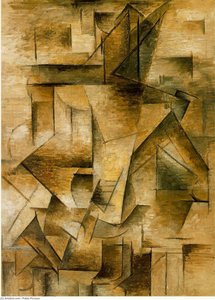
The evolution of Cubism is traditionally categorized into two distinct phases, each offering unique visual opportunities for large-scale interior curation. The first, known as Analytical Cubism, is characterized by a rigorous, almost scientific deconstruction of the subject. During this period, artists utilized a muted, monochromatic palette—heavy in ochres, greys, and browns—to ensure that the viewer’s attention remained focused on the complex interplay of overlapping planes rather than being distracted by color. The compositions are dense, intricate, and often difficult to decipher at first glance, creating a sense of profound intellectual depth and structural density that can serve as a powerful focal point in minimalist or highly structured corporate lobbies.
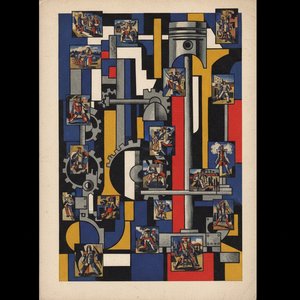
In contrast, Synthetic Cubism introduced a more playful and additive approach to the canvas. This phase moved away from the fragmentation of forms toward the construction of images using broader shapes, brighter colors, and the revolutionary technique of collage. Artists began incorporating real-world textures and materials, creating a layered effect that brought a sense of tactile reality back to the abstract form. For a procurement manager or designer, Synthetic Cubism offers much greater versatility in color coordination. The bolder hues and more recognizable silhouettes allow these works to integrate seamlessly into vibrant, contemporary hospitality settings, providing a rhythmic energy that complements modern furniture and textile selections.
The Impact of Cubist Principles on Modern Architectural and Interior Design
The legacy of Cubism extends far beyond the frame of a painting, acting as a foundational pillar for much of 20th-century architectural thought. The movement’s emphasis on geometric clarity and the rejection of superfluous ornamentation directly informed the development of Modernism and the Bauhaus school. When we observe the clean lines, functionalist approach, and the interplay of glass, steel, and concrete in contemporary hotel architecture, we are seeing the echoes of Cubist fragmentation applied to three-dimensional space. The way a modern building uses cantilevered planes and intersecting volumes to create a dynamic silhouette is essentially Cubism rendered in stone and glass.
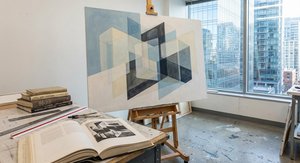
In the realm of interior design, these principles manifest in the strategic use of rhythm, scale, and texture. A room designed with Cubist sensibilities utilizes the tension between solid masses and open voids, much like a Braque composition balances heavy planes against light-filled interstices. The movement encourages designers to think about the "multi-perspectival" nature of a space—how a feature wall or a large-scale installation changes as a guest moves through a corridor or enters a lounge. By incorporating works that celebrate geometric intersection, designers can create environments that feel structurally cohesive yet visually stimulating, preventing static or monotonous atmospheres in high-traffic commercial zones.
Integrating Cubist Masterpieces into Large-Scale Hospitality Projects
Implementing Cubist art within large-scale hospitality projects requires a sophisticated understanding of scale and visual weight. Because Cubist works often feature complex, interlocking patterns, they possess an inherent "visual noise" that can either anchor a room or overwhelm it. In expansive hotel lobbies or grand dining halls, a single, massive reproduction—perhaps a multi-panel split across three or five sections—can act as a structural element in its own right. Using the multi-panel trend allows for a seamless flow of color and brushwork across wide expansional walls, creating an immersive experience that guides the eye through the architectural volume.
The key to successful integration lies in balancing the complexity of the artwork with the surrounding textures of the interior. In a space featuring heavy marble or dark wood, a more monochromatic Analytical Cubist piece can provide a sophisticated, intellectual counterpoint. Conversely, in a light-filled, airy atrium, a Synthetic Cubist work with vibrant tones can inject much-needed character and warmth. For procurement professionals managing large volumes, the ability to source these works in custom dimensions is essential for ensuring that the artwork respects the specific proportions of the architectural site, turning a standard wall into a curated gallery experience.
Sourcing and Customizing Cubist Reproductions for Commercial Spaces
For the professional decorator or procurement manager, the challenge often lies in finding art that meets both high aesthetic standards and strict budgetary and logistical requirements. Sourcing museum-quality reproductions allows for the introduction of iconic styles—such as the works of Picasso or Léger—without the prohibitive costs of original masterpieces. The value in modern sourcing lies in the ability to customize; for instance, requesting a "period shift" where a contemporary photograph is reimagined through the fractured, geometric lens of Cubism. This level of bespoke service ensures that the art is not just an addition to the room, but a tailored component of the design identity.
When managing large-scale orders for hospitality chains, reliability in production and logistics is paramount. The transition from selecting a concept to final installation requires a streamlined process: from digital mockups that allow for color matching with existing upholstery, to the rigorous quality control of hand-painted oil on canvas, and finally to the efficient delivery via global carriers like DHL or FedEx. By utilizing professional services that offer VAT-compliant documentation, bulk-order flows, and customizable framing options—such as the ExtendedWrap for a frameless, modern look—designers can execute complex, large-scale art programs with the confidence of operational certainty.