Wassily Kandinsky. Russian pioneer of abstraction and the Blue Rider movement, known for spiritual, colorful forms and the musical interplay of shapes and lines.
The transition from representing a place to expressing a feeling marks a fundamental shift in how we perceive the natural world. It is a move away from the topographical toward the psychological. In the early twentieth century, Wassily Kandinsky began to strip away the recognizable details of the landscape, seeking instead to capture the spiritual vibrations of the environment through pure color and form. This departure from narrative representation allowed the artist to communicate directly with the viewer's subconscious. Today, this legacy persists in the way contemporary collectors approach abstraction; the value lies not in the accuracy of a mountain range, but in the ability of a composition to evoke the internal state of the observer.
Rhythmic Geometry: Paul Klee and the Architecture of Nature
Nature is rarely a chaotic sprawl; it possesses an underlying structure that the eye instinctively seeks. Paul Klee understood this through a musicality of form, translating the rhythmic pulse of the earth into a disciplined, geometric language. In his work Crystalline Landscape, the terrain is distilled into a symphony of triangles and circles, where sharp peaks and celestial spheres interact to create a sense of cosmic order. This approach finds a modern parallel in the way we curate spaces today. Just as Klee used the tension between angularity and softness to create balance, the collector uses geometric abstraction to introduce intellectual clarity and a sense of structured calm into a room.
The Gestural Terrain: De Kooning and the Energy of the Brushstroke
Where Klee sought order, the Abstract Expressionists often sought the raw, unmediated energy of the act itself. Willem de Kooning’s Abstraction (1950) exemplifies this tension, utilizing impasto and dynamic brushstrokes to navigate an urban landscape. Here, the subject is not a static view but a collision of movement and color, influenced by the intense, spontaneous marks of artists like Franz Kline. This gestural approach reminds us that a painting is a record of an event. For the collector, a work with visible, heavy texture offers a tactile presence that a flat print cannot replicate, providing a physical connection to the artist's movement.
Chromatic Depth: Color Field Principles in Contemporary Vistas
The evolution of abstraction eventually led to a refinement of the surface, where the individual mark was often effaced in favor of expansive, flat areas of color. This Color Field approach sought to strip art of superfluous rhetoric, focusing instead on the relationship between the canvas and the viewer's perception. While the Action Painters emphasized the drama of the gesture, the Color Field painters offered a more austere, meditative experience. This shift from the "event" to the "environment" is essential for large-scale architectural installations, where color is used to define the atmosphere of a space rather than to tell a specific story.
Symbolic Landscapes: Peter Busa and the Totemic Form
Beyond the purely formal, there exists a tradition of using the landscape to touch upon the symbolic and the totemic. Peter Busa, working through the mid-twentieth century, moved through a world of shifting forms to find the essence of the land. His work often drifted into a realm where the boundaries between a physical coordinate and a felt emotion dissolved, leaning toward a more personal, symbolic representation of the earth. This ability to bridge the tangible world with the internal landscape of the mind is what gives certain abstract works their enduring weight, transforming a simple depiction of terrain into a profound meditation on existence.
The Graphic Horizon: Lichtenstein and the Deconstruction of Scenery
The dialogue between abstraction and the everyday reached a new peak with the advent of Pop Art, where the landscape was deconstructed through the lens of mass production and graphic clarity. Roy Lichtenstein’s Landscape (1964) utilized geometric shapes and a controlled palette to reimagine the natural world through a lens of artificiality. This movement challenged the emotional intensity of the previous era by introducing a sense of detachment and precision. For the modern interior, such works provide a sharp, graphic impact that complements minimalist or contemporary architectural settings, offering a sophisticated nod to the intersection of nature and the modern, manufactured world.
For those seeking to acquire these diverse expressions of form and color, AllPaintingsStore.com provides access to a curated selection of high-quality works. Whether you require a bespoke, hand-painted oil reproduction of a historical landscape or a custom commission that reimagines a personal photograph in a specific stylistic tradition, our professional team ensures museum-grade quality and reliable global logistics.
A cura del team editoriale di AllPaintingsStore.com
Scopri come interpretare l'arte astratta attraverso un viaggio tra emozione e forma. Una guida raffinata per appassionati che desiderano decodificare il ritmo del colore e la purezza della geometria, andando oltre la realtà visibile.


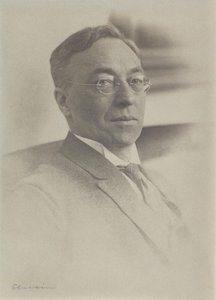 Wassily Kandinsky
 Crystalline Landscape
 Abstraction
 Landscape


