


The Core Concept: Prioritizing Subjective Experience Over Reality
To understand Expressionism, one must first accept that the artist is no longer a mirror reflecting the physical world. In traditional painting, the goal was often to capture the light hitting a landscape or the precise proportions of a human face. Expressionism rejects this objective duty. Instead, it prioritizes the internal landscape—the anxieties, joys, and spiritual tensions felt by the individual. The artist does not paint what they see with their eyes, but what they feel in their soul. This shift means that a tree might appear twisted or a sky might turn an unnatural shade to communicate a specific mood rather than a literal weather report.
This focus on the internal state finds a historical echo in the works of the early 20th-century pioneers who sought to move beyond the surface of things. Just as Expressionists used distortion to reveal psychological truths, earlier movements began to question the necessity of perfect anatomical accuracy to convey human presence. The movement essentially argues that a distorted figure can be more "truthful" about human suffering than a perfectly rendered one. By abandoning the constraints of physical accuracy, the artist gains the freedom to use the canvas as a direct outlet for human emotion.
This fundamental change in purpose is why Expressionism remains a vital way to interpret the human condition. It acknowledges that our perception of the world is always filtered through our personal experiences and current emotional state.
The Departure from Realism: Understanding the Psychological Shift
The move away from Realism was not a sudden accident but a response to a rapidly changing world. As the early 20th century progressed, the industrialization and social shifts of the era created a sense of alienation. Artists felt that the old ways of painting—which focused on the external, orderly world—could no longer account for the chaotic, often unsettling nature of modern life. They sought a new visual language that could articulate the complexities of the subconscious mind, a concept gaining traction through the rise of psychoanalysis. This was a move from the "what" of a scene to the "why" of a feeling.
We see a parallel in the way artists have historically reacted to social upheaval. When the world feels unstable, art often follows suit by breaking away from established norms. In the early 1900s, this meant breaking away from the requirement that art must be a window into a recognizable scene. Instead, the canvas became a site of psychological exploration, where the boundaries between the self and the external environment began to blur.
By prioritizing the psychological over the physical, Expressionism allowed art to tackle themes of existential dread and intense passion that Realism simply could not reach. It turned the act of painting into a deeply personal, often visceral, confrontation with the self.
The Mechanics of Emotion: Color, Line, and Distortion
 self-portrait
self-portrait, Egon Schiele
If the goal is to communicate feeling, the tools of the artist must change. In Expressionism, color is liberated from its descriptive role. A face does not have to be flesh-toned; it can be green to suggest sickness or blue to suggest profound sadness. Lines are rarely calm or steady. Instead, they are often jagged, swirling, or heavy, creating a sense of movement and tension that mirrors a racing heart or a heavy spirit. The brushwork itself becomes a part of the message, with thick, visible strokes that show the physical energy of the artist's hand.
This use of aggressive, non-naturalistic color and line echoes the way light and shadow were used in the Baroque period to create drama. However, while Baroque artists used light to create a sense of divine or theatrical spectacle, Expressionists used these tools to provoke a direct, often uncomfortable, emotional response. The intention is not to create something beautiful in the traditional sense, but to create something truthful to the intensity of the moment.
When you look at an Expressionist work, you are seeing the mechanics of emotion laid bare. The distortion of form and the exaggeration of color work together to bypass the intellect and speak directly to the viewer's own emotional memory.
Pioneering Voices: The Contributions of Munch and Werefkin
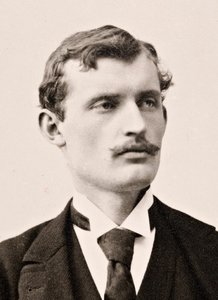 Edvard Munch
Expressionist pioneer Edvard Munch created the iconic The Scream. Discover his haunting masterpieces of anxiety and emotion today.
The movement was shaped by diverse voices who brought unique perspectives to the exploration of the soul. Edvard Munch, for instance, is a central figure whose work often grapples with themes of anxiety and alienation. His paintings do not just show a person in distress; they make the viewer feel the weight of that distress through the very composition of the work. Similarly, Marianne von Werefkin, born in Tula, Russia, was a vital force in the development of the movement. Her journey from the traditions of Russian Realism to the radical innovations of the Munich avant-garde demonstrates the movement's breadth. After a significant injury to her hand forced her to paint with her left, her work moved toward a more symbolic and expressive mode, proving that physical limitations can lead to profound artistic breakthroughs.
These artists were part of a larger, international dialogue. Just as Werefkin found common ground with the ideas of Gauguin and the emotional intensity of Munch, many artists of this era were part of a "School of Paris" or German collectives that shared ideas across borders. They were not working in isolation but were part of a collective effort to redefine what art could be.
The legacies of Munch and Werefkin remind us that Expressionism was not a single style, but a shared commitment to using art as a vehicle for the most intimate and difficult human experiences.
The Evolution of Expression: From Figurative Roots to Abstract Forms
Expressionism was never a monolithic style; it evolved through several distinct phases. In its early stages, it was often figurative, using recognizable people and landscapes as the subjects for emotional distortion. However, this impulse toward pure emotion eventually led many artists toward abstraction. If the goal is to express a feeling, why must the feeling be attached to a recognizable object at all? This question paved the way for movements like Abstract Expressionism in the mid-20th century, where the act of painting itself—the gesture, the drip, and the scale of the canvas—became the primary subject.
This evolution mirrors the historical trajectory of many artistic movements that begin with a reaction against a specific style and eventually move toward total freedom. Just as the early Expressionists broke away from Realism, the later Abstract Expressionists broke away from the need for any representational subject, focusing instead on the raw energy of the medium itself.
From the distorted figures of the early 1900s to the massive, gestural canvases of the post-war era, the movement shows a continuous drive toward stripping away the unnecessary to reach a core of pure, unadulterated expression.
Curating Emotion: Integrating Expressionist Styles into Modern Interiors
Today, the influence of Expressionism is felt in how we choose to decorate our personal and professional spaces. The movement's emphasis on bold color and strong texture makes it a powerful tool for interior design. An Expressionist-style piece can serve as a focal point in a room, providing a sense of depth and character that a standard print cannot match. Whether it is a large-scale abstract piece that adds energy to a corporate lobby or a smaller, more intimate portrait that brings a sense of history to a home, these works demand engagement.
This desire to use art to set a specific mood is a modern continuation of the Expressionist goal. Just as the artists used color to evoke a feeling, we use art in our environments to curate an atmosphere. A room filled with soft, muted tones might seek tranquility, while a space featuring the bold, energetic strokes of an Expressionist reproduction can stimulate creativity and conversation.
At AllPaintingsStore.com, we provide a wide range of options to help you bring this intensity into your space. From hand-painted oil reproductions that capture the tactile impasto of the original masters to high-quality Giclée prints, we offer various ways to own a piece of this emotive history. Our professional digital mockup service allows you to see exactly how a piece will look on your wall before you commit, ensuring the colors and scale are perfect for your specific environment. Whether you are looking for a single statement piece or a multi-panel arrangement to cover a large wall, we provide the logistical support and quality craftsmanship to make it happen.