Landscape painting, also known as landscape art, is the depiction in painting of natural scenery such as mountains, valleys, rivers, trees, and forests, especially where the main subject is a wide view—with its elements arranged into a coherent compo...
To look upon an old landscape is to engage with a silent dialogue between the earth and the sky, a conversation captured through centuries of human perception. These works are far more than topographical records; they act as windows into how our ancestors understood their place within a vast, untamed world. In earlier eras, landscapes often functioned as mere backdrops for religious or mythological narratives, yet as cultural tides shifted, the land emerged as a protagonist in its own right. We see this transition in the evolution of human perception, moving from structured recordings of territory to deeply subjective experiences of light and weather.
The history of the genre reveals a shift from the secondary to the primary. In the East Asian tradition, particularly in Chinese shan shui or mountain-water painting, the landscape was often the most prestigious form of art, frequently depicting imaginary vistas where the only sign of human life might be a solitary sage. This contrasts with the Western tradition, where until the 19 and century, landscape occupied a lower position in the hierarchy of genres. Today, these works remain vital because they offer a sanctuary of stillness, reminding us of the organic rhythms that persist despite our digital fragmentation.
Architectural Precision and the Evolution of Perspective
Architectural painting (also Architecture painting) is a form of genre painting where the predominant focus lies on architecture, including both outdoor and interior views. While architecture was present in many of the earliest paintings and illumina...
Architecture within painting has long served to provide rhythm and depth, acting as a structural anchor for the eye. During the Renaissance, artists utilized architectural elements to emphasize perspective and create an illusion of profound space, much like Masaccio did in his 1420s work, The Holy Trinity. As the centuries progressed, this evolved into a specialized genre known as architectural painting. In the 16th century, centers in Flanders and the Dutch Republic saw the rise of artists like Hans Vredeman de Vries, who was both an architect and a painter, helping to establish the genre's foundation.
This technical precision finds a historical echo in the development of the "world landscape." Joachim Patinir, a pioneer of the Northern Renaissance, began to move beyond using architecture as mere background detail. He developed a way of seeing that imbued landscapes with narrative power and symbolic depth, creating expansive vistas that felt both real and fantastical. This movement toward architectural painting reached its peak during the Dutch Golden Age, where artists like Pieter Neefs the Elder specialized in the intricate, light-filled interiors of churches. These works remind us that the way we frame a structure is as much about capturing light as it is about documenting stone.
Landscape Painting and the Witness of Industrialization
Explore Carl Blechen's haunting Study for a Funerary Monument (1824-27), a masterful Romantic landscape capturing solemn beauty and reflecting the anxieties of industrialization. See more at Nationalgalerie Berlin.
The landscape has often functioned as a mirror for the human soul, capturing our deepest contemplations on solitude and our connection to the natural world. However, as the 19th century approached, the genre began to reflect the anxieties of a changing era. The movement known as Romantic Industrialization brought a new tension to the canvas, where the beauty of nature was often viewed through the lens of encroaching change. Carl Blechen’s Study for a Funerary Monument (1824) serves as a haunting example, capturing a solemn beauty that reflects the underlying tensions of an age undergoing rapid industrial transformation.
This period of transition echoes the broader shifts in how we perceive the environment. Just as the Romantics sought to celebrate the sublime—that intersection of awe and terror found in untamed wilderness—the rise of industrialization forced a confrontation with environmental degradation. Artists like Richard Tongue, while maintaining a commitment to realistic detail, captured the essence and mood of the British countryside, documenting geological formations and flora with an almost obsessive precision. These paintings remind us that the landscape is a living entity, shifting with every passing cloud and every change in human industry.
The Voortrekker Monument is located just south of Pretoria in South Africa. The granite structure is located on a hilltop, and was raised to commemorate the Voortrekkers who left the Cape Colony between 1835 and 1854. It was designed by the architect...
Monuments are more than mere stone and bronze; they are repositories of stories woven through centuries of ambition and loss. A monument often seeks to freeze a moment of historical significance, turning a specific event into a permanent fixture of the landscape. The Voortrekker Monument in South Africa, for instance, was raised to commemorate the migrations that occurred between 1835 and 1854. Its massive granite structure and intricate marble frieze depict the history of the Great Trek, using art to solidify a sense of shared heritage and identity.
This impulse to memorialize is mirrored in the creation of the Rizal Monument in Manila. Built to honor the executed nationalist José Rizal, the monument uses an obelisk and bronze sculpture to transform a site of execution into a landmark of national pride. Both structures demonstrate how physical landmarks can serve as anchors for collective memory, much like the way a sculptor uses bronze to capture the strength of a figure. These sites remind us that the built environment is often a deliberate attempt to ensure that the weight of history remains palpable to future generations.
Sacred Structures: The Preservation of Spiritual Landscapes
A Global Guardian of Living Heritage World Monuments Fund is not a traditional institution confined to the silent halls of a gallery; rather, it is a global guardian of the living landscape, an organization that breathes life into the very soul of hu...
The preservation of sacred architecture allows us to touch the very soul of human civilization. In places like the Monastery of San Isidoro del Campo, founded in 1301, the architecture itself is a chronicle of identity. Here, the Gothic-Mujuader style creates an atmosphere where European trends meet the ornamental sensibilities of Hispanic-Muslim artistry. Within these walls, treasures such as the sculptures of Juan Martínez Montañés capture the essence of divine grace, making the monastery a living reliquary of faith and craftsmanship.
The active stewardship of such sites is a global necessity, a mission carried out by organizations like the World Monuments Fund. Based in New York City, the Fund works to ensure that architectural triumphs, from the temples of Angkor Wat to the corridors of Venice, continue to endure. Their work is a delicate dance of stabilization and revitalization, much like the way an artist uses layers of glaze to protect and deepen a painting. By focusing on community-centric conservation, they ensure that these monuments do not become static relics but remain integrated into the living landscapes they inhabit.
For those looking to bring the weight and texture of history into contemporary spaces, AllPaintingsStore.com offers a vast catalog of hand-painted reproductions. Whether you require large-format murals for a hotel or custom multi-panel sets for a corporate office, our artists specialize in recreating the visible brushstrokes and deep tonal ranges of the masters. From the 100% cotton canvas of our oil paintings to our professional digital mockup service, we provide the reliability and scale required by procurement managers and designers worldwide.
A cura del team editoriale di AllPaintingsStore.com
Esaias van de Velde: maestro olandese del Seicento, celebre per i suoi paesaggi realistici e le scene di genere. Scopri la sua arte innovativa e l'influenza sulla pittura …
Esplora i paesaggi di Claude de Jongh (1605-1663), pittore dell'Età dell'Oro olandese noto per i suoi viaggi in Inghilterra e le suggestive scene naturalistiche.


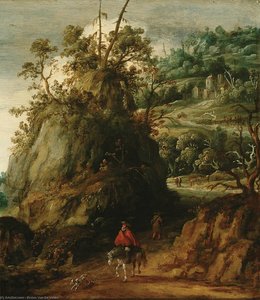


 Landscape painting
 Architectural painting
 Study for a Funerary Monument
 Voortrekker Monument
 World Monuments Fund


