The Impulse to Dissent: Art as a Catalyst for Change
The urge to use a brush or a chisel to challenge the status quo is as old as human expression itself. It begins when an observer refuses to accept the world as it is presented by those in power. This impulse is not merely about aesthetic preference; it is a fundamental reaction to perceived injustice. When the visual language of a society becomes a tool for critique, art ceases to be a passive object of contemplation and becomes an active participant in the struggle for reform. It is a way to make the invisible visible, forcing a confrontation between the viewer and the realities of their era.
This drive for change often emerges from a place of profound empathy or sharp observation. An artist might look at the structural inequalities of their city or the quiet suffering of a marginalized community and feel a compulsion to document it. By doing so, they strip away the polished facades of authority, leaving behind a raw, unvarnished truth. This act of documentation is the first step in a long process of social evolution, where the image serves as the spark for a much larger, often turbulent, conversation.
Ancient Echoes: From Xenophanes to the Enlightenment
The roots of this critical impulse reach back into the classical world, long before the formalization of modern political theory. In the fragments of the Greek philosopher Xenophanes, we find an early instance of the artist or thinker questioning the adulation of the powerful. He observed the way society placed excessive value on sport players and urged a return to moderation, a sentiment that echoes through the centuries. This early skepticism toward the idols of the day laid the groundwork for a tradition of questioning the legitimacy of social hierarchies.
Centuries later, the Age of Enlightenment transformed this sporadic skepticism into a systematic method of inquiry. The radical enlightenment, championed by figures like Spinoza and his circle, moved the critique from the individual level to the structural. It was no longer just about the behavior of specific men, but about the very foundations of religious and political authority. This shift from observing social flaws to questioning the systems that produce them marks the birth of modern social criticism, a lineage that connects the ancient philosopher to the modern activist.
The Weight of Reality: Social Realism and the Industrial Age
As the nineteenth century dawned, the rapid shifts of the Industrial Revolution created a new kind of visual necessity. The smoke-filled cities and the grinding poverty of the working class could no longer be ignored by the art world. Social Realism emerged not to provide a beautiful escape, but to act as a visual protest against the oppressive systems of the time. These artists sought to capture the socio-political conditions of the laborer, using their work to demand empathy and, ultimately, systemic change.
This movement found its most potent expression in the works of those who refused to look away from the grit of urban life. While some preferred the gentle observations of genre painting, the Social Realists chose a descriptive, often biting, realism. They understood that to provoke thought, one must first present the truth in its most unadorned form. By documenting the harsh realities of the working class, they challenged the established power structures that relied on the invisibility of the poor to maintain their own comfort.
Subverting Order: The Avant-Garde and the Chaos of War
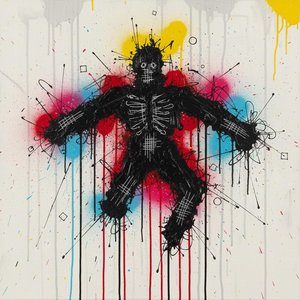
The twentieth century brought a different kind of disruption, one born from the trauma of global conflict. The violence of World War I shattered the belief in a rational, orderly world, prompting artists to respond with a radical subversion of form. The Dadaists and Surrealists did not merely make art; they engaged in a form of cultural criticism that sought to overthrow the bourgeois rules they believed had led to such destruction. They used absurdity and the irrational to strike at the heart of a society that had lost its moral compass.
This period demonstrated that art could be a weapon of psychological and cultural warfare. By rejecting traditional aesthetics, the avant-garde challenged the very idea of what was considered "civilized." Their work was a direct response to the chaos of the era, a way to mirror the fragmentation of the human experience in the face of unprecedented mechanized slaughter. In their hands, the canvas became a site of rebellion against the logic of the state.
The Politics of Identity: Art as a Voice for the Marginalized
As the decades progressed, the focus of artistic protest shifted toward the specificities of identity and the struggle for recognition. The mid-to-late twentieth century saw artists using their work to fight against the lethal prejudices of the time, most notably during the HIV/AIDS pandemic. The emergence of highly influential social interventions, such as the "Silence = Death" movement, showed how a single, potent image could become a rallying cry, altering public opinion and forcing political action through sheer visual persistence.
This era also saw the rise of voices that challenged the intersections of race, gender, and class. From the profound insights of Audre Lorde to the rhythmic, political urgency of 2Pac, art became a primary vehicle for those whom society had attempted to silence. These artists did not just represent their communities; they asserted their right to exist and to be heard, using their medium to demand a seat at the table of human experience.
The Urban Canvas: Street Art and Contemporary Activism
In the modern landscape, the site of protest has moved from the gallery to the street. Street art has become a dominant visual language for contemporary activism, utilizing the public square to address issues of political corruption, economic inequality, and environmental degradation. This is art in its most immediate form, often bypassing the gatekeepers of the traditional art world to speak directly to the people passing by on the sidewalk.
The aesthetics of this movement often borrow from the gritty, high-impact style of documentary photography. There is a deliberate use of tension and unposed reality to grab attention in an increasingly crowded visual field. Whether it is a stencil on a brick wall or a large-scale installation, the goal remains consistent: to use the visual environment to provoke a reaction and to remind the public that the social textures of our time are constantly being contested.
The Enduring Image: Why Visual Protest Persists
As we navigate an era of digital saturation and rapid change, the power of the physical image remains a vital force. While a protest may become a meme or a viral video, it can never fully replace the profound intimacy of a physical object or the collective experience of a live demonstration. The image remains a way to strip down the façade of normalcy and force a confrontation with the truths we often prefer to ignore.
At AllPaintingsStore.com, we recognize that art is more than a decorative element for a home or a corporate space; it is a way to engage with history and the ongoing struggles of the human condition. From the meticulous detail of a hand-painted oil reproduction to the bold statement of a custom commission, the works we provide allow you to bring these powerful narratives into your own environment. Whether you are looking for a piece that reflects social history or a custom work that captures a personal moment of significance, our collection is designed to facilitate that connection. Explore our range of services, from professional digital mockups to global shipping, and find the art that speaks to the world you inhabit.