


The Break from Reason: The Origins of Surrealist Thought
To understand Surrealism, one must first look at the chaos of the early 20th century. The movement did not emerge from a vacuum of pure imagination; it was a response to the devastation of World War I. Many thinkers felt that the logic and rationalism of European society had failed, leading directly to the carnage of the trenches. They sought a way to bypass this failed logic to find a deeper truth. This impulse to reject the constraints of the waking world mirrors the way early Renaissance thinkers rejected medieval scholasticism to find a new way of seeing the human form. Just as those artists looked to anatomy to find realism, the Surrealists looked to the internal landscape of the mind to find a new kind of reality.
The term itself was first used by Guillaume Apollinaire in 1917 to describe his play Les Mamelles de Tirésias. While the term was initially a descriptor for a specific type of theatrical work, it soon became the banner for a much larger rebellion. This rebellion was heavily influenced by the Dada movement of the 1910s, which used absurdity to protest the status quo. However, while Dada was often destructive and nihilistic, the emerging Surrealist movement sought to build something new from the wreckage of the old world.
Defining the Dream: André Breton and the Power of the Manifesto
 André Breton
: Surrealist writer & poet (1896-1966). Co-founder of surrealism, known for ‘Nadja’ & ‘L'Amour Fou’. Pioneered 'pure psychic automatism'. Explore his revolutionary art.
The formalization of the movement arrived in 1924 when André Breton published the Surrealist Manifesto. This document was not merely a collection of artistic preferences; it was a philosophical declaration. Breton defined Surrealism as "pure psychic automatism," a process by which one expresses the actual functioning of thought in the absence of any control exercised by reason. He wanted to strip away the filters of morality and aesthetics to reach the raw, uninhibited core of human experience. This drive to define the essence of a movement through a central text echoes the way the Enlightenment philosophers used manifestos to reshape the political and social structures of Europe.
Breton’s leadership was firm, and his manifesto even served to claim the term "Surrealism" for his specific group, distinguishing them from other factions like those led by Yvan Goll. The movement found its heartbeat in the cafes of Paris, where artists gathered to debate, play collaborative drawing games, and experiment with the limits of the mind. By establishing a clear, albeit radical, framework, Breton ensured that Surrealism would be recognized as a revolutionary force rather than just a collection of strange images.
Techniques of the Unconscious: Automatism and the Art of Chance
To reach the subconscious, Surrealists developed specific technical methods designed to bypass the conscious mind. One of the most significant was automatism, where the artist allows the hand to move across the surface without a preconceived plan. This was often paired with other experimental techniques like frottage, which involves rubbing pencil or crayon over a textured surface to reveal hidden patterns, and grattage, a scraping technique. They also utilized decalcomania and photomontage to create unexpected, jarring compositions. These methods were intended to produce a "super-reality" where the boundaries between dream and waking life dissolve.
This reliance on chance and texture finds a historical echo in the way medieval monks used illuminated manuscripts to create intricate, almost hypnotic patterns that guided the eye toward the divine. While the Surrealists were looking inward toward the psyche rather than upward toward heaven, they shared that same fascination with the way a single, unplanned stroke or a textured surface could trigger a profound psychological response. Their goal was to turn the canvas into a site of discovery, where the artist is as much a witness to the work as they are its creator.
Iconic Visions: The Distinctive Styles of Dalí and Magritte
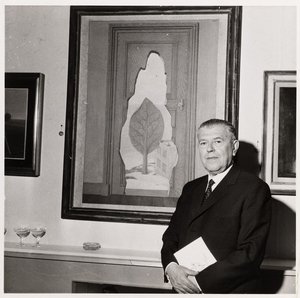 René Magritte
. A master of Surrealism known for The Treachery of Images. Discover his enigmatic and thought-provoking works today.
As the movement matured, two distinct visual languages emerged that would define its public face. Salvador Dalí, who joined the group in 1929, brought a meticulous, almost hyper-realistic technique to his depictions of the irrational. His works often feature melting forms and distorted landscapes that feel both tangible and impossible. In contrast, René Magritte used a more deadpan, illustrative style to present ordinary objects in extraordinary, often paradoxical contexts. While Dalí explored the melting, fluid nature of time and desire, Magritte challenged the very way we perceive language and reality through visual puns and non sequitur.
These artists moved the movement from the purely experimental games of the early years into a highly recognizable visual realm. Their ability to make the bizarre feel strangely familiar is a technique used by many great portraitists throughout history to capture the "essence" of a subject rather than just its likeness. By rendering the impossible with such clarity, Dalí and Magritte ensured that the Surrealist vision would remain etched in the collective memory of the public.
A Global Resonance: The Rise of Afro-Surrealism and Négritude
 Yamamoto Kansuke
Explore the surrealist photography & poetry of Yamamoto Kansuke (1914-1987), a key figure in Japan's avant-garde movement. Discover his anti-war themes, liberty-focused works, and influence on modern Japanese art. View artworks at AllPaintingsStore.
Surrealism was never confined to the streets of Paris; it was a global phenomenon that adapted to the political and cultural needs of different nations. In Japan, the movement faced intense state repression, with the Special Higher Police interrogating artists like Kansuke Yamamoto for their perceived links to radical thought. In the Americas and Africa, the movement took on a different, more profound character. The Négritude movement utilized Surrealism as a revolutionary tool to reclaim identity and resist colonial structures. This eventually evolved into Afro-Surrealism, a genre that explores the lived experience of the African Diaspora.
As noted by thinkers like D. Scot Miller, while European Surrealism is often viewed as empirical, African Surrealism can be seen as more mystical and metaphorical. This expansion shows how a single philosophical seed can grow into vastly different trees depending on the soil in which it is planted. The movement's ability to provide a language for the "other" to express their reality is a testament to its fundamental power as a tool for liberation and self-discovery.
The Living Dream: The Lasting Legacy of Surrealism in Contemporary Art
Today, the influence of Surrealism is felt far beyond the traditional canvas. Its principles have permeated music, film, and even modern digital culture. Composers like Erik Satie and Francis Poulenc were influenced by its logic, and the movement's emphasis on the unexpected continues to shape how we approach visual storytelling in cinema and advertising. The Surrealist legacy is not a closed chapter of history; it is a continuous method of questioning the stability of our perceived reality.
In an era of hyper-logic and digital precision, the Surrealist impulse to embrace the irrational and the dreamlike remains a vital sanctuary for the human imagination. Whether through a hand-painted oil reproduction of a classic work or a modern digital "remix" of a personal photograph, the desire to find the marvelous within the mundane continues to drive our creative expression. We still look to the subconscious to find the truths that our rational minds attempt to hide.
For those looking to bring these profound visual experiences into their own spaces, AllPaintingsStore.com offers a wide selection of high-quality, hand-painted reproductions and custom commissions. From museum-grade oils to personalized digital mockups, we help you integrate the power of art into your environment. Visit AllPaintingsStore.com to explore our collections and start your own creative transformation.


