Frederico Guilherme Briggs & Pedro Ludwig: Pioneers of Brazilian Lithography
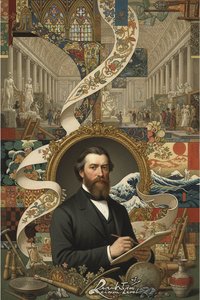
Frederico Guilherme Briggs (1813-1870) and Pedro Ludwig (1816-?) represent a pivotal moment in Brazilian artistic history—the establishment of a groundbreaking lithographic partnership that reshaped visual culture during the Victorian era. Born in Rio de Janeiro, Brazil, Briggs honed his skills in England, absorbing the techniques of the Day & Haghe Office, which revolutionized printing and engraving with its ability to reproduce images accurately and efficiently. This exposure to European artistic innovation profoundly influenced his subsequent work.
Early Career and Founding of Litografia Briggs
In 1837, Briggs initiated his artistic journey by establishing Litografia Briggs in Rio de Janeiro alongside Ludwig. Recognizing the burgeoning demand for printed materials—maps, advertisements, musical publications—they swiftly transformed into a prolific enterprise. Their atelier quickly became synonymous with quality craftsmanship and stylistic sophistication. By 1840, they relocated to Rua do Ouvidor, cementing their position as leaders within the Brazilian artistic landscape. Notably, Briggs acquired João José do Rego’s lithographic workshop, bolstering Litographia Briggs' capabilities and expanding its reach into musical publishing—specifically launching *Philo-harmonico*, a significant contribution to Brazilian musical culture. This ambitious project exemplifies their commitment to documenting and celebrating Brazil's cultural heritage through meticulously crafted engravings—a testament to their artistic vision and technical prowess.
Collaboration with Ludwig & Artistic Output
The partnership flourished until 1843 when Ludwig joined forces with Briggs. Together they operated Litographia do Commercio de Ludwig & Briggs, producing an impressive array of prints reflecting the diverse interests of their clientele. Their output spanned from architectural renderings and topographical maps to musical scores and decorative illustrations—demonstrating a remarkable versatility that cemented their reputation as masters of the lithographic medium. They moved to Rua dos Pescadores in 1846 and Rua dos Ourives in 1849, furthering their atelier’s presence in Rio de Janeiro's artistic hub. Their meticulous attention to detail and masterful execution continue to inspire admiration among art historians and collectors alike—solidifying their place as icons of Brazilian lithography and champions of artistic excellence.
Notable Works: “Brazilian Souvenir” Album & Beyond
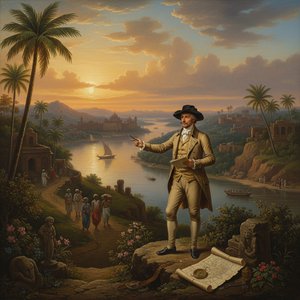
Perhaps Briggs and Ludwig’s most enduring legacy resides in the "Brazilian Souvenir" album (1845), a lavish publication showcasing scenes from Brazilian life and landscapes. This ambitious project exemplifies their commitment to documenting and celebrating Brazil's cultural heritage through meticulously crafted engravings—a testament to their artistic vision and technical prowess. Furthermore, Briggs continued to produce prints for various publications, including *ENCICLOPÉDIA da Música Brasileira* (2000) and *Impressão Musical no Brasil*. His work is documented in scholarly articles like “LEME, Mônica. Impressão Musical no Rio de Janeiro (Séc XIX): Modinhas e Lundus para \"Iaiás\" e \"Ioiôs\". In: CONGRESSO DA ANPPOM, 15, 2005.”
Legacy and Significance
Frederico Guilherme Briggs & Pedro Ludwig’s contribution to Brazilian art transcends mere stylistic innovation. They established a foundational framework for visual communication in the Victorian era, fostering artistic dialogue between Brazil and Europe. Their meticulous attention to detail and masterful execution continue to inspire admiration among art historians and collectors alike—solidifying their place as icons of Brazilian lithography and champions of artistic excellence. Their atelier’s enduring influence underscores the importance of collaborative creativity and the transformative power of embracing new techniques in disseminating cultural knowledge.