George Kilgour Ingelow: A Quiet Observer of Victorian Sydney
George Kilgour Ingelow (1821 – 1865) remains a somewhat elusive figure in the annals of Victorian art history, overshadowed by his sister Jean’s celebrated poetry. Yet, his sketches and watercolors offer a valuable glimpse into the artistic sensibilities of his time—specifically, the burgeoning landscape movement that captivated Britain and Australia alike during the mid-nineteenth century. Born in Boston, Lincolnshire, Ingelow pursued a career as a bank clerk alongside his artistic endeavors, traveling extensively throughout India, Singapore, and eventually settling in Sydney, New South Wales.
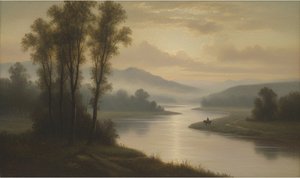
Ingelow’s artistic journey began modestly but possessed an unwavering dedication to capturing the beauty of the natural world. Primarily active between 1845 and 1862, he honed his skills sketching scenes from the Australian bush—particularly Sydney Harbour—producing evocative depictions that reveal a keen eye for detail and a masterful understanding of marine painting techniques. Unlike many of his contemporaries who favored grand narratives or idealized representations, Ingelow’s approach was characterized by quiet observation and meticulous rendering. He wasn't interested in imposing emotion onto his subjects; rather, he sought to faithfully reproduce the visual reality before him. This philosophy reflects the core tenets of Romanticism, albeit tempered with a restraint that distinguishes it from Turner’s dramatic explorations of atmospheric turbulence. Artists like Constable served as inspiration, guiding Ingelow toward capturing serene vistas illuminated by soft, diffused light—a stylistic choice mirroring the broader Victorian preoccupation with contemplative appreciation for nature's grandeur.
His artistic influences stemmed from Romanticism, though Ingelow tempered its dramatic fervor with a more restrained aesthetic. Artists like Turner and Constable served as models for capturing atmospheric effects and conveying mood through color—principles evident in Ingelow’s landscapes. However, unlike Turner's turbulent skies, Ingelow’s compositions often presented serene vistas bathed in soft light, reflecting the tranquility of the Australian countryside. This stylistic choice speaks to a broader cultural shift toward valuing natural beauty and contemplation during the Victorian era. He meticulously studied the techniques employed by masters like Constable, prioritizing accuracy and tonal gradation over flamboyant embellishment—a deliberate decision that underscored his commitment to portraying the world as he perceived it.
A pivotal moment in Ingelow’s artistic career was his participation in the London International Exhibition of 1862. The exhibition showcased British art and craftsmanship on an unprecedented scale, attracting visitors from across Europe and bolstering national pride. Ingelow's contribution—a series of watercolors depicting Sydney Harbour—received considerable acclaim, cementing his reputation as a skilled landscape artist and establishing him within the influential Australian art scene. This recognition underscored the growing appreciation for Australian landscapes amongst British artists and intellectuals. The exhibition provided an invaluable platform for showcasing Ingelow’s talent to a discerning audience and securing his place in the history of Victorian art.
Ingelow's artistic output focused predominantly on Sydney Harbour, capturing its harbor waters with remarkable precision and subtlety. His watercolors skillfully rendered the interplay of light and shadow upon the water surface, conveying an atmosphere of calm contemplation—a characteristic that aligns perfectly with the prevailing aesthetic sensibilities of his time. These works reside in collections at Watts Gallery – Artists’ Village and contribute to a richer understanding of Victorian artistic sensibilities. Furthermore, Ingelow's dedication to faithfully documenting the visual world exemplifies the humanist spirit of Romanticism, albeit filtered through a lens of quiet observation and meticulous technique—a legacy that continues to inspire artists today who strive for authenticity and sensitivity in their depictions of the environment.