A Poet of Reflection: Exploring the Artistry of Hreinn Friðfinnsson
Hreinn Friðfinnsson (1943 – 2024), born in Bederkum, Iceland, stands as a singular voice within Icelandic conceptual art. His oeuvre transcends mere visual representation; it delves into profound questions about perception and reality, employing deceptively simple materials—primarily everyday objects like wine glasses—to provoke contemplation and challenge conventional viewpoints. Moving to Amsterdam in 1971 solidified his artistic trajectory, fostering an environment conducive to experimentation and intellectual exploration that would define his career.
Early Influences & Artistic Formation:
Friðfinnsson’s formative years were steeped in Icelandic folklore and mythology, shaping a sensibility characterized by sensitivity to the natural world and a fascination with narratives embedded within seemingly mundane experiences. This initial grounding would prove crucial in informing his later artistic explorations. He absorbed tales of elves and trolls—stories that instilled in him a deep appreciation for ambiguity and an understanding of how stories can reshape our perception of the world around us. These formative influences directly impacted his artistic approach, prioritizing subtle gestures and evocative imagery over grand pronouncements or overt symbolism.
Conceptual Artistry: Mirroring Reality
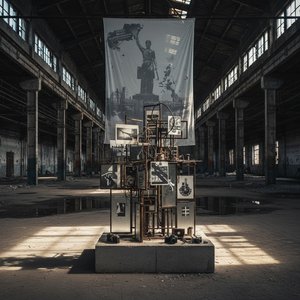
Friðfinnsson’s distinctive style is instantly recognizable—a masterful manipulation of mirrored reflections combined with commonplace objects. He doesn't aim for grand statements or dramatic gestures; instead, he seeks to disrupt our habitual ways of seeing. Consider “Rounding the Corner,” a striking Icelandic painting that exemplifies this approach. The mirrored wine glasses subtly distort and multiply the image beyond the frame, creating an illusionistic space that invites viewers to consider how perception shapes our understanding of what is present before us. This technique isn’t merely decorative; it's a deliberate strategy for questioning assumptions about visual experience—a cornerstone of his conceptual practice. He believed that art should unsettle expectations and encourage viewers to actively engage with the artwork, prompting them to reconsider their preconceived notions about how they interpret visual information.
Technique & Material Exploration:
Friðfinnsson’s meticulous craftsmanship ensured that each piece possessed an exceptional quality of execution. He favored acrylic paint on canvas, achieving remarkable luminosity and tonal subtlety—characteristics that underscore his dedication to capturing nuanced visual information. The careful layering of pigment allowed him to create surfaces that shimmered with reflected light, mirroring the artist's preoccupation with illusion and perception. His work consistently utilized materials that appeared unassuming at first glance – wine glasses, cardboard, wood – yet these objects served as catalysts for profound artistic exploration. He skillfully manipulated their reflections to generate visual paradoxes, prompting viewers to confront the limitations of sensory experience and questioning how we construct our understanding of reality.
Recognition & Legacy
Throughout his prolific career, Friðfinnsson garnered considerable acclaim from critics and scholars alike who lauded his intellectual depth and poetic resonance. Notably, he was awarded the Prince Eugen Medal in 2004—a prestigious honor recognizing excellence in visual arts—affirming his contribution to contemporary art discourse. His artistic vision resonated with audiences worldwide, demonstrating the power of understated artistry to provoke thought and inspire contemplation. He remains a pivotal figure in Icelandic artistic history, embodying the ethos of conceptual art: challenging conventions and prioritizing ideas over aesthetics.
Further Research:
For more information about Hreinn Friðfinnsson’s life and work, consult Wikipedia:
Wikipedia