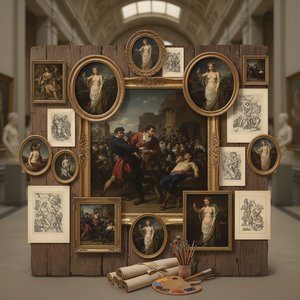
La Scintilla Parigina e l'Influenza di Greuze
Nato nella storica città di Colonia nel 1725, Johann Anton de Peters intraprese un'odissea artistica che avrebbe infine intrecciato il suo nome con la trama stessa dell'era Rococò. I suoi anni formativi furono definiti dalla vibrante ed emotiva atmosfera di Parigi, dove cercò la guida del leggendario Jean-BT. Greuze. Sotto la tutela di Greuze, Peters padroneggiò l'arte della sentimentalità, uno stile che privilegiava la profondità psicologica e la tenera vulnerabilità dei suoi soggetti. Questo periodo non fu una semplice istruzione tecnica; fu un'immersione in un mondo dove ogni pennellata poteva evocare un battito cardiaco o un sospiro. La sua educazione aristocratica fornì la base perfetta per questa ricerca, permettendogli di muoversi nei sofisticati salotti della Francia con una disinvoltura che avrebbe successivamente favorito la sua ascesa ai più alti ranghi della società europea.Il Mecenatismo Reale e l'Apice del Successo
Con la crescita della sua reputazione, aumentò anche l'ampiezza delle sue opportunità. Il talento di Peters catturò lo sguardo dei monarchi più influenti d'Europa, portandolo a un periodo di prestigio senza pari. Non era soltanto un artista, ma una figura di distinzione sociale, arrivando persino a essere elevato al rango di nobiltà dal Re di Francia. La sua carriera fiorì sotto il generoso patrocinio di Cristiano VII di Danimarca e Carlo III di Lorena, ruoli che richiedevano sia versatilità che eccellenza. Durante questa età dell'oro, egli si mosse fluidamente tra la delicata precisione dell'incisione e le ricche texture della pittura a olio, affermandosi come un maestro di diversi mezzi espressivi. Il suo repertorio includeva opere notevoli quali:- La Madre Felice (1775)
- La Morte di Cleopatra
- Una Ragazza che esce dal Bagno
- La Ragazza con la Carpa
L'Arte dell'Intimità: Simbolismo e Tecnica
La vera magia dell'opera di Peters risiede nella sua capacità di trasformare il quotidiano in monumentale. Le sue scene di genere sono finestre su un'esistenza idealizzata del diciattresimo secolo, dove la tranquillità domestica viene elevata a forma d'arte sublime. In capolavori come La Madre Felice, contempliamo l'essenza stessa dello spirito Rococò: una fusione armoniosa di tonalità pastello, luce soffusa e profonda risonanza emotiva. Attraverso la sua meticolosa attenzione al dettaglio — la curva delicata dell'arto di un bambino, il calore di uno sguardo materno o la presenza simbolica dei libri che rappresentano il raffinamento intellettuale — egli creò opere che parlavano ai valori della sua epoca. Impiegò con maestria toni della terra, come cremi e rossi smorzati, per stabilire una tavolozza che rinforzasse un senso di bellezza serena e leggerezza atmosferica.Il Crepuscolo di un'Era
Tuttavia, la brillantezza della carriera di Peters non fu immune ai venti turbolenti della storia. La Rivoluzione Francese, un mutamento sismico che smantellò proprio quelle strutture aristocratiche che egli abitava, lo costrinse ad allontanarsi dalle scintillanti corti d'Europa per tornare nella sua nativa Colonia. La transizione dallo splendore delle commissioni reali alla cruda realtà della vita in una Germania in mutamento fu profonda. I suoi ultimi anni furono segnati da un declino struggente, vivendo gran parte della maturità nella povertà prima di morire nel 1795. Eppure, nonostante la perdita del suo status mondano, la sua eredità artistica permane: una testimonianza di un'era di eleganza e di un'anima capace di catturare la bellezza fugace della connessione umana.Domande e risposte
Come posso trovare le opere di Johann Anton De Peters relative a un tema specifico?
La pagina Per parole chiave di Johann Anton De Peters raggruppa le opere dell'artista per parole chiave.
Come posso trovare tutte le opere di Johann Anton De Peters suddivise per tecnica?
La pagina Per tecnica raggruppa le opere di Johann Anton De Peters per tecnica.
Dove posso vedere tutte le opere di Johann Anton De Peters?
Tutte le opere di Johann Anton De Peters presenti su questo sito web sono consultabili nella pagina Tutte le opere dell'artista.