Garanzia soddisfatti o rimborsati · 100 giorni Spedizione gratuita in tutto il mondo
646.446opere d'arte 53.409artisti 5.406musei 32Lingue
Portrait of Aleksandr Rodčenko

The 89 Most Famous Aleksandr Rodčenko Paintings to Choose From

Updated Ottobre 2026 · ranked by our popularity score (searches, visits and orders for each work) · 89 works by Aleksandr Rodčenko in our catalogue

Quick answer

Number one among Aleksandr Rodčenko's paintings is Composizione non obiettiva (1917). In second and third place: Ragazza con una Leica and A proposito di ciò (1923). Our catalogue holds 89 works by Aleksandr Rodčenko. The 89 listed here are the most famous, in rank order, with the year and museum of each original.

1891 – 1956, San Pietroburgo Costruttivismo Most works: Museo delle Arti Figurative del Tatarstan

The top 10: Aleksandr Rodčenko's most famous paintings

1
Composizione non obiettiva (1917) by Aleksandr Rodčenko

Composizione non obiettiva

1917 · Pittura

Lo sguardo incontra la Composizione non obiettiva, un'opera che esiste interamente nel regno dell'astratto. Creata da Aleksandr Rodchenko nel 1917, questa composizione emerge da un momento di profonda transizione artistica. Non cerca di replicare il mondo fisico o le forme familiari della natura; al contrario, la tela presenta una realtà puramente non obiettiva, dove l'attenzione si sposta interamente verso le qualità intrinseche della forma e del colore.

2
Ragazza con una Leica by Aleksandr Rodčenko

Ragazza con una Leica

Stampa all'argento gelatina

La scena si svela attraverso una stampa all'gelatina d'argento su carta fotografica, catturando un istante fugace di vita urbana. In quest'opera, intitolata Ragazza con una Leica, l'artista Aleksandr Rodchenko rivolge il suo obiettivo verso una giovane donna. Lei si sporge da un edificio, con il corpo colto in un momento di movimento intenzionale. Stringe tra le mani una fotocamera Leica, con lo sguardo rivolto verso il mondo oltre l'inquadratura, apparendo…

3
A proposito di ciò (1923) by Aleksandr Rodčenko

A proposito di ciò

1923 · Collage

L'occhio vaga attraverso un paesaggio caotico e stratificato, dove la logica dello spazio tradizionale si è completamente dissolta. In questo fotomontaggio del 1923, il mondo non è più una visione singola e coesa, ma una collisione di disparati elementi fotografici. Il volto di una donna emerge dalla nebbia grigia, accostato ai bordi netti di un carro armato e alle linee rigide di strutture architettoniche. Si percepisce un senso di movimento…

4
Books (1924) by Aleksandr Rodčenko

Books

1924

The painting Books by Aleksandr Rodchenko is a quintessential example of Constructivist art, showcasing the artist's innovative style and elements. Created in 1924, this piece embodies the movement's core principles, which emphasized geometric forms, bold colors, and a rejection of traditional representation. Constructivist Style and Elements The painting features a dynamic composition, with a large red circle dominating the right side of the image. The background is divided into red…

Ranks 11 to 89: more Aleksandr Rodčenko paintings

11Monument to Pushkin (1930) by Aleksandr RodčenkoMonument to Pushkin1930 12Radio listener (1929) by Aleksandr RodčenkoRadio listener1929 13Park of Culture and Rest (1932) by Aleksandr RodčenkoPark of Culture and Rest1932 14Guard at the Shukhov Radio Tower, Moscow (1929) by Aleksandr RodčenkoGuard at the Shukhov Radio Tower, Moscow1929 15Pioneer with a horn (1930) by Aleksandr RodčenkoPioneer with a horn1930 16Stairway (1930) by Aleksandr RodčenkoStairway1930 17Assembling for a Demonstration (1930) by Aleksandr RodčenkoAssembling for a Demonstration1930 18Girl with a Flower by Aleksandr RodčenkoGirl with a FlowerMuseo delle Arti Figurative del Tatarstan 19Astrazione (Rottura) (1920) by Aleksandr RodčenkoAstrazione (Rottura)1920 20White circle (1918) by Aleksandr RodčenkoWhite circle1918 21Girl with a Leica by Aleksandr RodčenkoGirl with a Leica 22A Pageant of Youth by Aleksandr RodčenkoA Pageant of Youth 23Lilya Brik by Aleksandr RodčenkoLilya Brik 24Journalist by Aleksandr RodčenkoJournalist 25Construction (1917) by Aleksandr RodčenkoConstruction1917 26Composition (1919) by Aleksandr RodčenkoComposition1919 · Buffalo AKG Art Museum 27Non-Objective Painting no. 80 (Black on Black) (1918) by Aleksandr RodčenkoNon-Objective Painting no. 80 (Black on Black)1918 28Line Construction (1920) by Aleksandr RodčenkoLine Construction1920 29Nonsense (1921) by Aleksandr RodčenkoNonsense1921 30Untitled (1919) by Aleksandr RodčenkoUntitled1919 31Composition (Winning Red) (1918) by Aleksandr RodčenkoComposition (Winning Red)1918 32Objectless composition (1918) by Aleksandr RodčenkoObjectless composition1918 33Variant cover design for Zaum'. Nestroch'e (1921) by Aleksandr RodčenkoVariant cover design for Zaum'. Nestroch'e1921 34Mandolin player (1922) by Aleksandr RodčenkoMandolin player1922 35Watches (1923) by Aleksandr RodčenkoWatches1923 36Cover of book ''About That'' (1923) by Aleksandr RodčenkoCover of book ''About That''1923 37Vladimir Mayakovsky (1924) by Aleksandr RodčenkoVladimir Mayakovsky1924 38Dobroliot (Fly well) (1923) by Aleksandr RodčenkoDobroliot (Fly well)1923 39Sifilis (1926) by Aleksandr RodčenkoSifilis1926 40For Sergey Esenin (1926) by Aleksandr RodčenkoFor Sergey Esenin1926 41Rubbers of Rezinotrest (1925) by Aleksandr RodčenkoRubbers of Rezinotrest1925 42Itogo. Stikhi (1924) by Aleksandr RodčenkoItogo. Stikhi1924 43Syphilis (1926) by Aleksandr RodčenkoSyphilis1926 44Mayakovsky smiles, laughs, mocks (1923) by Aleksandr RodčenkoMayakovsky smiles, laughs, mocks1923 45Rubbers of Rezinotrest (1924) by Aleksandr RodčenkoRubbers of Rezinotrest1924 46Fly. Avia-poems. (1923) by Aleksandr RodčenkoFly. Avia-poems.1923 47Boats (1926) by Aleksandr RodčenkoBoats1926 48Down with Bureaucracy (1927) by Aleksandr RodčenkoDown with Bureaucracy1927 · Galleria Nazionale del Canada 49Sovetskoe foto, no. 10 (1927) by Aleksandr RodčenkoSovetskoe foto, no. 101927 50Razgovor s fininspektorom o poezii (1926) by Aleksandr RodčenkoRazgovor s fininspektorom o poezii1926 51Death Ray (1925) by Aleksandr RodčenkoDeath Ray1925 52Pine Trees, Pushkino (1927) by Aleksandr RodčenkoPine Trees, Pushkino1927 53And this is standing for centuries (1923) by Aleksandr RodčenkoAnd this is standing for centuries1923 54Rubbers of Rezinotrest (1924) by Aleksandr RodčenkoRubbers of Rezinotrest1924 55Parizh (1925) by Aleksandr RodčenkoParizh1925 56Promotional poster for Mosselprom (1923) by Aleksandr RodčenkoPromotional poster for Mosselprom1923 57Sergeiu Eseninu (1926) by Aleksandr RodčenkoSergeiu Eseninu1926 58Mess Mend ili Ianki v Petrograde, vol. 1 10 (1924) by Aleksandr RodčenkoMess Mend ili Ianki v Petrograde, vol. 1 101924 59Mess Mend ili Ianki v Petrograde, vol. 7 (1924) by Aleksandr RodčenkoMess Mend ili Ianki v Petrograde, vol. 71924 60Promotional poster for Rezinotrest (1923) by Aleksandr RodčenkoPromotional poster for Rezinotrest1923 61Novyi LEF. Zhurnal levogo fronta iskusstv (New LEF Journal of the Left Front of the Arts), no. 2 (1928) by Aleksandr RodčenkoNovyi LEF. Zhurnal levogo fronta iskusstv (New LEF Journal of the Left Front of the Arts), no. 21928 62Novyi LEF. Zhurnal levogo fronta iskusstv (New LEF Journal of the Left Front of the Arts), no. 1 (1928) by Aleksandr RodčenkoNovyi LEF. Zhurnal levogo fronta iskusstv (New LEF Journal of the Left Front of the Arts), no. 11928 63Battleship Potemkin (1925) by Aleksandr RodčenkoBattleship Potemkin1925 64Katalog posmertnoi vystavki khudozhnika konstruktora L.S. Popovoi (1924) by Aleksandr RodčenkoKatalog posmertnoi vystavki khudozhnika konstruktora L.S. Popovoi1924 65Untitled (1929) by Aleksandr RodčenkoUntitled1929 66Quadriga of Apollo on the front of the Bolshoi Theatre (1929) by Aleksandr RodčenkoQuadriga of Apollo on the front of the Bolshoi Theatre1929 67Lumber (1930) by Aleksandr RodčenkoLumber1930 68Bug (1929) by Aleksandr RodčenkoBug1929 69There and back (1930) by Aleksandr RodčenkoThere and back1930 70Rechevik (1929) by Aleksandr RodčenkoRechevik1929 71Rechevik. Stikhi (1929) by Aleksandr RodčenkoRechevik. Stikhi1929 72Demonstration (1932) by Aleksandr RodčenkoDemonstration1932 73The Fire's Man (1929) by Aleksandr RodčenkoThe Fire's Man1929 74The Stairs (1930) by Aleksandr RodčenkoThe Stairs1930 · Sala Centrale del Manege 75Realistic abstraction (1940) by Aleksandr RodčenkoRealistic abstraction1940 76Red and Yellow (1918) by Aleksandr RodčenkoRed and Yellow1918 77Construction by Aleksandr RodčenkoConstruction 78Construction by Aleksandr RodčenkoConstruction 79Clerk by Aleksandr RodčenkoClerk 80Dobroliot stamps by Aleksandr RodčenkoDobroliot stamps 81Construction by Aleksandr RodčenkoConstruction 82Construction by Aleksandr RodčenkoConstruction 83Construction by Aleksandr RodčenkoConstruction 84Dancer of the East by Aleksandr RodčenkoDancer of the East 85Dobroliot (Fly well) by Aleksandr RodčenkoDobroliot (Fly well) 86Books propaganda poster by Aleksandr RodčenkoBooks propaganda poster 87Construction by Aleksandr RodčenkoConstruction 88Dobroliot (Fly well) by Aleksandr RodčenkoDobroliot (Fly well) 89Composition (1917) by Aleksandr RodčenkoComposition1917

Aleksandr Rodčenko paintings by period

Aleksandr Rodčenko paintings by subject

The four most frequent subjects in this ranking, with the top painting for each.

Museums holding Aleksandr Rodčenko's originals

The 4 museums that hold the most of the paintings on this page.

Museum City Works by Aleksandr Rodčenko Paintings from this list
Museo delle Arti Figurative del Tatarstan, KazanMuseo delle Arti Figurative del Tatarstan Kazan 1 Girl with a Flower
Buffalo AKG Art Museum, BuffaloBuffalo AKG Art Museum Buffalo 1 Composition
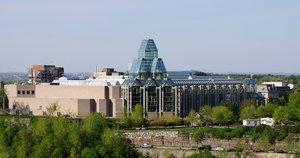
Galleria Nazionale del Canada, OttawaGalleria Nazionale del Canada Ottawa 1 Down with Bureaucracy
Sala Centrale del Manege, Saint PetersburgSala Centrale del Manege Saint Petersburg 1 The Stairs

Each decade's top Aleksandr Rodčenko painting

Works per decade

Select a decade to see its top painting.

Aleksandr Rodčenko paintings: FAQ

Which is Aleksandr Rodčenko's most famous work?Show answer

Composizione non obiettiva (1917) ranks first, followed by Ragazza con una Leica and A proposito di ciò (1923).

At what age was Composizione non obiettiva painted by Aleksandr Rodčenko?Show answer

Aleksandr Rodčenko was 26: Composizione non obiettiva is dated 1917, and Aleksandr Rodčenko was born in 1891.

What are the ten most famous Aleksandr Rodčenko paintings?Show answer

Composizione non obiettiva, Ragazza con una Leica, A proposito di ciò, Books, Painter Alexander Shevchenko, Untitled (Female Athletes), Untitled (Self portrait with poster for Battleship Potemkin), Parade of the Dynamo Sports Club, 1928, And this is standing for centuries and Battleship Potemkin. Year and museum for each are in the ranking above.

How many paintings by Aleksandr Rodčenko are listed?Show answer

89 works by Aleksandr Rodčenko are in our catalogue, dated 1917 to 1940.

Which museums hold Aleksandr Rodčenko's most famous originals?Show answer

Mainly in Museo delle Arti Figurative del Tatarstan (Kazan), Buffalo AKG Art Museum (Buffalo) and Galleria Nazionale del Canada (Ottawa). See the museum table above for the full list.

When were the top Aleksandr Rodčenko paintings made?Show answer

In 1920s: 51 of the 89 paintings ranked here date from that time, including A proposito di ciò.

What are the oldest and the most recent famous Aleksandr Rodčenko paintings?Show answer

Earliest on this page: Composizione non obiettiva (1917). Latest: Realistic abstraction (1940).

Which subjects appear most in Aleksandr Rodčenko's paintings?Show answer

Among the 89 paintings ranked here: Advertisments (12), Designs and sketches (11) and Covers (8).

Which medium is most common in Aleksandr Rodčenko's paintings?Show answer

Pittura, for 2 of the 89 paintings ranked here.

What movement do Aleksandr Rodčenko's paintings belong to?Show answer

Costruttivismo, based on the paintings ranked on this page.

Can I buy a Aleksandr Rodčenko painting as a reproduction?Show answer

Yes. Every painting on this page can be ordered as a hand-painted oil reproduction or a print. Open the painting, choose the size and place your order.

Aleksandr Rodčenko: the artist behind the paintings

Aleksandr Rodchenko: Un Pioniero del Modernismo Russo

Aleksandr Rodchenko, nato a San Pietroburgo il 5 dicembre 1891, è una figura centrale e rivoluzionaria nel panorama artistico russo del XX secolo. La sua vita e la sua opera sono intrinsecamente legate alla trasformazione sociale e politica della Russia post-rivoluzionaria, e rappresentano un esempio unico di come l'arte possa essere utilizzata come strumento di cambiamento e di costruzione di una nuova società. La sua carriera, iniziata con una formazione artistica tradizionale, si sviluppò rapidamente verso l’innovazione radicale, plasmando il corso del costruttivismo e della fotografia moderna.

Primi Anni e Formazione

Rodchenko trascorse la sua infanzia a Kazan’, dove la sua famiglia si trasferì dopo la morte del padre nel 1909. Inizialmente autodidatta, trovò ispirazione nelle riviste d’arte dell'epoca, nutrendo un interesse per le correnti artistiche emergenti. Nel 1910 iniziò gli studi presso la Scuola d’Arte di Kazan’, sotto la guida di Nikolai Fechin e Georgii Medvedev, dove conobbe Varvara Stepanova, che divenne sua moglie e collaboratrice artistica. Nel 1914 si trasferì a Mosca per proseguire i suoi studi presso l'Istituto Stroganov, un ambiente fertile per lo scambio di idee tra artisti e intellettuali. Fu proprio a Mosca che Rodchenko entrò in contatto con le avanguardie russe, in particolare il futurismo, un movimento che avrebbe profondamente influenzato la sua visione artistica.

Influenze e Sviluppo Artistico

L'incontro con i futuristi segnò una svolta decisiva nella carriera di Rodchenko. Il dinamismo, l’esaltazione della velocità e del progresso tecnologico tipici del futurismo lo spinsero a sperimentare nuove forme espressive, abbandonando gradualmente gli stili tradizionali. Rodchenko si dedicò inizialmente alla pittura, esplorando diversi approcci stilistici, ma ben presto trovò la sua voce unica, caratterizzata da una forte semplificazione delle forme e un’estrema essenzialità compositiva. La sua ricerca artistica fu costantemente guidata dalla volontà di trovare nuove modalità espressive adatte all'età moderna, un’epoca segnata da rapidi cambiamenti sociali e tecnologici.

Costruttivismo e Innovazione Fotografica

Rodchenko ebbe un ruolo fondamentale nella fondazione del Costruttivismo, un movimento artistico che rifiutava le preoccupazioni puramente estetiche in favore di una progettazione socialmente utile. Credeva che l’arte dovesse servire la rivoluzione e contribuire alla costruzione di una nuova società socialista. La sua visione si tradusse in un impegno attivo nella vita culturale del periodo, collaborando con intellettuali e artisti per promuovere i principi del costruttivismo. Parallelamente, Rodchenko rivoluzionò il mondo della fotografia, considerandola non solo come uno strumento di documentazione, ma come un potente mezzo di comunicazione sociale e artistica. Le sue fotografie erano caratterizzate da angolazioni dinamiche, composizioni audaci e una focalizzazione sulla vita quotidiana, spesso ritratta in modo crudo e realistico.

Opere Significative e Eredità

Rodchenko è noto per opere iconiche come “White Circle”, un esempio emblematico del suo stile astratto geometrico. Altre opere importanti includono "Red and Yellow" e "Composition". La sua sperimentazione con il fotomontaggio, iniziato nel 1923 in collaborazione con Vladimir Mayakovsky (in particolare nella poesia "About This"), gli valse un posto di rilievo nella storia dell'arte del XX secolo. Rodchenko progettò anche manifesti, copertine di libri e altri materiali grafici, contribuendo a definire l’estetica della propaganda sovietica. La sua eredità è immensa: la sua visione innovativa ha influenzato generazioni di artisti e designer, e le sue opere continuano ad essere studiate e ammirate per la loro forza espressiva e il loro significato storico-politico. Le sue opere sono conservate in importanti musei in Russia e all'estero, testimoniando l’importanza duratura del suo contributo al mondo dell’arte.

All 89 works by Aleksandr Rodčenko →