Garanzia soddisfatti o rimborsati · 100 giorni Spedizione gratuita in tutto il mondo
646.446opere d'arte 53.409artisti 5.406musei 32Lingue
Portrait of Eugène Fromentin

Shop the 69 Most Famous Eugène Fromentin Paintings

Updated Ottobre 2026 · ranked by our popularity score (searches, visits and orders for each work) · 69 works by Eugène Fromentin in our catalogue

Quick answer

Le donne degli Ouled Nayls (1867) is Eugène Fromentin's best-known painting; the original belongs to the Art Institute of Chicago, Chicago. Ricordo di Ezneh, Alto Egitto (1876) ranks second, Moorish Burial (1853) third. Our catalogue has 69 works by Eugène Fromentin; here are the 69 most famous, ranked, with the year and museum of each, to help you pick the one to order.

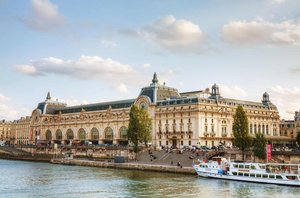
1820 – 1876, La Rochelle Orientalismo Most works: Musée d'Orsay

Eugène Fromentin: the 10 top-ranked paintings

1
Le donne degli Ouled Nayls (1867) by Eugène Fromentin

Le donne degli Ouled Nayls

1867 · Olio su tela · Art Institute of Chicago, Chicago

In questo olio su tela del 1867, ci ritroviamo immersi in un cortile algerino racchiuso, osservando un gruppo di donne Ouled Nayls durante un momento di riposo. La composizione sfrutta le pareti alte e scoscese dell'ambientazione per creare un senso di profondo isolamento, trascinando lo spettatore in uno spazio privato e ombroso. La luce entra nella scena con una qualità densa e direzionale, tipica del tardo pomeriggio o del crepuscolo.…

2
Ricordo di Ezneh, Alto Egitto (1876) by Eugène Fromentin

Ricordo di Ezneh, Alto Egitto

1876 · Olio su tela · Musée d'Orsay, Parigi

Quest'opera, intitolata Ricordo di Ezneh, Alto Egitto, fu dipinta da Eugène Fromentin nel 1876. Si tratta di un pezzo che cattura un momento specifico di osservazione, riflettendo il profondo coinvolgimento dell'artista con i paesaggi e le popolazioni della regione. La composizione si concentra su una scena tranquilla lungo la riva del fiume, resa con un senso di quiete che definisce gran parte della produzione di Fromentin di questo periodo.

Eugène Fromentin, ranks 11 to 69

11The country's thirst (1869) by Eugène FromentinThe country's thirst1869 · Musée d'Orsay 12The Arab Falconer (1864) by Eugène FromentinThe Arab Falconer1864 · Metropolitan Museum of Art 13Orientals (1872) by Eugène FromentinOrientals1872 · Minneapolis Institute of Art 14At the Well (1875) by Eugène FromentinAt the Well1875 · Walters Art Museum 15Arabs Watering Their Horses (1872) by Eugène FromentinArabs Watering Their Horses1872 16Arabs Crossing a Ford (1873) by Eugène FromentinArabs Crossing a Ford1873 · Metropolitan Museum of Art 17Cavalli Arabi (1850) by Eugène FromentinCavalli Arabi1850 · Art Institute of Chicago 18Una Fantasia, Algeria (1869) by Eugène FromentinUna Fantasia, Algeria1869 · Musée d'Orsay 19Arabian Encampment (1847) by Eugène FromentinArabian Encampment1847 · Yale University Art Gallery 20North African Landscape (1847) by Eugène FromentinNorth African Landscape1847 · Museum of Fine Arts 21Horsemen at the Foot of the Chiffa Cliffs (1850) by Eugène FromentinHorsemen at the Foot of the Chiffa Cliffs1850 · Museo delle Belle Arti di Gand (MSK) 22Farmyard with Cattle, Eugène Fromentin-Dupeux, 1849 (1849) by Eugène FromentinFarmyard with Cattle, Eugène Fromentin-Dupeux, 18491849 · Rijksmuseum 23Moroccan Combat Scene (1863) by Eugène FromentinMoroccan Combat Scene1863 · Cantor Arts Center at Stanford University 24Arabs Watering Their Horses (1870) by Eugène FromentinArabs Watering Their Horses1870 · Museo d’Arte 25Crossing the Ford, Algeria (1869) by Eugène FromentinCrossing the Ford, Algeria1869 · National Gallery of Ireland 26Lion hunting (1867) by Eugène FromentinLion hunting1867 · Museo delle Belle Arti di Gand (MSK) 27On the Nile, Near Philae (1871) by Eugène FromentinOn the Nile, Near Philae1871 · Art Institute of Chicago 28African scene (1871) by Eugène FromentinAfrican scene1871 29Arabs on the Way to the Pastures of the Tell (1866) by Eugène FromentinArabs on the Way to the Pastures of the Tell1866 · High Museum of Art 30The Arab Falconer (1864) by Eugène FromentinThe Arab Falconer1864 31An Encampment in the Atlas Mountains (1865) by Eugène FromentinAn Encampment in the Atlas Mountains1865 · Walters Art Museum 32Scene in the Desert (1868) by Eugène FromentinScene in the Desert1868 33Falcon Hunt ('Algeria Remembered') (1874) by Eugène FromentinFalcon Hunt ('Algeria Remembered')1874 · National Gallery of Ireland 34An Arabian Camp (1873) by Eugène FromentinAn Arabian Camp1873 · Minneapolis Institute of Art 35Arabs Crossing a Ford (1873) by Eugène FromentinArabs Crossing a Ford1873 36La Caravane (Scene of Nomads) (1875) by Eugène FromentinLa Caravane (Scene of Nomads)1875 37Head of an Old Woman by Eugène FromentinHead of an Old WomanLa Nuova Galleria d’Arte di Walsall 38scenery with trees by Eugène Fromentinscenery with trees 39Falkenjagd In Der Sahara by Eugène FromentinFalkenjagd In Der SaharaMusée Condé 40Arabs Fording A Mountain Stream by Eugène FromentinArabs Fording A Mountain Stream 41Night Robbers by Eugène FromentinNight Robbers 42Tents of the Smalah of Si-Hamed-Bel-Hadj - Sahara by Eugène FromentinTents of the Smalah of Si-Hamed-Bel-Hadj - Sahara 43Arabs Resting by Eugène FromentinArabs Resting 44Les bords du Nil by Eugène FromentinLes bords du NilNational Gallery 45Felucca au bord du nil by Eugène FromentinFelucca au bord du nil 46Arabs Hunting with a Falcon by Eugène FromentinArabs Hunting with a FalconMusee des Beaux-Arts 47Khan in Algiers by Eugène FromentinKhan in AlgiersMuseum of Fine Arts 48An Encampment in the Atlas Mountains by Eugène FromentinAn Encampment in the Atlas Mountains 49Une Rue A El-aghouat by Eugène FromentinUne Rue A El-aghouat 50The Bab-El-Gharbi Road by Eugène FromentinThe Bab-El-Gharbi Road 51Arab Horsemen by Eugène FromentinArab Horsemen 52Falcon Hunting In Algeria by Eugène FromentinFalcon Hunting In Algeria 53Departing For The Hunt by Eugène FromentinDeparting For The Hunt 54A Falcon Hunt in Algeria by Eugène FromentinA Falcon Hunt in Algeria 55Arab Horsemen Resting in the Forest by Eugène FromentinArab Horsemen Resting in the ForestMusée d'Orsay 56Rider Bunch In The Paying Sandstorm by Eugène FromentinRider Bunch In The Paying Sandstorm 57The Land of Thirst by Eugène FromentinThe Land of Thirst 58Muleteers stopped - algiers by Eugène FromentinMuleteers stopped - algiers 59Ville d-Algérie by Eugène FromentinVille d-Algérie 60Interior of the Workshop of an Arab Tailor by Eugène FromentinInterior of the Workshop of an Arab Tailor 61Departing For The Hunt - by Eugène FromentinDeparting For The Hunt - 62Abreuvoir à Laghouat, en Algerie by Eugène FromentinAbreuvoir à Laghouat, en Algerie 63Cavaliers au bord de l'eau by Eugène FromentinCavaliers au bord de l'eau 64Jeunes filles arabes by Eugène FromentinJeunes filles arabes 65Arab Camp by Eugène FromentinArab Camp 66The Land of Thirst (1869) by Eugène FromentinThe Land of Thirst1869 67Kabyle Shepherd (Shepherd: High Plateau of Kabylia) (1861) by Eugène FromentinKabyle Shepherd (Shepherd: High Plateau of Kabylia)1861 · Philadelphia Museum of Art 68Falconeria in Algeria: la preda (1863) by Eugène FromentinFalconeria in Algeria: la preda1863 · Musée d'Orsay 69Coup de vent dans les plaines d'Alfa (1864) by Eugène FromentinCoup de vent dans les plaines d'Alfa1864

Eugène Fromentin paintings by period

Eugène Fromentin paintings by subject

The four most frequent subjects in this ranking, with the top painting for each.

Museums holding Eugène Fromentin's originals

The 8 museums that hold the most of the paintings on this page.

Museum City Works by Eugène Fromentin Paintings from this list
Musée d'Orsay, ParigiMusée d'Orsay Parigi 5 Ricordo di Ezneh, Alto Egitto, The country's thirst, Una Fantasia, Algeria
Art Institute of Chicago, ChicagoArt Institute of Chicago Chicago 3 Le donne degli Ouled Nayls, Cavalli Arabi, On the Nile, Near Philae
Museum of Fine Arts, BostonMuseum of Fine Arts Boston 3 Standard Bearer, North African Landscape, Khan in Algiers
National Gallery of Ireland, DublinoNational Gallery of Ireland Dublino 3 L'Incendie, Crossing the Ford, Algeria, Falcon Hunt ('Algeria Remembered')
Metropolitan Museum of Art, New YorkMetropolitan Museum of Art New York 2 The Arab Falconer, Arabs Crossing a Ford
Minneapolis Institute of Art, MinneapolisMinneapolis Institute of Art Minneapolis 2 Orientals, An Arabian Camp
Walters Art Museum, BaltimoraWalters Art Museum Baltimora 2 At the Well, An Encampment in the Atlas Mountains
Museo delle Belle Arti di Gand (MSK), GandMuseo delle Belle Arti di Gand (MSK) Gand 2 Horsemen at the Foot of the Chiffa Cliffs, Lion hunting

Top Eugène Fromentin painting by decade

Works per decade

Select a decade to see its top painting.

What to know about Eugène Fromentin paintings

Which famous Eugène Fromentin painting tops the ranking?Show answer

Le donne degli Ouled Nayls (1867), Art Institute of Chicago, Chicago, ranks first, followed by Ricordo di Ezneh, Alto Egitto (1876) and Moorish Burial (1853).

How old was Eugène Fromentin in the year of Le donne degli Ouled Nayls?Show answer

Eugène Fromentin was 47: Le donne degli Ouled Nayls is dated 1867, and Eugène Fromentin was born in 1820.

Which Eugène Fromentin paintings make the top 10?Show answer

Le donne degli Ouled Nayls, Ricordo di Ezneh, Alto Egitto, Moorish Burial, Falconry in Algeria, Standard Bearer, The Arab Chief, Stop of Arab Riders in the Plain, Centaurs, L'Incendie and Before the Race: Fantasia or The Halt in the Desert. Year and museum for each are in the ranking above.

How many Eugène Fromentin works does your catalogue list?Show answer

69 works by Eugène Fromentin are in our catalogue, dated 1847 to 1876.

Where can the originals of Eugène Fromentin's famous paintings be seen?Show answer

Mainly in Musée d'Orsay (Parigi), Art Institute of Chicago (Chicago) and Museum of Fine Arts (Boston). See the museum table above for the full list.

In which years did Eugène Fromentin paint the top-ranked works?Show answer

In 1860s: 21 of the 69 paintings ranked here date from that time, including Le donne degli Ouled Nayls.

Which famous Eugène Fromentin paintings are the earliest and the latest?Show answer

Earliest on this page: Arabian Encampment (1847). Latest: Ricordo di Ezneh, Alto Egitto (1876).

What are Eugène Fromentin's most frequent subjects?Show answer

Among the 69 paintings ranked here: Landscape (5), Cielo (4) and Hunting (4).

Which medium did Eugène Fromentin use most often?Show answer

Olio su tela, for 5 of the 69 paintings ranked here.

Which art movement is Eugène Fromentin part of?Show answer

Orientalismo and Romanticism, based on the paintings ranked on this page.

Which Eugène Fromentin paintings are held by the Musée d'Orsay?Show answer

The Musée d'Orsay, Parigi holds 5 of the paintings ranked here, including Ricordo di Ezneh, Alto Egitto, The country's thirst and Una Fantasia, Algeria.

Do you sell reproductions of Eugène Fromentin paintings?Show answer

Yes. Every painting on this page can be ordered as a hand-painted oil reproduction or a print. Open the painting, choose the size and place your order.

Eugène Fromentin: life and career

Il Visionario del Sahara: La Vita e l'Eredità di Eugène Fromentin

Eugène Fromentin si staglia come una figura cardine nella pittura orientalista francese, eppure la sua eredità si estende ben oltre la semplice rappresentazione visiva. Nato a La Rochelle, in Francia, nel 1820, intraprese un viaggio artistico segnato dal primo contatto con la pittura di paesaggio sotto la guida di Louis Cabat. Questa formazione fondamentale lo spinse verso un profondo coinvolgimento con la vibrante cultura dell'Algeria, una fascinazione che avrebbe definito sia la sua opera che i suoi interessi intellettuali. Più che limitarsi a catturare viste pittoresche, Fromentin cercò di distillare l'essenza della vita algerina, fondendo un'osservazione meticolosa con pennellate espressive per creare immagini impregnate di un'atmosfera palpabile e vibrante.

La svolta artistica di Fromentin arrivò nel 1847 con “Les gorges de la Chiffa”, una tela monumentale che ottenne immediatamente il plauso al Salon di Parigi, affermandolo come uno dei più importanti interpreti della drammatica topografia dell'Algeria. Il suo legame con l'Africa settentrionale non era meramente accademico; attraverso viaggi come la missione del 1852 in compagnia di una spedizione archeologica, egli acquisì una conoscenza intima della terra. Questa esperienza diretta gli permise di catturare la bellezza selvaggia del deserto del Sahara con straordinaria accuratezza, documentandone la flora, la fauna e le sfumature delle abitudini della sua gente. La sua opera funge spesso da finestra su un mondo di luce e ombra, dove il calore del deserto e la resilienza della vita umana sono resi con un realismo sorprendente.

Maestria della Luce e Realismo Orientalista

La brillantezza della tecnica di Fromentin risiede nella sua capacità di fondere elementi dell'Orientalismo e del Romanticismo. I suoi dipinti, come “L'arciere arabo” e <น้อย Gli arabi attraversano un guado, esemplificano uno stile distintivo caratterizzato da palette cromatiche luminose e composizioni dinamiche. Profondamente influenzato dal fervore romantico di Eugène Delacroix, Fromentin utilizzò la luce per creare profondità e tridimensionalità, rendendo i paesaggi aridi quasi tattili. Il suo uso di colori vibranti non fu mai puramente decorativo; serviva ad accentuare il dramma e la tensione intrinseci nelle scene di sopravvivenza e di vita quotidiana.

Una delle sue opere più toccanti, “La terra della sete”, dipinta nel 1869, mostra la sua maestria narrativa attraverso il paesaggio. In questo pezzo, l'artista ritrae una scena drammatica di persone che lottano per sopravvivere in un ambiente desertico ostile. Attraverso dettagli intricati e un potente senso dell'atmosfera, egli cattura l'essenza della resilienza umana di fronte all'avversità. Questa capacità di infondere descrizioni realistiche con un profondo peso emotivo è ciò che distingue Fromentin da molti dei suoi contemporanei, i quali si concentravano esclusivamente sull'esotismo dell'Oriente.

Il Pittore-Studioso: Critica d'Arte ed Eminenza Letteraria

Tuttiamone, il contributo di Fromentin alla storia dell'arte trascende la pura estetica visiva. Egli emerse come un critico d'arte e scrittore pionieristico, possedendo una prospettiva unica che combinava l'occhio del praticante con l'anima del filosofo. La sua opera fondamentale, “Les maîtres d’autrefois” (I maestri di un tempo), pubblicata nel 1876, rimane un testo influente della letteratura d'arte. In questo ambizioso progetto, egli fornì un'analisi completa della pittura fiamminga e dei maestri barocchi del Nord, incluse leggende come Rubens e Rembrandt.

Ciò che rese la sua critica così rivoluzionaria fu il suo approccio personale; non si limitava a offrire un'esposizione accademica, ma condivideva riflessioni profondamente personali sul raggiungimento artistico. Egli osservava i Grandi Maestri attraverso la lente di un artista, considerando le loro emozioni e i contesti sociali, politici ed economici in cui avevano creato i loro capolavori. Le sue intuizioni furono così profonde che persino il rinomato critico Bernhard Berenson parlò della necessità di leggere Fromentin per comprendere veramente le opere che egli criticava. Attraverso la sua doppia identità di pittore e uomo di lettere, Eugène Fromentin lasciò un segno indelebile nel panorama intellettuale del XIX secolo, colmando il divario tra il mondo visibile del deserto e la profonda storia dell'arte europea.

All 69 works by Eugène Fromentin →