1914. Acrylic On Canvas.

§ 1Catalogue data


§ 2Abstract
컬렉션 상세 정보
 상세 보기
상세 보기
작가 소개
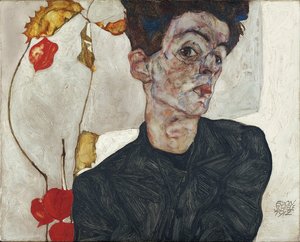
에곤 실레는 표현주의 화가로 독특한 기법과 심리적 깊이를 통해 인간 내면의 불안과 고통을 드러냈습니다. 클림트의 영향 아래 그의 작품은 예술계에 혁명적인 변화를 가져왔으며, 오늘날까지도 관객들에게 깊은 감동을 선사합니다.
§ 3Commentary
A Portrait of Vulnerability: Examining Egon Schiele’s “Woman Undressing”
Egon Schiele's "Woman Undressing," completed in 1914, stands as a haunting testament to the anxieties and emotional turbulence characteristic of Expressionism. More than just a depiction of nudity—though undeniably striking—the painting delves into profound psychological complexities, capturing a moment of intense introspection and confronting themes of mortality with unflinching honesty. This artwork isn’t merely observed; it's felt.- Subject Matter: The central figure is presented in a Rückenblick (back view) pose, a technique Schiele favored to convey inner turmoil and vulnerability. Her body is partially exposed, revealing her undergarments as she undertakes the act of undressing—a gesture laden with symbolic significance.
- Style & Technique: Schiele’s Expressionist style prioritizes emotional intensity over realistic representation. Bold lines dominate the composition, creating a sense of dynamism and urgency. The artist employs a meticulous hatching technique to sculpt the contours of the woman's body, emphasizing texture and conveying a palpable physicality.
Historical Context: Vienna at the Precipice
Vienna in 1914 was a city grappling with societal shifts—the burgeoning Austro-Hungarian Empire faced challenges from nationalist sentiments, and intellectual currents debated the role of art in confronting existential questions. Schiele’s work reflects this atmosphere of unease, mirroring the anxieties prevalent during a period leading up to World War I. The Rückenblick pose itself has roots in Symbolist traditions, where artists sought to express inner states through visual cues rather than literal depiction. Symbolism & Emotion: The act of undressing symbolizes not only physical vulnerability but also psychological exposure—a stripping away of defenses and confronting the raw essence of being. Schiele’s masterful use of hatching creates a sense of claustrophobia, mirroring the internal struggle depicted within the painting. The woman's gaze is averted downwards, suggesting introspection and perhaps resignation in the face of inevitable change.- Color Palette: The muted color palette—primarily browns and ochres—contributes to the painting’s somber mood, reinforcing its thematic concerns about decay and fragility.
- Composition: Schiele's deliberate cropping emphasizes the woman’s torso, focusing attention on her physicality and emotional state. This compositional choice underscores the artist’s intention to convey psychological depth rather than mere visual beauty.
Legacy & Inspiration
“Woman Undressing” continues to resonate with audiences today due to its unflinching portrayal of human emotion and its masterful execution of Expressionist principles. It serves as a powerful reminder that art can transcend mere representation, capturing the complexities of the human psyche and confronting universal themes of vulnerability and mortality. Reproductions offer an opportunity to experience Schiele’s vision firsthand, bringing this evocative artwork into contemporary spaces and fostering contemplation on its enduring significance.질의응답
"Woman Undressing" 작품은 명암 대비가 강한 편인가요?
에곤 실레의 "Woman Undressing"은(는) 밝은 부분과 어두운 부분 사이의 Balanced 대비를 보여줍니다.
에곤 실레의 "Woman Undressing"은 어떤 소재와 분위기를 결합하고 있나요?
에곤 실레의 "Woman Undressing"은(는) female nude, sketch, anatomy, emotion, vulnerability, sexuality, austrian art, expressionism와(과) Dramatic 분위기가 어우러진 작품입니다.
에곤 실레의 "Woman Undressing"의 프린트 제품은 어디에서 구매할 수 있나요?
에곤 실레의 "Woman Undressing"의 프린트를 구매하시려면, 해당 작품의 파인 아트 프린트 페이지에서 간단히 주문하실 수 있습니다: 코튼 캔버스 또는 아카이브용 캔버스지에 인쇄된 파인 아트 프린트.


 프린트 판매로 전환


 가로 또는 세로 중 어느 한 면이라도 105cm(약 41인치)를 초과하는 작품이나 복제화의 경우, 프레임은 분해된 키트 형태로 배송됩니다. 이는 안전한 배송을 보장하고 운송 중 발생할 수 있는 손상을 방지하기 위함입니다.