


 실제 크기로 보기
 보내기
보내기 공유하기
공유하기
 상세 보기
상세 보기 가이드 보기

 이미지 다운로드
 유사 작품 더 보기
 X-레이
X-레이 슬라이드 쇼 보기
 통계 정보
통계 정보Second Version of Triptych 1944


 상세 보기
상세 보기
이 페이지에 표시된 작품은 저작권법의 보호를 받으며, 이에 따라 동일한 복제품을 제작하거나 판매하는 것은 법으로 금지되어 있습니다. 이러한 권리 보호는 다음과 같은 국제 협약에 따라 시행됩니다. 베른 협약 또한 다음에서 명시하는 법률을 포함한 국내법에 의해 보호됩니다. 미국 저작권법 제17조.
이 방식은 저작권 보호를 받는 예술 작품을 복제하거나 그대로 재현하는 것이 아니기에 저작권 규정을 완벽히 준수합니다. 대신, 이는 창의적인 재해석의 과정을 거칩니다. 즉, 원작에서 영감을 받되 원작과 동일하지 않은 새로운 회화 작품을 의미합니다.
지클레 / 아트 프린트
빠른 제작과 다양한 마감 옵션을 선택할 수 있는 박물관 수준의 지클레이 및 캔버스 프린트. ( 수작업 채색 복제본 주문하기 디지털 이미지 판매 채널로 전환)




P118B ₩10

P118H ₩10

P118W ₩10

P438Z ₩10

P508JH ₩12

P508YH ₩12

P805H ₩10

P805Z ₩10

P919BZ ₩10

P919G ₩10

P919XJ ₩10

P959ZH ₩10

P968JZ ₩12

W106C ₩8

W218G ₩10

W218JH ₩8

W218Y ₩10

W307PJ ₩10

W316G ₩10

W316PJ ₩8

W316Y ₩10

W398PJ ₩8

W4111J ₩10

W500HY ₩15

W500JH ₩15

W692G ₩12

W849H ₩8

W940BG ₩15

W953PJ ₩8




작품의 원본 비율을 그대로 유지하는 프리셋 사이즈 중에서 선택해 보세요.

액자나 벽면 크기에 맞춰 필요한 가로와 세로 길이를 입력해 주세요. 프린트는 원본 이미지보다 크게 제작할 수 없으며 오직 자르는 것만 가능하므로, 비율이 다른 사이즈를 선택할 경우 이미지의 일부가 잘려 나갈 수 있습니다. 인쇄 작업에 들어가기 전, 최종 확인을 위해 디지털 목업을 보내드립니다. 이 페이지에 표시된 이미지는 실제 잘리는 영역을 나타내지 않으며, 오직 목업을 통해서만 정확한 확인이 가능합니다.


 유리 옵션은 110cm 미만 크기에서만 선택 가능합니다.

Second Version of Triptych 1944
지클레 / 아트 프린트
복제본 규격
-


총 결제 금액
₩ 86880
Second Version of Triptych 1944: A Descent Into Visceral Horror
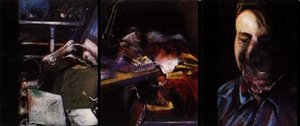
Francis Bacon’s *Second Version of Triptych 1944*, completed in 1988, stands as a monumental testament to the artist's unwavering commitment to confronting the darkest recesses of human experience. It is not merely a repetition of his seminal 1944 masterpiece, *Three Studies for Figures at the Base of a Crucifixion*; rather, it’s an amplification—a deliberate deepening of the unsettling psychological landscape established by its predecessor. Executed in acrylic on canvas, this expansive piece embodies Bacon's signature style: grotesque, fragmented figures rendered against a stark crimson backdrop that pulsates with latent menace.- Historical Context
- Stylistic Innovations
- Symbolism and Imagery
- Technique: The Alchemy of Texture
- Emotional Resonance
Historical Context: Echoes of Trauma and Artistic Legacy
Bacon’s artistic journey began amidst the turbulent aftermath of World War II, a period marked by profound disillusionment and existential questioning. Influenced heavily by Picasso's biomorphs—distorted representations of human forms—and deeply affected by Nietzsche’s philosophy of eternal recurrence, Bacon wrestled with themes of suffering, mortality, and the inescapable brutality inherent in existence. *Three Studies for Figures at the Base of a Crucifixion*, created just two years prior, served as a crucible for these anxieties, distilling them into three powerfully unsettling images—a man seated on a bench, a figure standing before a red wall, and a man holding an umbrella beside a chair. The triptych’s genesis in Aeschylus's *Oresteia*, specifically the Furies—demons embodying retribution and vengeance—underscores Bacon’s preoccupation with primal forces and moral dilemmas. The 1988 reworking wasn’t simply a casual revisiting of this iconic work; it was a conscious effort to grapple with the legacy of its initial impact, acknowledging both its aesthetic brilliance and its unsettling psychological depth.Stylistic Innovations: Expanding Upon Formality
While retaining the core compositional elements of *Three Studies*, Bacon dramatically increased the scale of his second version—reaching 78 × 58 inches—a decision that profoundly altered the artwork’s expressive potential. The crimson hue replacing the burnt orange background intensifies the sense of dread and claustrophobia, mirroring the psychological tension inherent in the original. Critics noted a subtle shift away from the stark simplicity of the earlier piece; Bacon deliberately layered textures and employed techniques designed to heighten visual impact. This deliberate expansion wasn’t merely about grandeur—it was about allowing for a more immersive experience of the artwork's unsettling imagery. As John Russell observed, “there was painting in England before the Three Studies, and painting after them, and no one ... can confuse the two.”Symbolism and Imagery: Confronting The Primordial
The figures themselves—rendered in acrylic on canvas—remain strikingly similar to those depicted in *Three Studies*, embodying Bacon’s fascination with distorted human forms. These semi-anthropomorphic creatures are positioned against a backdrop that evokes the desolate landscapes of myth and legend, mirroring the influence of Nietzsche's philosophy. The deliberate fragmentation of the figures—their limbs contorted into grotesque postures—serves as a visual metaphor for psychological disintegration and the inescapable confrontation with mortality. Bacon’s use of geometric structures—the three radiating lines from the central figure—further reinforces this thematic preoccupation, channeling the energy of ancient Greek tragedy and highlighting the inescapable cycle of violence and retribution.Technique: The Alchemy of Texture
Bacon's meticulous approach to painting involved layering acrylic paint onto canvas with painstaking precision. He achieved remarkable textural effects through a combination of brushstrokes and glazing techniques—a deliberate departure from more polished styles prevalent at the time. The resulting surface is characterized by palpable roughness, conveying an immediacy and visceral energy that transcends mere visual representation. This technique wasn’t simply about achieving aesthetic beauty; it was about capturing the essence of psychological torment—the feeling of being trapped within a suffocating space where primal forces threaten to overwhelm reason.Emotional Resonance: An Unflinching Portrait of Darkness
Ultimately, *Second Version of Triptych 1944* succeeds in conveying Bacon’s profound pessimism and his unwavering commitment to confronting the darkest aspects of human consciousness. Like its predecessor, it refuses to offer easy answers or comforting illusions—instead presenting a starkly honest depiction of suffering, fear, and the inescapable confrontation with death. It stands as a powerful reminder that art can serve as a catalyst for introspection and a conduit for grappling with existential anxieties—a legacy cemented by Bacon’s enduring influence on subsequent generations of artists.질의응답
증강 현실(AR)을 사용하여 제 방에 프랜시스 베이컨의 "Second Version of Triptych 1944"를 배치해 볼 수 있나요?
"Second Version of Triptych 1944"은(는) 증강 현실 미리보기를 제공합니다. 작품의 AR 미리보기 페이지를 통해 호환 가능한 기기에서 여러분의 공간에 배치된 작품을 확인해 보세요.
프랜시스 베이컨의 "Second Version of Triptych 1944"의 주요 색상은 무엇인가요?
프랜시스 베이컨의 "Second Version of Triptych 1944"의 주요 색상은 Walnut (#6c180a)입니다.
"Second Version of Triptych 1944"은(는) 프랜시스 베이컨의 예술 활동기 중 어느 시기에 해당하나요?
"Second Version of Triptych 1944"은(는) 프랜시스 베이컨의 Late Period를 잘 보여주는 작품입니다.
관련 작품들




작가 소개
프랜시스 베이컨: 고통과 존재의 심연을 탐구한 화가
프랜시스 베이컨은 20세기 미술에 깊은 상흔을 남긴 아일랜드 출신의 영국 화가로, 인간 존재의 가장 원초적인 감정과 불안을 날카롭게 드러낸 작품들로 유명합니다. 1909년 더블린에서 태어난 그는 어린 시절부터 불우하고 불안정한 환경 속에서 성장했습니다. 아버지와의 복잡한 관계, 엄격한 가정 분위기, 그리고 끊임없는 이주는 그의 내면에 깊은 상처를 남겼고, 이는 이후 작품 전반에 걸쳐 드러나는 고독과 절망감의 근원이 되었습니다. 베이컨은 정규 미술 교육을 받지 않았지만, 타고난 예술적 감각과 끊임없는 탐구를 통해 자신만의 독특한 화풍을 구축했습니다. 초기에는 경박하고 방탕한 생활을 즐겼으나, 20대 후반에 이르러 우연히 접한 세르게이 에이젠슈타인의 영화 <전함 포템킨> 속 비명 지르는 여성의 클로즈업 장면은 그의 예술적 전환점을 마련했습니다. 이 이미지에서 영감을 받아 그는 인간 존재의 근원적인 고통과 공포를 표현하는 데 몰두하기 시작했습니다.영향과 스타일: 파괴와 재창조
베이컨의 작품 세계는 다양한 예술가들과 사상가들에게 영향을 받았습니다. 파블로 피카소의 변형된 인물 묘사는 그의 초기 작품에 큰 영향을 미쳤으며, 에곤 실레의 표현주의적 왜곡은 인간의 고통과 불안을 시각적으로 드러내는 데 중요한 영감을 제공했습니다. 또한, 디에고 벨라스케스의 <인노센트 10세 교황 초상>은 베이컨에게 끊임없는 모티브가 되어, 그는 이 작품을 재해석하며 권위와 위엄 대신 고독과 절망을 강조하는 독특한 이미지를 창조했습니다. 그의 스타일은 전통적인 표현 방식을 거부하고 파괴적인 붓질과 왜곡된 형태를 통해 인간 존재의 불안정성과 취약성을 극명하게 드러냅니다. 배경을 단순화하거나 제거하고 인물을 고립시키는 방식은 그들의 내적 갈등과 고독감을 더욱 부각시킵니다. 베이컨은 색채 또한 효과적으로 활용하여 작품에 강렬한 감정적 분위기를 부여했습니다. 칙칙하고 어두운 색조는 절망감과 불안을, 때로는 강렬한 대비를 이루는 색상은 격렬한 감정을 표현하는 데 사용되었습니다.주요 작품과 주제: 고통의 형상화
베이컨은 주로 삼중 연작(Triptych) 형식으로 작품을 제작하여 인간 존재의 복잡성과 다층성을 효과적으로 드러냈습니다. 그의 대표작인 <십자가에 못 박힌 예수의 세 연구>(Three Studies for Figures at the Base of a Crucifixion, 1944)는 전쟁의 상흔과 인간의 고통을 강렬하게 표현한 작품으로 평가받습니다. 이 작품에서 베이컨은 종교적인 의미를 넘어선 근원적인 공포와 절망감을 형상화했습니다. 또한, <교황 인노센트 10세> 연작은 벨라스케스의 원작을 재해석하여 권위 있는 교황의 모습을 비명 지르는 악몽으로 변모시켰습니다. 이는 인간 존재의 허무함과 고독을 상징하는 그의 대표적인 주제를 잘 보여줍니다. 그는 자신의 연인 조지 다이어의 죽음 이후 더욱 어두운 분위기의 작품들을 제작했는데, 특히 <블랙 트리프틱> 연작은 슬픔과 상실감에 잠긴 베이컨의 내면세계를 반영합니다.예술사적 의의와 유산: 현대 미술의 지평을 넓히다
프랜시스 베이컨은 20세기 현대 미술의 흐름을 선도하며, 표현주의를 넘어선 독창적인 예술 세계를 구축했습니다. 그의 작품은 인간 존재의 어두운 측면과 고통을 가감 없이 드러내며 관객에게 깊은 충격을 안겨줍니다. 그는 전통적인 회화 기법을 파괴하고 새로운 표현 방식을 모색하며 현대 미술의 지평을 넓혔습니다. 베이컨의 영향은 데미안 허스트, 제니 새빌 등 후대 예술가들에게까지 이어져 왔으며, 그의 작품은 현재 전 세계 주요 미술관에 소장되어 있으며 높은 가격에 거래되고 있습니다. 그는 단순한 화가를 넘어 현대 사회의 불안과 고독을 상징하는 아이콘으로 자리 잡았습니다. 베이컨의 그림들은 우리에게 인간 존재의 취약성과 고통을 직시하게 하며, 동시에 예술의 힘을 통해 이러한 감정을 극복하고 이해할 수 있다는 희망을 제시합니다.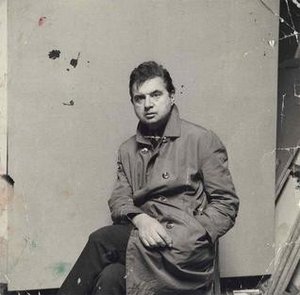
프랜시스 베이컨
1909 - 1992 , 아일랜드
작가 정보 요약
- 국적: 아일랜드-영국
- 사망일: 1992년 4월 28일
- 영향을 받은 예술 사조: ['전후 표현주의']
- 영향을 준 예술가:
- 파블로 피카소
- 에곤 실레
- 예술 사조: 표현주의
- 전체 이름: 프랜시스 베이컨
- 주요 작품:
- 세 가지 연구: 십자가 아래 인물
- 교황 시리즈
- 조지 다이어 초상화
- 출생일: 1909년 10월 28일
- 출생지: 더블린, 아일랜드
관련 기사

The Enduring Legacy of Printmaking: Techniques, Themes & Artistic Innovation Across Centuries
Explore the rich history of printmaking with AllPaintingsStore. Discover techniques from intaglio to lithography, learn about collecting valuable prints & find museum-quality reproductions. Expert insights for art enthusiasts and collectors.
프랜시스 베이컨의 걸작 25선: 강렬한 감정과 시대를 초월하는 예술 (Francis Bacon's 25 Masterpieces: Intense Emotion & Timeless Art)
프랜시스 베이컨의 강렬하고 파격적인 세계로. 현대 미술 거장의 대표작 25선을 만나보세요. 절망, 고독, 인간 존재에 대한 깊은 성찰을 담은 작품들을 감상하고, AllPaintingsStore.com에서 최고 품질의 그림 복제본과 인테리어 아이디어를 찾아보세요.

The Enduring Legacy of Fine Art Prints: Technique, History & Aesthetic Impact
Explore the rich history & techniques of fine art prints. Discover investment potential, assess authenticity, and learn how to preserve your collection with expert guidance. Trusted insights for discerning collectors.

Echoes of Time: Exploring the Enduring Appeal & Historical Context of Vintage Art Prints
Explore the captivating world of vintage art prints! Discover their history, collecting tips & enduring appeal. Expert insights on chromolithography and building a legacy collection with AllPaintingsStore.

Giclée Prints: Archival Quality & Aesthetic Nuances for the Discerning Collector
Explore the world of giclée prints with AllPaintingsStore. Learn about archival quality, aesthetic nuances & investment potential. Expert guidance for discerning art collectors seeking museum-quality reproductions and lasting value.


