


 미리보기
미리보기
 공유하기
공유하기 공유하기
공유하기
 상세 정보
상세 정보

 다운로드
다운로드
 유사 작품
유사 작품 X-레이
X-레이 슬라이드 쇼
Whippoorwill
 Acrylic On Canvas
- WallArt
- New York School
 1974
1974 47.0 x 62.0 cm
 메트로폴리탄 미술관
 더 보기
더 보기
지클레 / 아트 프린트
빠른 제작과 다양한 마감 옵션을 제공하는 박물관 품질의 지클레이 또는 캔버스 프린트. ( 손으로 그린 그림 구매 이미지 구매)




P118B $10

P118H $10

P118W $10

P438Z $10

P508JH $12

P508YH $12

P805H $10

P805Z $10

P919BZ $10

P919G $10

P919XJ $10

P959ZH $10

P968JZ $12

W106C $8

W218G $10

W218JH $8

W218Y $10

W307PJ $10

W316G $10

W316PJ $8

W316Y $10

W398PJ $8

W4111J $10

W500HY $15

W500JH $15

W692G $12

W849H $8

W940BG $15

W953PJ $8




작품의 원본 비율을 유지하는 미리 설정된 크기 중에서 선택하세요.

특정 프레임이나 공간에 맞춰 직접 치수를 입력하실 수 있습니다. 선택하신 사이즈가 원본 이미지의 비율과 일치하지 않을 경우, 작품을 크롭(자르기)하거나 이미지를 대칭 또는 단색 채우기로 확장하여 제작합니다. 제작 시작 전, 최종 확인을 위해 디지털 목업이 전송됩니다.
화면상의 미리보기는 실제 크롭이나 확장 상태를 반영하지 않으므로, 최종 구도는 오직 목업을 통해서만 정확하게 확인하실 수 있습니다.
맞춤 사이즈 제작도 가능하지만, 원본 비율을 유지하기 위해서는 사전 정의된 목록에서 치수를 선택하시는 것을 권장합니다.


 유리 옵션은 110cm 미만 크기에서만 선택 가능합니다.

Whippoorwill
지클레 / 아트 프린트
복제본 크기
-


최종 결제 금액
$ 64
작품 상세 설명
A Moment of Quietude: Joe Brainard’s “Whippoorwill”
Joe Brainard's "Whippoorwill," painted in 1974, isn’t merely a depiction of a dog resting on a couch; it’s a carefully constructed tableau of domestic tranquility imbued with the artist’s signature blend of lyrical observation and understated emotion. This work, rendered in oil on canvas and measuring 47 x 62 cm, exemplifies Brainard's unique approach to capturing the essence of everyday life—transforming the familiar into something quietly profound. The painting immediately draws the viewer in with its soft focus, a deliberate technique that creates an atmosphere of gentle intimacy, as if we’ve stumbled upon a private, cherished moment.
The central figure, a pristine white dog, is presented in a state of blissful repose. Its head nestled comfortably against the armrest of the vibrant green couch, its body stretched languidly across the upholstery, it embodies a sense of complete contentment. The couch itself—a classic design with rolled arms and a tufted back cushion—adds to the scene’s elegance while simultaneously grounding it in a recognizable domestic setting. The color palette – primarily greens, blues, and yellows – contributes significantly to the painting's calming effect; these hues evoke feelings of serenity, nature, and warmth, creating a harmonious visual experience.
Exploring Brainard’s Poetic Realism
Brainard was a pivotal figure in the New York School of art, known for his ability to distill complex emotions and experiences into deceptively simple forms. “Whippoorwill” is a prime example of this approach. He wasn't interested in grand narratives or dramatic displays; instead, he sought to capture fleeting moments of beauty and quiet contemplation—the subtle gestures, the unspoken connections that define human relationships. His style can be described as ‘poetic realism’ – an ability to render familiar subjects with a heightened sense of awareness and emotional resonance.
The use of soft focus in the background is particularly noteworthy. It subtly directs the viewer's attention towards the dog and the couch, emphasizing their importance within the composition while simultaneously creating a dreamlike quality. This technique mirrors Brainard’s broader interest in exploring perception and how we construct meaning from our experiences. It suggests that the painting isn’t simply a representation of reality but an invitation to contemplate its deeper significance.
Contextualizing “Whippoorwill” within Brainard's Oeuvre
Created in 1974, "Whippoorwill" reflects a period of significant artistic experimentation and exploration within the New York School. Brainard’s work often incorporated elements of Pop Art—particularly its engagement with popular imagery—but he always filtered these influences through his own unique sensibility. He was less concerned with replicating reality than with capturing its essence, using collage, drawing, and painting to create layered narratives that explored themes of memory, identity, and the everyday.
Considering Brainard’s broader body of work, including his iconic memoir “I Remember,” "Whippoorwill" can be seen as a continuation of this exploration of personal experience. Like “I Remember,” it invites the viewer to engage with a series of seemingly insignificant details—a dog resting on a couch—and to find within them a deeper sense of meaning and connection. The painting’s quiet intimacy and understated beauty resonate deeply, offering a moment of respite from the complexities of modern life.
A Timeless Reflection on Domesticity
"Whippoorwill" is more than just a pretty picture; it's a meditation on comfort, companionship, and the simple pleasures of domestic life. Brainard’s masterful use of color, light, and composition creates an atmosphere of profound tranquility—a reminder to appreciate the beauty that can be found in the most ordinary moments. This painting would make a stunning addition to any collection, offering both aesthetic pleasure and a poignant reflection on the human condition. AllPaintingsStore offers meticulously crafted hand-painted reproductions that faithfully capture the essence of this remarkable work by Joe Brainard.
유사한 작품들


작가 약력
A Life Painted in Light and Lyrical Detail
Joe Brainard, born in Salem, Arkansas, in 1942, emerged as a singular voice within the vibrant tapestry of the New York School, an artist whose work defied easy categorization. His story isn’t simply one of artistic development, but a testament to the power of embracing everyday life with unwavering curiosity and affection. Growing up in Tulsa, Oklahoma, Brainard's innate talent blossomed early, marked by consistent success in art contests and nurtured within a family that valued creative expression—his father a painter himself, and siblings who also pursued artistic paths. This familial encouragement laid the foundation for a lifelong dedication to visual exploration. Even as a high school student, he demonstrated an unusual prescience, serving as art editor of *The White Dove Review*, a literary journal alongside future luminaries like Ron Padgett, Dick Gallup, and Ted Berrigan. This early foray into collaborative creativity foreshadowed his later integration of poetry and visual art, forging connections that would define his artistic identity.New York’s Embrace: A Circle of Innovation
The move to New York City in 1960 proved pivotal. Reconnecting with Padgett and Berrigan, Brainard plunged into a dynamic milieu of artists and poets—a constellation of influential figures including Frank O'Hara, Kenneth Koch, Alex Katz, Edwin Denby, Larry Rivers, Fairfield Porter, James Schuyler, Jane Freilicher, Virgil Thomson, and John Ashbery. This wasn’t merely proximity to greatness; it was an immersive experience that fueled his artistic evolution. His first solo exhibition in 1964 signaled the arrival of a unique talent, one already demonstrating influences of Jasper Johns and Andy Warhol, yet quickly forging its own distinct path. Brainard's work possessed a lyrical quality absent from much of Pop Art’s ironic detachment; he imbued ordinary subjects with tenderness and humor, transforming them into revelatory moments. This period also marked the beginning of a significant personal relationship with Kenward Elmslie, a partnership that provided both emotional support and artistic inspiration throughout much of his life.A Kaleidoscope of Mediums and Influences
Brainard’s artistic practice was remarkably diverse, encompassing assemblages, collages, drawings, and paintings. He wasn't confined by the limitations of a single medium; instead, he embraced experimentation, allowing each form to best serve his vision. While acknowledging an admiration for Warhol, Brainard consciously diverged from strict Pop Art conventions, prioritizing affection and amusement over ironic distance. His art was populated with fragments of everyday life—comic strips, cigarette packaging, popular culture imagery—repurposed and recontextualized with a poetic sensibility. This wasn’t mere appropriation; it was an act of transformation, elevating the mundane to the extraordinary. He distilled complex emotions and observations into clear, immediate forms, creating works that resonated with both intimacy and universal appeal. His approach was deeply intertwined with poetry, viewing each artwork as a visual poem—a distillation of experience rendered in color, texture, and form.Legacy of Remembrance and Everyday Beauty
Perhaps Brainard is most enduringly known for his memoir, I Remember, published in 1970. Praised by Paul Auster as “one of the few totally original books I have ever read,” it’s a fragmented, evocative collection of recollections presented as a series of simple declarative sentences. The book's impact extended far beyond the literary world, inspiring homages like Georges Perec’s *Je me souviens*. Beyond this seminal work, Brainard exhibited widely throughout New York and the United States, gaining recognition at prestigious institutions such as the Museum of Modern Art and the Whitney Museum. Critics lauded his wit and beauty—John Russell, for example, celebrated his ability to find poetry in the commonplace. His influence even extended into education, with Kenneth Koch utilizing I Remember in classrooms to inspire creative writing among children. Joe Brainard’s historical significance lies in his bridging of art and poetry within the New York School, anticipating postmodern aesthetics through his embrace of diverse sources and resistance to categorization. He elevated the ordinary, influencing subsequent generations of artists to find beauty and meaning in the everyday—a legacy that continues to inspire today.
Joe Brainard
1942 - 1994 , United States of America
주요 정보
- Artistic Movement Or Style: Pop Art, New York School
- Artists Or Movements Influenced By This Artist: ['Postmodernism']
- Artists Who Influenced This Artist:
- Jasper Johns
- Andy Warhol
- Date Of Birth: March 11, 1942
- Date Of Death: May 25, 1994
- Full Name: Joe Brainard
- Nationality: American
- Notable Artworks:
- Foot Landscape
- Torso with Bandanna
- Nude with Tattoo
- I Remember
- Place Of Birth: Salem, USA
관련 기사 더 보기

Verdant Visions: Exploring the Symbolism & Aesthetic Impact of Green in Art History
Explore the rich history & symbolism of green in art! Discover iconic paintings, techniques, and how to bring verdant harmony into your home with AllPaintingsStore's expert guide.

Chrome Green Masterpieces: 10 Famous Paintings & Their Alluring Hues |
Explore 10 famous paintings where 'Chrome Green' reigns supreme! Discover Monet, Manet & Van Gogh’s masterpieces. Learn the stories behind these iconic artworks and find museum-quality art reproductions for your home at .

Emerald Visions: Top 10 Paintings Dominated by Cadmium Green |
Explore 10 iconic paintings where cadmium green reigns supreme! From Monet to Van Gogh, discover the stories behind these masterpieces & the power of color. Find museum-quality art reproductions and elevate your home decor on .

Seafoam & Masterpieces: 10 Paintings Dominated by Medium Sea Green | AllPaintingsStore
Dive into serenity with 10 famous paintings bathed in calming medium sea green. Explore Impressionist masterpieces by Monet, Degas & Renoir. Find museum-quality art reproductions and elevate your home decor at AllPaintingsStore.com.
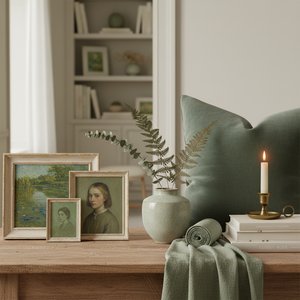
Sage Green Masterpieces: 10 Famous Paintings & Timeless Decor Inspiration
Explore 10 famous paintings dominated by serene sage green tones! Discover Monet, Renoir & Manet masterpieces. Learn art history & find museum-quality reproductions for your home decor on .


