


 미리보기
미리보기
 공유하기
공유하기 공유하기
공유하기
 상세 정보
상세 정보

 다운로드
다운로드
 유사 작품
유사 작품 X-레이
X-레이 슬라이드 쇼
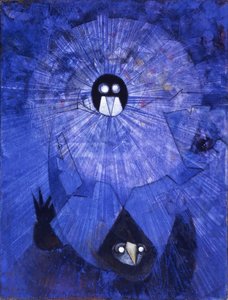
Abstract Composition


 더 보기
더 보기
지클레 / 아트 프린트
빠른 제작과 다양한 마감 옵션을 제공하는 박물관 품질의 지클레이 또는 캔버스 프린트. ( 손으로 그린 그림 구매 이미지 구매)




































작품의 원본 비율을 유지하는 미리 설정된 크기 중에서 선택하세요.

특정 프레임이나 공간에 맞춰 직접 치수를 입력하실 수 있습니다. 선택하신 사이즈가 원본 이미지의 비율과 일치하지 않을 경우, 작품을 크롭(자르기)하거나 이미지를 대칭 또는 단색 채우기로 확장하여 제작합니다. 제작 시작 전, 최종 확인을 위해 디지털 목업이 전송됩니다.
화면상의 미리보기는 실제 크롭이나 확장 상태를 반영하지 않으므로, 최종 구도는 오직 목업을 통해서만 정확하게 확인하실 수 있습니다.
맞춤 사이즈 제작도 가능하지만, 원본 비율을 유지하기 위해서는 사전 정의된 목록에서 치수를 선택하시는 것을 권장합니다.


 유리 옵션은 110cm 미만 크기에서만 선택 가능합니다.

Abstract Composition
지클레 / 아트 프린트
복제본 크기
-


최종 결제 금액
$ 64
유사한 작품들








작가 약력
Konrad Ernst Otto Zuse: Pioneer of Computing
Early Life and Education
- Konrad Ernst Otto Zuse was born on June 22, 1910, in Berlin, Germany.
- He studied mechanical engineering at the Technical University of Braunschweig, graduating in 1933.
- Even during his studies, Zuse demonstrated a keen interest in automation and calculation, laying the groundwork for his future innovations.
The Genesis of Computing: Early Machines
- Driven by frustration with repetitive calculations during his engineering work, Zuse began designing calculating machines in the 1930s.
- His first creation was the Z1 (1936-1938), a mechanical binary computer using floating-point numbers and limited programmability. Though mechanically unreliable, it demonstrated key concepts.
- The Z2 (1939) improved upon the Z1 with electromechanical relays, offering greater reliability but was destroyed during World War II.
The Z3: The First Functional Programmable Computer
- In May 1941, Zuse completed the Z3, widely considered the world’s first functional program-controlled Turing-complete computer.
- It was electromechanical, using relays, and operated with binary floating-point arithmetic.
- The Z3 was destroyed during a bombing raid in 1943, but its design principles were revolutionary.
Further Developments: The Z4 and Beyond
- Zuse continued his work, developing the Z4 (completed in 1945), which became the world’s first commercial computer. It was sold to the Aerodynamische Versuchsanstalt (AVA) for aerodynamic calculations.
- He founded one of the earliest computer businesses, Zuse KG, to produce and sell computers.
Plankalkül: A Visionary Programming Language
- Between 1943 and 1945, amidst wartime conditions, Zuse designed Plankalkül, the first high-level programming language.
- It was remarkably advanced for its time, featuring concepts like data structures and conditional statements. However, it remained largely unimplemented during his lifetime due to lack of resources and computing power.
Later Life and Theoretical Work
- In 1969, Zuse published Rechnender Raum (Calculating Space), proposing the concept of a computation-based universe – a precursor to digital physics.
- He received belated recognition for his pioneering work in the latter part of his life, including the Turing Award in 1968.
- Konrad Zuse died in Hünfeld, Germany, on December 18, 1995.
Historical Significance and Legacy
- Zuse’s work was largely overlooked during World War II due to the conflict and limited communication with Allied researchers.
- His contributions were crucial in laying the foundations for modern computing, influencing subsequent generations of computer scientists and engineers.
- He is rightfully regarded as a founding father of computer science, whose vision extended beyond mere calculation to encompass the very nature of reality itself.

konrad ernst otto zuse
1910 - 1995 , Germany
주요 정보
- Birth Date: 1910
- Birth Place: Berlin, Germany
- Death Date: 1995
- Movement: Early Computing / Pioneer of Computer Science
- Name: Konrad Ernst Otto Zuse
- Nationality: German
- Notable Works:
- Z3
- Plankalkül
- Z4


