


 미리보기
미리보기
 공유하기
공유하기 공유하기
공유하기
 상세 정보
상세 정보 Guide
Guide

 다운로드
다운로드
 유사 작품
유사 작품 X-레이
X-레이 슬라이드 쇼
 통계 정보
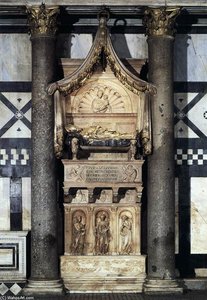
통계 정보Monument to Doge Tommaso Mocenigo


 더 보기
더 보기
수제 유화 복제품
원하는 크기와 액자로 주문 제작되는, 작가들이 직접 캔버스에 손으로 그린 유화 작품입니다. ( 프린트 판매로 전환 디지털 이미지로 전환)




































작품의 원본 비율을 유지하는 미리 설정된 크기 중에서 선택하세요.

특정 프레임이나 공간에 맞도록 직접 크기를 입력할 수 있습니다. 선택하신 크기가 원본 이미지의 비율과 일치하지 않는 경우, 작품을 자르거나 추가적인 손으로 그린 요소를 사용하여 그림을 확장합니다. 제작 시작 전 승인을 위해 디지털 목업을 보내드립니다.
화면 미리 보기는 실제 자르기 또는 확장을 반영하지 않습니다. 최종 구성은 목업을 통해서만 정확하게 확인하실 수 있습니다.
맞춤 크기 제작도 가능하지만, 원본 비율을 유지하기 위해 사전 정의된 목록에서 크기를 선택하시는 것을 권장합니다.
주문 후 AllPaintingsStore.com 팀에서 상세 안내를 위해 고객님께 이메일을 보내드리며, 미리보기 시안을 제공해 드립니다.


 유리 옵션은 110cm 미만 크기에서만 선택 가능합니다.

Monument to Doge Tommaso Mocenigo
재현 기법
복제본 크기
-


최종 결제 금액
$ 258
유사한 작품들




작가 약력
Early Life and Florentine Beginnings
Niccolò di Piero Lamberti, a name resonating softly through the annals of Renaissance sculpture, emerged in Florence around 1370—a period brimming with artistic ferment. While precise details of his early life remain elusive, records indicate he was already established as a *magister* by 1391, working on the ambitious Porta della Mandorla for the Florence Cathedral. This initial involvement suggests an apprenticeship steeped in the traditions of Tuscan artistry and a rapid ascent within the city’s burgeoning artistic community. Married in Florence in 1392, Lamberti quickly became part of the fabric of Florentine creative life, participating in the famed 1401 competition for the North Doors of the Baptistery—a contest ultimately won by the prodigious Lorenzo Ghiberti. This early exposure to such monumental projects and formidable talent undoubtedly shaped his artistic trajectory.
The Cathedral Commissions and a Rising Reputation
Lamberti’s dedication to Florence Cathedral continued with his selection in 1408 as one of three sculptors tasked with creating the Evangelists for the cathedral's façade. The resulting statue of Saint Mark, completed in 1415, stands as a testament to his growing skill and stylistic maturity. Now housed within the Museo dell’Opera del Duomo, this sculpture reveals a blend of Gothic elegance and emerging Renaissance naturalism—a characteristic that would define much of his subsequent work. The figure possesses a dignified composure, yet retains a certain degree of stylized formality, indicative of the transitional period in which Lamberti was active. Beyond the cathedral, he contributed significantly to Orsanmichele, sculpting not only Saint Luke but also Saint James the Major for the Guild of Furriers and Skinners, further solidifying his position as a leading sculptor within Florence.
Venturing East: Venice and the Façade of St Mark’s
Around 1416, Lamberti embarked on a significant geographical shift, relocating to Venice with his son, Piero di Niccolò. This move marked a pivotal moment in his career, as he became deeply involved in the sculptural decoration of the upper storey of Saint Mark's Basilica’s façade—a project that would profoundly influence Venetian art. The Tuscan style, previously less prominent in the city, began to take root under Lamberti’s guidance, introducing a new level of detail and narrative complexity to the basilica’s architectural ornamentation. His work here wasn’t merely about adding sculpture; it was about integrating a distinct artistic sensibility into the very heart of Venetian identity.
Collaboration with Son and Continued Artistic Exploration
The partnership between Niccolò di Piero Lamberti and his son, Piero, proved remarkably fruitful. While Niccolò’s experience provided a foundation, Piero brought a fresh perspective to their collaborative endeavors. Together they undertook commissions in both Venice and Padua, demonstrating a shared commitment to quality craftsmanship and artistic innovation. The tomb of Tommaso Mocenigo in SS Giovanni e Paolo (Venice), completed in 1423, exemplifies their combined talents—a Late Gothic canopied wall tomb showcasing intricate detailing and a refined sense of proportion. Later, the collaboration extended to the tomb of Raffaello Fulgosio in Padua’s Santo, where they worked alongside Giovanni di Bartolomeo da Firenze, further broadening their artistic horizons.
Legacy and Historical Significance
Niccolò di Piero Lamberti occupies a unique position within the Renaissance art landscape. He wasn't a revolutionary like Donatello or Ghiberti, but rather a skilled artisan who played a crucial role in disseminating Tuscan artistic principles beyond Florence’s borders—most notably to Venice. His work embodies the transition from Gothic formalism to the burgeoning naturalism of the early Renaissance, blending elegance with increasing attention to anatomical accuracy and emotional expression. His influence extended through his son, Piero, ensuring that the Lamberti family left an indelible mark on the sculptural traditions of both Florence and Venice, shaping the aesthetic character of these iconic Italian cities for generations to come.

piero di niccolò lamberti
1370 - 1451 , Italy
주요 정보
- Artistic Movement Or Style: Renaissance sculpture
- Date Of Birth: c. 1370
- Date Of Death: 1451
- Full Name: Niccolò di Piero Lamberti
- Nationality: Italian
- Notable Artworks:
- St. Mark Blessing
- Saint Luke
- St. James the Major
- Place Of Birth: Florence, Italy

