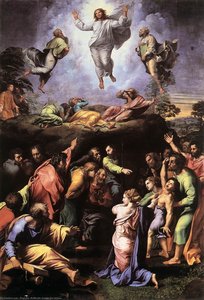
![Stanze Vaticane - The School Of Athens (detail) [08] — 라파엘로](/media-resize/960/artworks/images-full/df/dc/dfdc23a7320557b237f038c4d9ebc5ec.jpg.webp)
 미리보기
미리보기
 공유하기
공유하기 공유하기
공유하기
 상세 정보
상세 정보 Guide
Guide

 다운로드
다운로드
 유사 작품
유사 작품 X-레이
X-레이 슬라이드 쇼
 통계 정보
통계 정보Stanze Vaticane - The School of Athens (detail) [08]


 더 보기
더 보기
수제 유화 복제품
원하는 크기와 액자로 주문 제작되는, 작가들이 직접 캔버스에 손으로 그린 유화 작품입니다. ( 프린트 판매로 전환 디지털 이미지로 전환)




P118B $10

P118H $10

P118W $10

P438Z $10

P508JH $12

P508YH $12

P805H $10

P805Z $10

P919BZ $10

P919G $10

P919XJ $10

P959ZH $10

P968JZ $12

W106C $8

W218G $10

W218JH $8

W218Y $10

W307PJ $10

W316G $10

W316PJ $8

W316Y $10

W398PJ $8

W4111J $10

W500HY $15

W500JH $15

W692G $12

W849H $8

W940BG $15

W953PJ $8




작품의 원본 비율을 유지하는 미리 설정된 크기 중에서 선택하세요.

특정 프레임이나 공간에 맞도록 직접 크기를 입력할 수 있습니다. 선택하신 크기가 원본 이미지의 비율과 일치하지 않는 경우, 작품을 자르거나 추가적인 손으로 그린 요소를 사용하여 그림을 확장합니다. 제작 시작 전 승인을 위해 디지털 목업을 보내드립니다.
화면 미리 보기는 실제 자르기 또는 확장을 반영하지 않습니다. 최종 구성은 목업을 통해서만 정확하게 확인하실 수 있습니다.
맞춤 크기 제작도 가능하지만, 원본 비율을 유지하기 위해 사전 정의된 목록에서 크기를 선택하시는 것을 권장합니다.
주문 후 AllPaintingsStore.com 팀에서 상세 안내를 위해 고객님께 이메일을 보내드리며, 미리보기 시안을 제공해 드립니다.


 유리 옵션은 110cm 미만 크기에서만 선택 가능합니다.

Stanze Vaticane - The School of Athens (detail) [08]
재현 기법
복제본 크기
-


최종 결제 금액
$ 258
The School of Athens: A Renaissance Dialogue on Wisdom and Beauty
Raphael’s “School of Athens,” a breathtaking fresco residing within the Vatican’s Stanza della Segnatura, isn't merely a depiction of philosophers; it’s a vibrant testament to the humanist ideals that defined the High Renaissance. Completed between 1509 and 1511, this monumental work transcends its physical space, inviting viewers into a timeless conversation about knowledge, reason, and the pursuit of truth. The scene unfolds within an architectural setting subtly inspired by Bramante’s ambitious plans for rebuilding St. Peter's Basilica – a nod to the burgeoning grandeur of Rome itself – creating a backdrop that simultaneously anchors the composition in reality and elevates it towards a realm of intellectual aspiration.
At the heart of the fresco stand Plato and Aristotle, their figures rendered with an exquisite balance of realism and idealized beauty. Plato, gesturing upwards toward the heavens, embodies the pursuit of abstract ideals – his flowing robes and contemplative posture suggesting a detachment from the earthly world. Opposite him, Aristotle, grounded and engaged in a lively debate, represents the emphasis on empirical observation and the study of nature. This dynamic pairing immediately establishes the core tension within Renaissance philosophy: the conflict between idealism and realism, a theme that resonates powerfully throughout the composition. The surrounding figures – Pythagoras, Heraclitus, Euclid, Socrates, and many others – are not simply historical footnotes; they’re carefully chosen representatives of diverse schools of thought, each contributing to a rich tapestry of intellectual discourse.
Raphael's mastery of technique is immediately apparent in the fresco’s astonishing detail. The figures are rendered with remarkable anatomical accuracy, yet imbued with an almost ethereal quality. Note the subtle gradations of color, the delicate modeling of drapery, and the precise rendering of architectural elements – all hallmarks of Raphael’s refined style. The use of *chiaroscuro*, the dramatic interplay of light and shadow, adds depth and volume to the scene, drawing the viewer's eye across the complex arrangement of figures. The perspective is meticulously executed, creating a convincing illusion of space and contributing to the overall sense of realism. It’s important to note that Raphael learned this technique from Leonardo da Vinci, who had been experimenting with linear perspective in his paintings.
Beyond its artistic merits, “The School of Athens” carries profound symbolic weight. The fresco is a celebration of classical Greek philosophy and science, which were experiencing a revival during the Renaissance – a period marked by renewed interest in ancient texts and ideas. By placing these figures within a contemporary setting, Raphael suggests that the wisdom of antiquity remains relevant to modern thought. The inclusion of Euclid, the father of geometry, further emphasizes the importance of reason and logic as tools for understanding the world. The painting’s overall message is one of optimism – a belief in the power of human intellect to unlock the secrets of the universe. It's a powerful statement about the enduring legacy of classical thought and its continued influence on Western civilization.
The Figures: A Dialogue of Ideas
Each figure within “The School of Athens” is carefully chosen not just for their historical significance but also for their symbolic representation of specific philosophical concepts. Plato, with his upward gaze, embodies the realm of Forms – the eternal and unchanging ideas that exist beyond the physical world. His book, "Timaeus," symbolizes his theory of cosmology, suggesting a universe governed by mathematical principles. Aristotle, in contrast, is depicted gesturing downwards, engaging in a more earthly debate about ethics and politics. His book, “Nicomachean Ethics,” represents his focus on practical wisdom and the pursuit of happiness within the human experience.
Observe the details surrounding each figure: Pythagoras, with his geometric diagrams, embodies mathematical knowledge; Euclid, holding a compass and ruler, symbolizes geometry; Heraclitus, depicted as a river, represents the concept of constant change. The inclusion of these specific figures demonstrates Raphael’s deep understanding of classical philosophy and his ability to translate complex ideas into a visually compelling narrative. Even seemingly minor details, such as the scrolls held by each philosopher, are laden with symbolic meaning, further enriching the painting's intellectual depth.
Architectural Setting & Renaissance Influence
The architectural setting of “The School of Athens” is not merely decorative; it’s integral to the composition and serves as a visual metaphor for the pursuit of knowledge. The building behind the philosophers is clearly inspired by Bramante's designs for St. Peter's Basilica, reflecting the Renaissance fascination with classical architecture and its grandeur. However, Raphael subtly transforms this architectural model, incorporating elements from various historical periods – including Roman and Greek styles – to create a harmonious blend of past and present.
The use of columns, arches, and pediments evokes the monumental scale of ancient temples, suggesting that the philosophers are engaged in a dialogue worthy of the gods. The perspective lines converge towards a central vanishing point, drawing the viewer's eye into the heart of the scene. This masterful manipulation of space reinforces the sense of depth and realism, while simultaneously elevating the painting to a realm of timeless beauty. The architectural elements also serve as a reminder of the ambition and innovation that characterized the Renaissance – a period marked by a renewed interest in classical art and architecture.
Owning a Piece of History: A AllPaintingsStore Reproduction
Experience the profound beauty and intellectual depth of Raphael’s “School of Athens” with a meticulously crafted, handmade oil painting reproduction from AllPaintingsStore. Our skilled artists painstakingly recreate every detail of this iconic masterpiece, using traditional techniques and archival-quality materials to ensure lasting vibrancy and authenticity. Each reproduction is created on canvas, capturing the texture and luminosity of the original fresco.
Whether you’re an art collector, a design enthusiast, or simply someone who appreciates timeless beauty, a AllPaintingsStore reproduction of “The School of Athens” offers a unique opportunity to bring this masterpiece into your home or office. Explore our selection of sizes and framing options to find the perfect piece that complements your personal style. Visit AllPaintingsStore.com today to discover how you can own a tangible connection to one of the greatest works of art in history.
유사한 작품들


![Stanze Vaticane - The School Of Athens (detail) [02] — 라파엘로, High Renaissance](/media/artworks/images-thumb/ff/73/ff7321cc7f1d85f7343079c25e188bce.jpg)
![Stanze Vaticane - The School Of Athens (detail) [03] — 라파엘로, High Renaissance](/media/artworks/images-thumb/30/f3/30f39c600ce9f8eb336752926431690e.jpg)
![Stanze Vaticane - The School Of Athens (detail) [05] — 라파엘로, Renaissance](/media/artworks/images-thumb/ca/a9/caa9f9be8f76fbc617e906bfcb543fad.jpg)
![Stanze Vaticane - The School Of Athens (detail) [06] — 라파엘로, High Renaissance](/media/artworks/images-thumb/a5/aa/a5aa2b9acdb9dbd4f6ab64748f4cc597.jpg)


작가 약력
라파엘로: 우르비노의 빛, 르네상스 미술의 정수
1483년, 이탈리아 우르비노에서 태어난 라파엘로 산치오 다 우르비노, 그는 역사 속에서 ‘라파엘’이라는 이름으로 영원히 기억될 것입니다. 그의 삶은 바로크 건축과 예술의 중심지였던 우르비노 공국의 문화적 풍요 속에서 시작되었습니다. 아버지 조반니 산티 역시 공국에 고용된 화가이자 시인이었으며, 르네상스 사상의 흐름을 읽고 새로운 예술적 아이디어를 적극적으로 수용한 인물이었습니다. 이러한 환경은 어린 라파엘에게 예술과 학문이 결합된 균형 잡힌 감수성을 심어주었고, 그의 작품 세계에 깊은 영향을 미쳤습니다. 아버지의 갑작스러운 죽음 이후, 라파엘은 젊은 나이에 가족 작업장을 이끌며 그림 실력을 갈고 닦았고, 섬세한 표현과 부드러운 선이 특징인 초기 작품들에서 그의 재능을 엿볼 수 있습니다.
움브리아에서 피렌체로: 새로운 영감의 추구
라파엘의 예술적 여정은 끊임없는 변화와 성장의 연속이었습니다. 페루지노에게 그림을 배우며 움브리아 스타일의 기반을 다졌지만, 그는 안주하지 않고 더 넓은 세상으로 나아가고자 했습니다. 1504년, 예술 혁신의 중심지였던 피렌체로 향한 라파엘은 레오나르도 다 빈치와 미켈란젤로의 걸작들을 직접 마주하며 깊은 감명을 받았습니다. 그는 두 거장의 기법을 탐구하고 분석하며 자신만의 독창적인 스타일을 구축하기 위해 노력했습니다. 특히 레오나르도의 스푸마토 기법, 즉 부드러운 명암 대비를 통해 형태를 표현하는 방식과 미켈란젤로의 인체 해부학적 정확성과 역동적인 구성을 연구하며 자신의 예술 세계에 새로운 가능성을 불어넣었습니다. 피렌체에서의 경험은 라파엘에게 깊은 영향을 미쳐, 그의 작품에서 더욱 풍부한 감정과 생동감을 느낄 수 있게 해주었습니다.
로마의 황금기: 위대한 의뢰와 걸작 탄생
1508년, 교황 율리우스 2세의 초청으로 라파엘은 로마행을 결정하며 자신의 예술적 역량을 본격적으로 발휘할 기회를 맞이합니다. 영원한 도시 로마는 그에게 무대이자 영감의 원천이었으며, 바티칸 궁전의 벽면을 장식하는 대규모 프레스코화 작업을 통해 그의 명성은 더욱 높아졌습니다. 특히 ‘아테네 학당’은 라파엘의 대표작으로 손꼽히며, 고대 그리스 철학자들의 모습을 생생하게 묘사하여 지성과 예술이 조화를 이루는 르네상스 시대의 이상을 구현했습니다. 또한, 교황 레오 10세의 의뢰를 받아 ‘세그나투라 방’과 ‘엘리오도로 방’ 등의 프레스코화 작업을 진행하며 종교적 주제와 세속적인 이야기를 능숙하게 조화시키는 그의 재능을 증명했습니다. 이러한 작업들은 라파엘을 단순한 화가를 넘어, 시대의 정신을 반영하는 위대한 예술가로 자리매김하게 했습니다.
우아함과 웅장함의 조화: 라파엘의 예술적 특징
라파엘의 작품은 우아함, 명료함, 이상적인 아름다움이 절묘하게 어우러진 것이 특징입니다. 그는 움브리아 전통, 피렌체 혁신, 고대 그리스 로마 문화 등 다양한 영향을 흡수하여 자신만의 독창적인 예술 세계를 구축했습니다. 그의 구도는 정교하게 계획되어 있으며, 르네상스 시대의 원리를 반영하는 균형과 비례미를 자랑합니다. 인물들은 서정적이고 감성적인 표현을 통해 인간 본연의 아름다움을 드러내며, 보는 이로 하여금 깊은 감동을 불러일으킵니다. 또한, 그는 풍부하고 밝은 색채를 사용하여 시각적으로 매혹적이면서도 지적으로 자극하는 작품들을 창조했습니다. 미켈란젤로의 강렬하고 격렬한 스타일과는 대조적으로, 라파엘의 작품은 평온함과 조화로움이 느껴지는 것이 특징입니다.
불멸의 유산: 후대에 드리운 영향
라파엘은 37세라는 젊은 나이에 세상을 떠났지만, 그의 예술적 업적은 시대를 초월하여 후대 예술가들에게 영감을 불어넣었습니다. 그의 작품은 르네상스 시대의 미학을 대표하는 동시에, 이후 네오클래식주의 운동에 큰 영향을 미쳤습니다. 요한 요아힘 빈켈만과 같은 비평가들은 라파엘의 작품에서 고전적인 아름다움의 이상을 발견하고 이를 적극적으로 재조명했습니다. 오늘날까지도 그의 그림들은 전 세계 미술관에 전시되어 수많은 사람들에게 감동을 선사하며, 르네상스 시대 최고의 거장으로서 그의 위상은 확고히 자리 잡았습니다. 라파엘은 단순한 화가를 넘어, 인간의 아름다움과 정신적인 가치를 예술로 승화시킨 불멸의 존재입니다.

라파엘로
1483 - 1520 , 이탈리아
주요 정보
- 국적: 이탈리아인
- 대표 작품:
- 아테네 학당
- 시스티나 마돈나
- 변화
- 사망일: 1520년 4월 6일
- 영향을 받은 예술 사조: ['신고전주의']
- 영향을 준 예술가:
- 레오나르도 다 빈치
- 미켈란젤로
- 피에트로 페루지노
- 예술 사조: 고전 회화 (High Renaissance)
- 전체 이름: 라파엘로 산치오 다 우르비노
- 출생일: 1483년 3월 28일 (또는 4월 6일)
- 출생지: 우르비노, 이탈리아
관련 기사 더 보기

Fresco Art Guide: Mastering the Timeless Technique of Wall Painting for Luxury Interior Design
Master the art of fresco for luxury hospitality design. Explore technical insights into historical wall painting and discover how professional-grade, large-scale reproductions can elevate hotel interiors with timeless Renaissance elegance.

The Barbizon School: A Professional Guide to Naturalism and Landscape Mastery for Interior Designers
Explore the Barbizon School's mastery of naturalism. An expert guide for hotel designers and procurement managers on sourcing high-quality landscape reproductions to elevate hospitality and corporate interiors with authentic, large-scale fine art solutions.