


 미리보기
미리보기
 공유하기
공유하기 공유하기
공유하기
 상세 정보
상세 정보

 다운로드
다운로드
 유사 작품
유사 작품 X-레이
X-레이 슬라이드 쇼
Being With (Être Avec)
 Acrylic On Canvas
- WallArt
- Surrealist Abstraction
 1946
1946- Contemporary
 221.0 x 457.0 cm
 메트로폴리탄 미술관
 더 보기
더 보기
지클레 / 아트 프린트
빠른 제작과 다양한 마감 옵션을 제공하는 박물관 품질의 지클레이 또는 캔버스 프린트. ( 손으로 그린 그림 구매 이미지 구매)




P118B $10

P118H $10

P118W $10

P438Z $10

P508JH $12

P508YH $12

P805H $10

P805Z $10

P919BZ $10

P919G $10

P919XJ $10

P959ZH $10

P968JZ $12

W106C $8

W218G $10

W218JH $8

W218Y $10

W307PJ $10

W316G $10

W316PJ $8

W316Y $10

W398PJ $8

W4111J $10

W500HY $15

W500JH $15

W692G $12

W849H $8

W940BG $15

W953PJ $8




작품의 원본 비율을 유지하는 미리 설정된 크기 중에서 선택하세요.

특정 프레임이나 공간에 맞춰 직접 치수를 입력하실 수 있습니다. 선택하신 사이즈가 원본 이미지의 비율과 일치하지 않을 경우, 작품을 크롭(자르기)하거나 이미지를 대칭 또는 단색 채우기로 확장하여 제작합니다. 제작 시작 전, 최종 확인을 위해 디지털 목업이 전송됩니다.
화면상의 미리보기는 실제 크롭이나 확장 상태를 반영하지 않으므로, 최종 구도는 오직 목업을 통해서만 정확하게 확인하실 수 있습니다.
맞춤 사이즈 제작도 가능하지만, 원본 비율을 유지하기 위해서는 사전 정의된 목록에서 치수를 선택하시는 것을 권장합니다.


 유리 옵션은 110cm 미만 크기에서만 선택 가능합니다.

Being With (Être Avec)
지클레 / 아트 프린트
복제본 크기
-


최종 결제 금액
$ 64
작품 상세 설명
The Labyrinthine Psyche: Exploring Roberto Matta’s “Being With”
Roberto Matta's "Being With" (1946) isn’t merely a painting; it’s an immersion into the fractured, dreamlike landscape of the subconscious. Painted during his formative years in New York City – a period deeply influenced by the anxieties and transformations following World War II – this monumental canvas pulsates with a potent blend of Surrealist imagery, architectural distortion, and unsettling human forms. Matta, a Chilean artist who navigated the currents of European avant-garde movements before establishing himself as a key figure in American Abstract Expressionism, crafted a work that speaks directly to the societal unease of the time, reflecting on the very act of “being” within a world grappling with profound change.

A Symphony of Architectural Distortion
The painting’s immediate impact is one of overwhelming complexity and disorientation. A dense, labyrinthine structure dominates the composition – a chaotic assemblage of towering buildings, bridges, and fragmented walls that seem to both contain and simultaneously repel the viewer. These aren't recognizable architectural forms; rather, they are warped, elongated, and interwoven in a manner reminiscent of Escher’s impossible geometries. Matta masterfully employs perspective to create an illusion of depth, drawing us into this claustrophobic world where scale is distorted and spatial relationships defy logic. The yellow wall serves as a stark backdrop, amplifying the sense of unease and highlighting the figures within.
The humanoid figures scattered throughout the scene are rendered in a deliberately ambiguous style – often partially obscured, contorted, or engaged in unsettling, almost ritualistic interactions. These aren’t portraits; they represent archetypal anxieties about human connection, isolation, and perhaps even the loss of identity within a rapidly changing world. Their positions suggest a struggle for agency amidst this overwhelming architectural maze.
Surrealism, Social Commentary, and the “Social Morphologies”
Matta’s work during the mid-to-late 1940s, collectively known as "social morphologies," represents a significant shift in his artistic approach. He moved beyond purely personal explorations of the subconscious to address broader societal concerns – specifically, the psychological impact of war and the anxieties surrounding the rise of modernity. “Being With” embodies this shift perfectly; it’s not just a dreamscape but a visual metaphor for the collective trauma experienced by humanity after World War II. His engagement with Surrealism provided him with the tools to express these complex emotions through symbolic imagery and distorted forms, while his architectural background informed the painting's intricate structure.
The Emotional Resonance of a Fragmented Reality
“Being With” is profoundly unsettling yet undeniably captivating. It evokes a sense of claustrophobia, disorientation, and perhaps even dread – mirroring the psychological state of a world reeling from conflict and uncertainty. However, amidst this darkness, there’s also a strange beauty in the painting's complexity and its exploration of the human condition. The vibrant colors, combined with Matta’s masterful use of line and texture, create a dynamic visual experience that invites repeated contemplation. It’s a work that lingers in the mind long after it has been viewed, prompting viewers to confront their own anxieties about existence and the nature of reality. Reproductions capture only a fraction of this powerful emotional depth.
유사한 작품들


작가 약력
Roberto Matta: A Surrealist Visionary
- Born: November 11, 1911, Santiago, Chile
- Died: March 23, 2002, Civitavecchia, Italy
Roberto Sebastián Antonio Matta Echaurren, known as Roberto Matta, was a Chilean painter and architect who significantly impacted abstract expressionism and surrealist art. His journey from architecture student to influential artist reflects a profound exploration of the subconscious mind and a unique artistic vision.
Early Life and Artistic Development
- Education: Studied architecture at the Pontificia Universidad Católica de Chile, graduating in 1935.
- European Influences: Travels to Europe exposed him to prominent artists like René Magritte, Salvador Dalí, André Breton, and Le Corbusier, shaping his artistic style.
- Surrealist Engagement: Became a key figure within the Surrealist movement, embracing its exploration of dreams, the subconscious, and challenging conventional reality. His work was heavily influenced by Sigmund Freud's psychoanalytic theories.
Key Artistic Characteristics and Influences
- Biomorphic Forms: Matta’s paintings are characterized by organic shapes and forms reminiscent of living organisms, a hallmark of his style.
- Psychological Landscapes: His works often depict dreamlike landscapes that evoke psychological states and emotions.
- Abstract Expressionism: While rooted in Surrealism, Matta's work significantly contributed to the development of Abstract Expressionism through its emphasis on gesture, color, and emotional expression. He collaborated with artists like Mark Rothko and Jackson Pollock.
- Modernismo Influence: His connection to the Modernismo art movement is evident in his use of Latin and Greek mythology and medieval verses.
Major Works and Political Engagement
- Notable Paintings: Being with, Invasion of the Night, and Verbo América are among his most recognized works.
- Mural "The First Goal of the Chilean People": A large-scale mural painted in 1973 was later covered by the military regime of Augusto Pinochet. It was rediscovered and restored in 2008, now displayed at La Granja City Hall. This work demonstrates his political engagement and commentary on social issues.
- Ceramic Vessels: Matta also explored ceramic art, creating vessels with surrealist imagery and ancient motifs (as seen in "Senza titolo").
Legacy and Historical Significance
- Influence on Subsequent Artists: Matta’s innovative use of color, form, and psychological themes inspired generations of artists.
- Museum Recognition: His works are held in prestigious collections including the Museum of Modern Art (MoMA) in New York City and the Butler Institute of American Art.
- Continued Relevance: Matta’s exploration of the subconscious mind, his blending of surrealism and abstraction, and his engagement with political themes continue to resonate with contemporary audiences.

Roberto Matta
1911 - 2002 , Chile
주요 정보
- Artistic Movement Or Style:
- Surrealism
- Abstract Expressionism
- Artists Or Movements Influenced By This Artist: ['Abstract Expressionism']
- Artists Who Influenced This Artist:
- Sigmund Freud
- André Breton
- René Magritte
- Date Of Birth: November 11, 1911
- Date Of Death: November 23, 2002
- Full Name: Roberto Sebastián Antonio Matta Echaurren
- Nationality: Chilean
- Notable Artworks:
- Being with
- Invasion of the night
- First goal of Chilean people
- Snail’s Trace
- Verbo América
- Place Of Birth: Santiago, Chile
관련 기사 더 보기

추상표현주의를 정의한 10대 걸작: 예술과 인테리어의 새로운 영감
추상표현주의의 심장을 뛰게 한 10대 걸작을 만나보세요. 폴록, 로스코 등 거장의 작품 비하인드 스토리와 예술적 영감을 AllPaintingsStore에서! 지금 바로 미술품 컬렉션을 탐험하고, 당신의 공간에 특별한 예술적 감성을 더하세요. AllPaintingsStore.com

Kandinsky's Masterpieces: 25 Paintings That Define Abstract Art | AllPaintingsStore
Journey through Wassily Kandinsky's 25 most iconic abstract paintings. Explore his revolutionary use of color, form & spiritual expressionism. Find museum-quality Kandinsky reproductions and elevate your home decor with AllPaintingsStore.com. Discover all masterpieces on AllPaintingsStore.com!

Lyrical Abstraction: The Emotional Power of Color and Form in Modern Art History
Explore the profound emotional depth of Lyrical Abstraction. Discover how masters like Raymond Parker used color and form to bridge Impressionism and Abstract Expressionism. Learn about this pivotal movement through our expert-led art history guide.

Pure Chaos & Color: The High-Voltage World of Abstract Expressionism
Dive into the high-voltage world of Abstract Expressionism. Explore the raw energy of Action Painting and the legendary masters of the New York School through a visual journey of pure chaos and color. Discover how to bring bold, high-impact abstract art into your modern space.
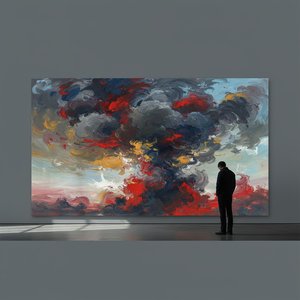
Beyond Representation: Exploring the Emotional Landscape of Abstract Expressionism
Explore the profound emotional world of Abstract Expressionism with AllPaintingsStore. Discover key artists like Pollock & Rothko, learn about collecting, and find museum-quality reproductions to inspire your space.



