


 미리보기
미리보기
 공유하기
공유하기 공유하기
공유하기
 상세 정보
상세 정보 Guide
Guide

 다운로드
다운로드
 유사 작품
유사 작품 X-레이
X-레이 슬라이드 쇼
 통계 정보
통계 정보Madonna and Child with the Infant Saint John the Baptist
 Oil On Canvas
- WallArt
- High Renaissance
 1570
1570 104.0 x 86.0 cm
 메트로폴리탄 미술관
 더 보기
더 보기
수제 유화 복제품
원하는 크기와 액자로 주문 제작되는, 작가들이 직접 캔버스에 손으로 그린 유화 작품입니다. ( 프린트 판매로 전환 디지털 이미지로 전환)




P118B $10

P118H $10

P118W $10

P438Z $10

P508JH $12

P508YH $12

P805H $10

P805Z $10

P919BZ $10

P919G $10

P919XJ $10

P959ZH $10

P968JZ $12

W106C $8

W218G $10

W218JH $8

W218Y $10

W307PJ $10

W316G $10

W316PJ $8

W316Y $10

W398PJ $8

W4111J $10

W500HY $15

W500JH $15

W692G $12

W849H $8

W940BG $15

W953PJ $8




작품의 원본 비율을 유지하는 미리 설정된 크기 중에서 선택하세요.

특정 프레임이나 공간에 맞도록 직접 크기를 입력할 수 있습니다. 선택하신 크기가 원본 이미지의 비율과 일치하지 않는 경우, 작품을 자르거나 추가적인 손으로 그린 요소를 사용하여 그림을 확장합니다. 제작 시작 전 승인을 위해 디지털 목업을 보내드립니다.
화면 미리 보기는 실제 자르기 또는 확장을 반영하지 않습니다. 최종 구성은 목업을 통해서만 정확하게 확인하실 수 있습니다.
맞춤 크기 제작도 가능하지만, 원본 비율을 유지하기 위해 사전 정의된 목록에서 크기를 선택하시는 것을 권장합니다.
주문 후 AllPaintingsStore.com 팀에서 상세 안내를 위해 고객님께 이메일을 보내드리며, 미리보기 시안을 제공해 드립니다.


 유리 옵션은 110cm 미만 크기에서만 선택 가능합니다.

Madonna and Child with the Infant Saint John the Baptist
재현 기법
복제본 크기
-


최종 결제 금액
$ 308
A Renaissance Echo in Florentine Baroque
Santi di Tito’s Madonna and Child with the Infant Saint John the Baptist stands as a testament to the transformative period of Florentine Baroque—a subtle yet decisive reaction against the stylized grandeur of Mannerism. Born in Sansepolcro around 1536, Santi di Tito embarked on an artistic journey that would ultimately solidify his place among Florence’s most celebrated painters. Unlike many of his contemporaries who sought inspiration from artists like Federico Zuccari and Andrea del Sarto—embracing elaborate ornamentation and distorted perspectives—Santi di Tito drew upon the legacy of Raphael and Andrea del Sarto, prioritizing naturalism and conveying profound emotion. This deliberate stylistic shift distinguishes him as a pioneer of what would become known as “Counter-Maniera,” marking a pivotal moment in Florentine art history.- Style: The artwork embodies High Renaissance ideals while simultaneously foreshadowing the Baroque’s expressive dynamism. It eschews Mannerist exaggeration for balanced composition and serene beauty, reflecting a renewed interest in humanist values and idealized forms.
- Technique: Santi di Tito meticulously employed oil paint on wood—a technique favored by artists of his era—resulting in smooth surfaces and subtle chiaroscuro (light-dark contrast). Visible brushstrokes subtly animate the canvas, conveying an immediacy absent from earlier styles.
Composition & Symbolism: A Pyramid of Faith
The painting’s pyramidal structure immediately draws the viewer's gaze upwards towards Mary—the apex of spiritual contemplation and divine grace. The figures are arranged closely together, fostering a sense of intimacy and warmth—a characteristic feature of Renaissance portraiture intended to evoke empathy and reverence. The landscape backdrop, hazy yet evocative, provides depth without overwhelming the central subjects. Notably, lambs symbolize purity and foreshadow Christ’s sacrificial destiny – elements deeply rooted in Christian iconography.
Historical Context: Florentine Artistic Evolution
Painted circa 1570s during Francesco I de' Medici’s reign, this panel reflects the broader artistic currents sweeping through Florence. Santi di Tito’s work represents a crucial step away from Mannerist formalism, aligning with the burgeoning Baroque style—characterized by dramatic lighting and emotional intensity—that would soon dominate European art.
Visual Analysis: Light & Texture
The diffused warmth of the illumination emanates from an unseen source, highlighting Mary’s face and clothing with remarkable precision. Careful attention to detail is evident in the depiction of skin texture – achieved through subtle brushstrokes—creating a palpable sense of realism. The artist skillfully utilizes atmospheric perspective—reducing color saturation and diminishing detail in distant hills—to convey depth and enhance the overall visual experience.
Concluding Impression: Timeless Serenity
Ultimately, Santi di Tito’s Madonna and Child transcends mere representation; it communicates a profound spiritual message. Its serene beauty and contemplative atmosphere continue to inspire viewers centuries later – cementing its status as an enduring masterpiece of Florentine Baroque artistry.
유사한 작품들


작가 약력
The Architect of Counter-Maniera
In the vibrant, shifting landscape of late 16th-century Italy, few figures played as pivotal a role in redefining the visual language of Florence as Santi di Tito. Born in 1536, this master emerged during a period of profound artistic transition, standing at the crossroads between the highly stylized, artificial elegance of Mannerism and the burgeoning naturalism that would eventually blossom into the Baroque. While his contemporaries often sought refuge in the complex, elongated forms and intellectual puzzles of the Maniera, di Tito embarked on a different journey—one of reform, clarity, and a return to the profound grace of classical tradition.
The early years of his career were marked by significant collaborative endeavors that expanded his horizons far beyond the borders of Tuscany. Between 1558 and 1564, di Tito’s presence was felt in the grand halls of Rome, where he worked alongside talented peers such as Giovanni de’ Vecchi and Niccolò Circignani. Their monumental fresco projects at the Palazzo Salviati and the Sala Grande of the Belvedere served as a crucible for his developing style. It was during this Roman period that he began to absorb the Raphaelesque influences that would become the hallmark of his mature work, moving away from the crowded, ornamental aesthetics of the Zuccari brothers toward a more balanced and legible composition.
A Departure from Tradition
Upon his return to Florence in 1564, Santi di Tito did not merely rejoin the existing artistic community; he sought to transform it. As a member of the prestigious Accademia del Disegno, he became a central figure in a movement often described by historians as Counter-Maniera. This was not simply a rejection of style, but a profound intellectual shift. While his early contributions to Francesco I de’ Medici's Studiolo—such as The Sisters of Pheton and Hercules and Io—still echoed the stylized conventions of Florentine Mannerism, they contained the seeds of his later revolution.
Driven by a desire for greater naturalism and emotional sincerity, di Tito famously distanced himself from the influence of Bronzino. He viewed the prevailing trend of extreme artifice as a barrier to true artistic expression. Instead, he looked backward to the clarity of the High Renaissance and forward toward a more direct, humanistic approach to painting. His work began to emphasize:
- Classical Form: A renewed focus on anatomical accuracy and structural integrity.
- Clarity of Composition: Moving away from overwhelming, overcrowded scenes toward more legible and focused narratives.
- Innovative Color Palettes: The use of light and color to create depth and atmosphere rather than mere decorative effect.
Legacy and Historical Significance
The legacy of Santi di Tito is etched into the very fabric of Italian art history. By championing a style that favored clarity and naturalism, he paved the way for the dramatic innovations of the 17th century. His ability to marry the intellectual rigor of Florentine training with a new, accessible emotionality made him one of the most respected painters of his era. His prolific output, including monumental altarpieces such as The Resurrection for Santa Croce, demonstrated that art could be both profoundly beautiful and deeply communicative.
Ultimately, di Tito stands as a bridge between two worlds. He took the sophisticated, often impenetrable language of the late Renaissance and refined it into something more enduring and human. In doing so, he helped steer the course of Western art, ensuring that the transition from the complex Mannerist era to the emotive Baroque was marked by a profound respect for the classical foundations of beauty.

Santi di Tito
1536 - 1603 , Italy
주요 정보
- Artistic Movement Or Style: Proto-Baroque & Counter-Maniera
- Artists Or Movements Influenced By This Artist:
- Vasari
- Alessandro Allori
- Artists Who Influenced This Artist:
- Titian
- Bronzino
- Date Of Birth: Florence, Italy (1536)
- Date Of Death: 1603
- Full Name: Santi di Tito
- Nationality: Italian
- Notable Artworks:
- Madonna and Child with the Infant Saint John the Baptist
- Vision of St Thomas Aquinas
- Saint Eustahe
- Place Of Birth: Florence
관련 기사 더 보기
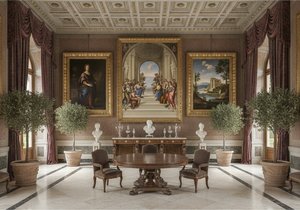
High Renaissance Art: A Professional Guide to Mastering Balance, Scale, and Composition for Luxury Interior Design
Elevate luxury hospitality with High Renaissance art. Our expert guide explores using classical balance, scale, and sfumato to create timeless hotel interiors through premium, hand-painted oil reproductions and custom architectural solutions for professional designers.

Italian Renaissance Art: A Procurement Guide to Timeless Masterpieces for High-End Hotel Interiors
A professional procurement guide for hotel designers seeking Italian Renaissance masterpieces. Discover how to utilize chiaroscuro, custom oil reproductions, and large-scale murals to elevate hospitality interiors with timeless, high-impact classical art.

