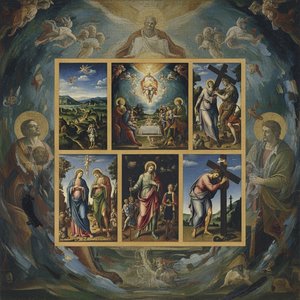
1560. Oil On Canvas. 루브르 박물관.

§ 1Catalogue data


§ 2Abstract
컬렉션 상세 정보
Experience the serene beauty of Titian's 'Supper at Emmaus,' depicting Jesus and his disciples sharing a meal – a masterpiece capturing faith, fellowship, and Renaissance artistry.
 상세 보기
상세 보기
작가 소개
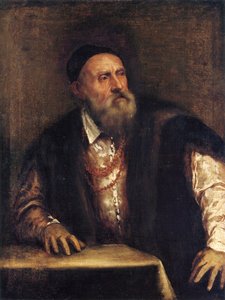
피에베 디 카도레 이탈리아 티치아노 티치아노 베첼리오 르네상스 시대 최고의 베네치아 화가 티치아노! 섬세한 색채와 빛의 사용, 인물화, 신화 및 종교화를 통해 예술사에 큰 족적을 남겼습니다. 그의 작품은 오늘날에도 전 세계 미술관에서 감동을 선사합니다. 르네상스, 베네치아 회화 서구 예술가 레오나르도 다 빈치 약 1490년 1576년 티치아노 베첼리오 이탈리아인 퀼트 소매의 남자 이탈리아 피에베 디 카도레 피렌체 3 티치아노는 어디에서 예술적 수련을 시작했습니까?
§ 3Commentary
A Moment of Revelation: The Story Behind Titian’s “Supper at Emmaus”
Titian’s “Supper at Emmaus,” a painting steeped in the profound drama of the Gospels, isn't merely a depiction of a biblical scene; it’s an invitation into a moment of spiritual awakening. Completed around 1534, this work transcends its religious subject matter to become a powerful meditation on faith, doubt, and the transformative power of encountering the divine. The painting captures the pivotal encounter between Jesus Christ and two disciples on their journey to Emmaus—an event that fundamentally altered their understanding of his resurrection. It’s a scene brimming with quiet intensity, a carefully constructed tableau designed to resonate deeply with viewers across centuries.
The composition itself is masterfully orchestrated. Titian eschews the dramatic gestures and overt expressions often associated with religious art of the period, opting instead for a subtle realism that draws the viewer into the intimate exchange between Jesus and his disciples. The figures are rendered with an almost photographic precision—notice the folds of their garments, the texture of the bread, even the individual strands of wicker in the basket of fruit. This meticulous detail wasn’t simply about accuracy; it was a deliberate choice to ground the ethereal subject matter in a tangible reality, making the miraculous encounter all the more believable and emotionally resonant.
The Venetian Master at Work: Technique and Color
Titian, arguably the greatest colorist of the Renaissance, wields his palette with breathtaking skill in “Supper at Emmaus.” The painting is a symphony of warm hues—rich oranges, deep reds, and earthy browns—that create an atmosphere of both warmth and solemnity. He employs a technique known as ‘sfumato,’ blurring the edges of forms and creating a hazy, atmospheric effect that softens the figures and imbues the scene with a sense of mystery. This is particularly evident in the background, which recedes into a dark, undefined space, drawing attention to the central figures.
Titian’s brushwork is loose and expressive, a departure from the more polished style favored by some of his contemporaries. He uses broad strokes to define shapes and create a sense of movement, while layering thin glazes of color to build up depth and luminosity. The use of gold leaf in the details—the fruit basket, the clothing—adds a touch of opulence and reinforces the sacred nature of the scene. It’s a testament to Titian's understanding that color wasn't just decorative; it was a powerful tool for conveying emotion and meaning.
Symbolism and Spiritual Depth
Beyond its immediate narrative, “Supper at Emmaus” is rich in symbolic detail. The basket of fruit, laden with oranges—a relatively rare sight in Renaissance paintings—is often interpreted as representing the abundance of God’s grace. The scattered crumbs on the table symbolize the broken bread of the Eucharist, a potent reminder of Christ's sacrifice and the communion shared by believers. Even the gesture of Cleopas, reaching out to grasp Jesus’ hand, is laden with significance—it represents the willingness to embrace faith despite doubt.
The painting’s setting itself contributes to its symbolic weight. The dimly lit room suggests a space of contemplation and spiritual searching. It's not a grand or celebratory scene; rather, it’s a quiet moment of revelation, a glimpse into the profound transformation that occurs when one encounters the divine. The figures are not actively engaged in conversation, but their shared gaze speaks volumes—a silent acknowledgment of the miracle they have witnessed.
A Legacy of Faith and Beauty
“Supper at Emmaus” stands as a testament to Titian’s genius and his profound understanding of human emotion. It's a painting that invites viewers to pause, reflect, and consider their own relationship with faith and the possibility of encountering the divine in unexpected places. Reproductions of this masterpiece capture only a fraction of its power—the subtle nuances of color, the delicate brushwork, and the deeply felt sense of spiritual longing that permeate every inch of the canvas. It remains a timeless depiction of one of Christianity’s most poignant stories, rendered with unparalleled beauty and insight.
질의응답
"The Supper at Emmaus"은(는) 티치아노의 예술적 발전 단계 중 어느 시기를 나타냅니까?
티치아노의 작품 활동 중 "The Supper at Emmaus"은(는) Mature Period 시기에 해당합니다. 이 시기는 작가의 다른 작품들과 비교해 보는 데 도움이 됩니다.
티치아노의 "The Supper at Emmaus"의 디지털 파일을 어떻게 구할 수 있나요?
"The Supper at Emmaus"은(는) 디지털 이미지 페이지에서 직접 구매 가능한 고해상도 디지털 이미지 다운로드 형태로 제공됩니다.
"The Supper at Emmaus"은(는) 언제 제작되었으며, 어떤 사조에 속하나요?
티치아노의 "The Supper at Emmaus"은(는) 1560년에 제작되었으며 High Renaissance에 속합니다.


 프린트 판매로 전환


 가로 또는 세로 중 어느 한 면이라도 105cm(약 41인치)를 초과하는 작품이나 복제화의 경우, 프레임은 분해된 키트 형태로 배송됩니다. 이는 안전한 배송을 보장하고 운송 중 발생할 수 있는 손상을 방지하기 위함입니다.