


 실제 크기로 보기
 보내기
보내기 공유하기
공유하기
 상세 보기
상세 보기 가이드 보기

 이미지 다운로드
 유사 작품 더 보기
 X-레이
X-레이 슬라이드 쇼 보기
 통계 정보
통계 정보Windswept lakeshore
 Acrylic On Canvas
- WallArt
- Contemporary Realism
 1201
1201 26.0 x 27.0 cm
 메트로폴리탄 미술관
 상세 보기
상세 보기
이 페이지에 표시된 작품은 저작권법의 보호를 받으며, 이에 따라 동일한 복제품을 제작하거나 판매하는 것은 법으로 금지되어 있습니다. 이러한 권리 보호는 다음과 같은 국제 협약에 따라 시행됩니다. 베른 협약 또한 다음에서 명시하는 법률을 포함한 국내법에 의해 보호됩니다. 미국 저작권법 제17조.
이 방식은 저작권 보호를 받는 예술 작품을 복제하거나 그대로 재현하는 것이 아니기에 저작권 규정을 완벽히 준수합니다. 대신, 이는 창의적인 재해석의 과정을 거칩니다. 즉, 원작에서 영감을 받되 원작과 동일하지 않은 새로운 회화 작품을 의미합니다.
지클레 / 아트 프린트
빠른 제작과 다양한 마감 옵션을 선택할 수 있는 박물관 수준의 지클레이 및 캔버스 프린트. ( 수작업 채색 복제본 주문하기 디지털 이미지 판매 채널로 전환)




P118B ₩10

P118H ₩10

P118W ₩10

P438Z ₩10

P508JH ₩12

P508YH ₩12

P805H ₩10

P805Z ₩10

P919BZ ₩10

P919G ₩10

P919XJ ₩10

P959ZH ₩10

P968JZ ₩12

W106C ₩8

W218G ₩10

W218JH ₩8

W218Y ₩10

W307PJ ₩10

W316G ₩10

W316PJ ₩8

W316Y ₩10

W398PJ ₩8

W4111J ₩10

W500HY ₩15

W500JH ₩15

W692G ₩12

W849H ₩8

W940BG ₩15

W953PJ ₩8




작품의 원본 비율을 그대로 유지하는 프리셋 사이즈 중에서 선택해 보세요.

액자나 벽면 크기에 맞춰 필요한 가로와 세로 길이를 입력해 주세요. 프린트는 원본 이미지보다 크게 제작할 수 없으며 오직 자르는 것만 가능하므로, 비율이 다른 사이즈를 선택할 경우 이미지의 일부가 잘려 나갈 수 있습니다. 인쇄 작업에 들어가기 전, 최종 확인을 위해 디지털 목업을 보내드립니다. 이 페이지에 표시된 이미지는 실제 잘리는 영역을 나타내지 않으며, 오직 목업을 통해서만 정확한 확인이 가능합니다.


 유리 옵션은 110cm 미만 크기에서만 선택 가능합니다.

Windswept lakeshore
지클레 / 아트 프린트
복제본 규격
-


총 결제 금액
₩ 87345
A Breathless Vista: Xia Gui’s Windswept Lakeshore
Xia Gui, a figure as enigmatic as the landscapes he immortalized, remains one of China's most revered landscape painters from the Southern Song dynasty. Despite the paucity of biographical details—his birth year and personal life largely unknown—the profound impact of his artistic vision persists in the surviving canvases that exemplify an unparalleled sensitivity to natural beauty and a masterful command of technique. Unlike many artists whose lives unfold across documented pages, Xia Gui’s story is primarily conveyed through his art itself, offering tantalizing glimpses into a creative spirit nurtured within the Imperial Painting Academy of Hangzhou. He wasn't merely depicting mountains; he was distilling them down to their core essence—a breathtaking simplification that speaks volumes about his artistic philosophy.The Essence of Minimalist Landscape
Xia Gui’s approach distinguishes him from earlier Song painters who embraced monumental compositions, prioritizing grandeur and scale. Instead, he adopted a radically different strategy, mirroring the aesthetic sensibilities of Li Tang—a deliberate reduction to its most fundamental elements. This stylistic choice resulted in paintings that eschewed elaborate ornamentation and instead focused on conveying immediacy and emotional resonance. The resulting images are strikingly powerful, capturing not just what is seen but how it *feels*. He achieved this remarkable feat by employing a technique characterized by sparse brushstrokes and tonal variations—a masterful distillation of the Song landscape tradition.Technique: Wet Ink Wash – A Dialogue with Silence
Xia Gui’s signature method was wet ink wash, a technique that involved applying diluted ink to paper using delicate brushstrokes and subtle tonal gradations. This approach prioritized capturing atmospheric conditions—misty mornings, hazy sunsets—rather than meticulously rendering every detail. The artist skillfully utilized dots and dashes of ink alongside broad washes of color, creating textures that evoked the rugged grandeur of mountainous terrain. These seemingly simple marks possessed immense expressive potential, conveying a sense of vastness and solitude – mirroring the profound contemplation inherent in observing nature undisturbed.Historical Context: Tranquility Amidst Turbulent Times
Created during the Southern Song dynasty (1195–1224), Xia Gui’s “Windswept Lakeshore” reflects both the serenity and underlying melancholy of a period marked by political instability. The court had retreated southwards to escape Mongol invasions, fostering an atmosphere of quiet resilience amidst external pressures. Yet, within this context of uncertainty, Xia Gui's art embodies a steadfast devotion to capturing the sublime beauty of the natural world—a testament to the enduring human desire for solace and contemplation.Symbolism: Echoes of Daoist Philosophy
The composition itself speaks volumes about Daoist principles – the belief in harmony with nature and acceptance of impermanence. The solitary trees, positioned against an infinite expanse of sky and water, symbolize resilience and adaptability—a quiet defiance of chaos. They invite viewers to consider the insignificance of human concerns within the grand scheme of existence, prompting a meditative response akin to witnessing the timeless beauty of the landscape itself.Emotional Impact: A Moment Frozen in Time
“Windswept Lakeshore” transcends mere visual representation; it evokes a palpable sense of tranquility and awe. The artist’s masterful use of wet ink wash captures not just the physical appearance of the mountains but also their intangible spirit—a feeling of profound stillness and connection to something larger than oneself. It's an artwork designed to inspire contemplation, reminding us that true beauty resides in simplicity and that nature possesses a power to heal and rejuvenate the soul.질의응답
"Windswept lakeshore" 작품을 파인 아트 프린트로 구매할 수 있나요?
Xia Gui의 "Windswept lakeshore"의 프린트를 구매하시려면, 해당 작품의 파인 아트 프린트 페이지에서 간단히 주문하실 수 있습니다: 코튼 캔버스 또는 아카이브용 캔버스지에 인쇄된 파인 아트 프린트.
Xia Gui의 "Windswept lakeshore"은(는) 어떤 감정을 전달하나요?
"Windswept lakeshore"은(는) Tranquil 느낌을 전달합니다. 이 정서적 톤은 작품이 주는 인상을 설명합니다.
Xia Gui의 "Windswept lakeshore"은(는) 어떤 미술 사조에 속하나요?
"Windswept lakeshore"은(는) Contemporary Realism 양식의 작품입니다. 이 사조는 해당 작품이 속한 예술적 전통을 나타냅니다.
관련 작품들


작가 소개
A Master of Subtle Landscapes: The Life and Art of Xia Gui
Xia Gui, a name resonating through the annals of Chinese art history, stands as one of the most significant landscape painters of the Southern Song dynasty (1195–1224). Though shrouded in mystery – details surrounding his birth and personal life remain elusive – his artistic legacy is powerfully present in the surviving works that exemplify a refined aesthetic and profound understanding of nature. Unlike many artists whose lives are well-documented, Xia Gui’s story is primarily told through his paintings, offering glimpses into a masterful technique honed within the Imperial Painting Academy in Hangzhou. He wasn't merely replicating scenery; he was capturing its essence, distilling it down to its most poetic form. His work emerged during a period of cultural flourishing despite political turmoil—the Southern Song court having retreated south from invading forces—and reflects both the serenity and underlying melancholy of that era.The Ma-Xia School and Artistic Development
Xia Gui is inextricably linked to the formation of the influential Ma-Xia school, a pivotal movement in Southern Song landscape painting. Alongside his contemporary, Ma Yuan, he redefined the conventions established by earlier masters like Li Tang. While building upon Li Tang’s foundations, Xia Gui diverged towards a more minimalist and evocative style. Where Li Tang's work often featured grand compositions, Xia Gui favored sparse arrangements, focusing on capturing atmosphere and suggestion rather than meticulous detail. This wasn’t about abandoning skill; it was about elevating the power of implication. He employed subtle ink washes and delicate brushwork to create scenes that felt both intimate and expansive, inviting viewers into a contemplative space. The hallmark of his technique lies in the use of short, angular strokes—often described as “axe-cut” strokes—to depict rocks and foliage with remarkable texture and vitality. This approach wasn’t simply about rendering form; it was about conveying the energy and resilience of nature itself.Technique and Notable Works
Xia Gui primarily worked in two formats: album leaves and hand scrolls. The album leaf, a small-scale painting intended for private contemplation, allowed him to showcase his mastery of detail and atmospheric perspective within an intimate frame. His hand scrolls, however, represent the pinnacle of his achievement. “Pure and Remote View of Streams and Mountains,” a monumental work exceeding nine meters in length, is perhaps his most celebrated masterpiece. This scroll exemplifies his ability to create a sense of vastness and depth using subtle tonal variations and carefully placed compositional elements. The viewer’s eye is led through winding paths, past towering peaks shrouded in mist, and along tranquil streams—a journey that evokes both awe and serenity. Other notable works include “Rapids in a Mountain Valley” and “Autumn Moonlight on Dongting Lake,” each demonstrating his unique ability to capture the mood and character of specific landscapes. He often employed a technique involving a "split brush," allowing for multiple strokes with a single application, adding complexity and dynamism to his depictions of foliage.Legacy and Enduring Influence
Despite initial acclaim during his lifetime, Xia Gui’s reputation waned in the centuries following his death, as academic painting fell out of favor. However, his genius was eventually rediscovered, and his influence began to reassert itself. Notably, Japanese master Sesshū Tōyō, who traveled to China in the 15th century, was profoundly impacted by Xia Gui’s art, incorporating elements of his style into his own work and transmitting them throughout Japan. This cross-cultural exchange ensured that Xia Gui's artistic principles continued to inspire generations of artists. Today, he is recognized as a pivotal figure in Chinese landscape painting—a master who redefined the boundaries of subtlety and suggestion. His emphasis on capturing atmosphere, his minimalist compositions, and his masterful use of ink continue to resonate with artists and art lovers alike, solidifying his place as one of the great visionaries of the Southern Song dynasty. He didn’t just paint landscapes; he painted emotions, memories, and a profound connection to the natural world—a legacy that endures through time.
Xia Gui
1940 - 1973 , United States of America
작가 정보 요약
- Full Name: Xia Gui
- Nationality: American
- Date Of Birth: 1940
- Date Of Death: 1973
- Place Of Birth: Chinatown, United States of America
- Notable Artworks:
- Pure and Remote View...
- Twelve Views of Landscape
- Rapids in a Mountain Valley
- Artistic Movement Or Style: Southern Song Landscape
- Artists Who Influenced This Artist: ['Li Tang']
- Artists Or Movements Influenced By This Artist:
- Sesshū Tōyō
- Ma Yuan
관련 기사
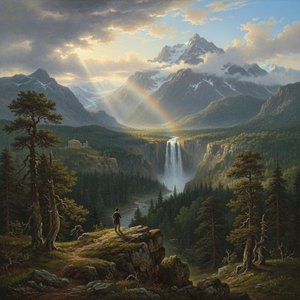
Evoking Nature's Sublime: A Comprehensive Exploration of 19th-Century Landscape Painting
Explore the captivating world of 19th-century landscape painting! Discover renowned artists like Friedrich & Monet, key movements, and find the perfect artwork to bring nature's serenity into your home. Expert insights at AllPaintingsStore.

Evocations of Place: A Historical Journey Through Landscape Art
Explore the rich history of landscape art with AllPaintingsStore. Discover renowned artists, movements like Impressionism & tonalism, and expert guidance for collecting timeless pieces. Find your perfect serene escape today!

낭만 풍경화의 황홀! 예술사에 빛난 10대 걸작 탐구 | 와후아트
낭만주의 시대, 예술혼을 불태운 10대 풍경화 걸작! 터너부터 프리드리히까지, 시대를 초월하는 아름다움을 와후아트에서 만나보세요. 고흐의 색채와 코로의 섬세함이 당신의 공간에 영감을 더합니다. 지금 바로 와후아트에서 명품 미술 작품을 감상하고 구매하세요!

Evocations of Place: A Historical Journey Through Landscape Art
Explore the rich history of landscape art with AllPaintingsStore. Discover renowned artists, movements like Impressionism & Romanticism, and expert guidance for collecting timeless pieces. Find your perfect serene escape today!

존 컨스터블 대표작 25선: 영국 풍경화의 거장, 자연과 감성을 담은 명화 컬렉션 | AllPaintingsStore
존 컨스터블 대표작 25선을 만나보세요. 영국 풍경화 거장의 자연주의 회화, 데담 밸리의 아름다움과 헤이 웨인의 정취를 담은 명화를 감상하세요. AllPaintingsStore에서 고품질 예술 작품 복제본을 소장하고 특별한 인테리어를 완성해보세요. 지금 바로 컬렉션을 탐험하세요!

