where was diego velázquez born
Diego Velázquez was born in Seville, Spain. This vibrant city served as the starting point for his artistic journey, where he began his training and eventually moved to Madrid to serve the Spanish royal court as a leading painter of the Baroque period.
His early years in Seville were defined by rigorous training under influential masters. He studied under Francisco Pacheco, who helped shape his technical foundation. This period allowed him to absorb the dramatic realism of Caravaggio and the stylistic conventions of Mannerism.
Key details of his early career include:
- Birthplace: Seville, Spain
- Early Mentor: Francisco Pacheco
- Artistic Focus: Bodegones (still lifes) and genre scenes
when was diego velázquez born
 Philip IV
Philip IV, Diego Velázquez
Diego Velázquez was born in 1599. While historical records indicate he was baptized on 6 June 1599, the year 1599 is the established date for his birth in Seville, marking the beginning of a life that would define the Spanish Golden Age.
He spent his formative years in Seville before his career took him to the heart of Spanish power. By 1623, at age twenty-four, he relocated to Madrid, a move that transformed his trajectory from a talented student to a royal court painter.
His life timeline includes:
- Birth Year: 1599
- Move to Madrid: 1623
- Appointment to Court: 1628 (serving King Philip IV)
- Death: 1660 in Madrid
what was the historical context of his birthplace
His birthplace was part of Spain’s Golden Age, a period of immense imperial power and cultural flourishing. This era provided the wealth and patronage necessary for artists to thrive, allowing Velázquez to rise from humble beginnings to become a visual interpreter of an empire.
The cultural atmosphere of the time influenced his evolution from painting meticulous still lifes to capturing the psychological depth of the Habsburg court. His work moved away from rigid formality toward a more naturalistic and insightful approach to human character.
Historical influences on his style included:
- Artistic Movements: Mannerism and the Baroque
- Key Influences: Caravaggio's realism and Venetian masters like Titian
- Political Backdrop: The grandeur of the Spanish Golden Age and the Habsburg dynasty
Frequently asked questions
Who was the court painter to King Philip IV?
He was appointed court painter to King Philip IV in 1628.
Where did he apprentice?
He apprenticed under Francisco Pacheco in Seville.
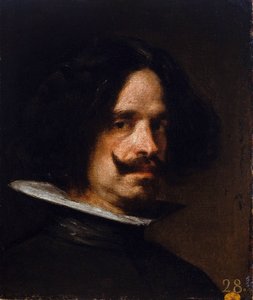
Where is A Young Man (detail) located?
A Young Man (detail) is housed in the Museo del Prado.
What were his painting specialties?
He was known for painting bodegones, which are detailed still lifes.
Learn more
- 1599 – 1660Diego Velázquez BiographyRead the full biography of Diego Velázquez to understand his historical significance.
- All Diego Velázquez ArtworksBrowse our complete catalog of Velázquez reproductions for your professional art procurement.