The Poet of Craftsmanship: The Life and Legacy of Archibald Knox
In the delicate interplay between ancient tradition and the burgeoning pulse of modernity, few names resonate with as much quiet elegance as Archibald Knox. Born on April 9th, 1864, in the tranquil village of Cronkbourne near Tromode, Isle of Man, Knox was a man whose very essence seemed woven from the intricate patterns of his heritage. A designer of Scottish descent, his life’s work became a profound synthesis of the Arts and Crafts ideals, the mystical symbolism of the Celtic Revival, and the clean, structural clarity of early Modernism. He did not merely create objects; he composed visual poems that bridged the gap between the utilitarian and the sublime, leaving an indelible mark on the decorative arts of the twentieth century.
The foundations of Knox’s meticulous artistry were laid in his childhood, shaped by the disciplined hands of his father, William Knox. As a skilled cabinet maker at Moore’s Tromric Works, William instilled in his son an reverence for material and a profound appreciation for the integrity of craftsmanship. This early exposure to the tactile world of wood and metal would later manifest in Archibald's ability to breathe life into even the most humble substances. His formal journey took him to the Glasgow School of Art, where he studied under the influential Charles Napier Fry. It was here that the seeds of his commitment to the Arts and Crafts movement were sown—a philosophy rooted in a rejection of the soullessness of industrial mass production in favor of a soulful, handcrafted approach that honored both the maker and the medium.
A Symbiosis of Heritage and Modernity
Knox’s artistic vocabulary was deeply enriched by the Celtic Revival, a movement that sought to rediscover and celebrate Gaelic culture. He drew immense inspiration from the ancient, interwoven knotwork and stylized flora of Manx heritage, translating these ancestral motifs into a contemporary language. This ability to look backward to move forward allowed him to create designs that felt both timeless and strikingly new. His work was never stagnant; it flowed between the organic curves of Art Nouveau and the bold, geometric precision that would eventually define the Modern Style.
The most luminous chapter of his career unfolded within the hallowed halls of Liberty London. Serving as the chief designer for Arthur Lasenby Liberty from 1897 until his death in 1933, Knox became the silent architect of one of Britain’s most iconic aesthetic eras. While Liberty famously kept their designers anonymous, the unmistakable "Knox style" became a global phenomenon. His contributions were vast and varied, ranging from the exquisite Cymric range of precious metalwork to the celebrated Tudric pewter collections. Through these pieces, he brought high art into the domestic sphere, proving that everyday objects—be they inkwells, jewelry, or tableware—could serve as vessels for profound beauty.
A Boundless Creative Vision
The sheer breadth of Knox’s talent is difficult to overstate. He was a polymath of design, possessing an uncanny ability to apply his aesthetic principles to almost any surface or medium. His creative output included:
- Metalwork and Jewelry: The creation of the legendary Cymric and Tudric ranges, characterized by textured surfaces and rhythmic patterns.
- Graphic Arts and Typography: A mastery of calligraphy and font design that integrated seamlessly with his decorative motifs.
- Architectural Elements: Designing everything from intricate house details to the poignant gravestone for Arthur Lasenby Liberty.
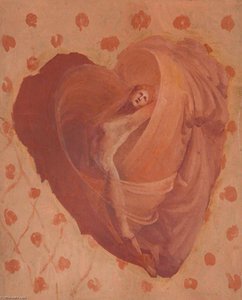
- Fine Arts: Exploring the emotive depths of watercolours and even surrealist oil paintings that captured a dreamlike, symbolic atmosphere.
Ultimately, Archibald Knox’s significance lies in his role as a bridge-builder. He connected the rugged, ancient spirit of the Isle of Man to the sophisticated urbanity of London; he connected the hand-wrought traditions of the past to the streamlined efficiency of the future. Though he lived through an era of rapid industrial change, he remained steadfast in his mantra: "Aim for order, hope for beauty." His legacy remains a testament to the idea that true design does not merely decorate life—it elevates it.