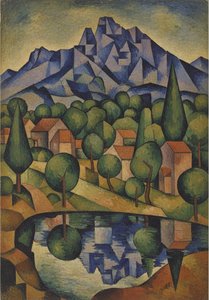
A Gentle Vision of Everyday Life
Edward Jeffrey Irving Ardizzone, CBE RA, possessed a rare and tender ability to find the extraordinary within the ordinary. Born in 1900 in the port city of Haiphong, French Indochina, his early life was shaped by a unique blend of colonial landscapes and English roots. While his father served with the Eastern Extension Telegraph Company in the Far East, Ardizzone’s formative years were spent under the nurturing care of his maternal grandmother in Suffolk. This transition from the vibrant, bustling atmosphere of Vietnam to the quiet, pastoral rhythms of the English countryside instilled in him a lifelong sensitivity to the nuances of environment and atmosphere—a quality that would later become the heartbeat of his most celebrated works.
His artistic path was not one of immediate triumph but rather one of persistent devotion. After leaving school in 1918, Ardizzont faced the sting of rejection when his initial attempts to enlist in the British Army were unsuccessful. He spent time as an office clerk in London and Warminster before finding his true calling through evening classes at the Westminster School of Art. Under the mentorship of Bernard Menins, he began to master the delicate medium of watercolor. This choice of medium was pivotal; the fluidity and transparency of watercolor allowed him to capture the ephemeral qualities of light and the soft edges of memory, creating a visual language that felt both intimate and timeless.
The Art of Observation and Influence
Ardizzone’s aesthetic sensibilities were deeply rooted in the traditions of Impressionism and Post-Impressionism. He drew profound inspiration from the works of masters like Cézanne and Gauguin, particularly in how they approached form and color to convey emotional depth. Rather than seeking grand, dramatic gestures, Ardizzone utilized these influences to explore the structural beauty of the natural world and the subtle complexities of human figures. His brushwork often embraced a certain simplified form and vibrant palette, which lent a charming, almost fable-like quality to his depictions of landscapes and social scenes.
His repertoire was remarkably diverse, yet unified by a consistent warmth. He moved seamlessly between genres, from evocative portraits and sweeping landscapes to the poignant documentation of wartime Britain. During World War II, his role as an official war artist allowed him to capture the resilience of the human spirit. Unlike many who focused solely on the mechanics of combat, Ardizzone turned his gaze toward the ordinary citizens navigating the hardships of conflict. His watercolors from this era serve as a vital historical record, documenting the quiet courage and daily struggles of a nation under siege with a profound sense of empathy.
A Legacy in Ink and Watercolor
Beyond the gallery walls, Ardizzone achieved legendary status through his contributions to children’s literature. He was a master storyteller who used both pen and brush to create worlds that resonated with readers of all ages. His most significant achievement in this realm came in 1956, when he won the inaugural Kate Greenaway Medal for Tim All Alone. This work, part of his beloved Little Tim series, showcased his ability to blend narrative charm with exquisite illustration, cementing his place as one of the twentieth century's most important illustrators.
The breadth of his professional impact extended far beyond books. His illustrations graced the pages of prestigious periodicals such as The Strand Magazine, Punch, and The Radio Times, and even appeared in Vogue. He was also a sought-after talent for commercial endeavors, providing artwork for companies like Guinness and the Arts Council. This versatility speaks to a man whose artistic vision was deeply integrated into the cultural fabric of his time. Today, Edward Ardizzone is remembered not just as a painter or an illustrator, but as a chronicler of the human condition, leaving behind a legacy of gentle beauty that continues to enchant and move the heart.