A Visionary of Light and Landscape: The Legacy of John Bourne
The history of British visual art is often told through the lens of grand movements, yet few figures capture the quiet, profound intersection of reality and atmosphere as masterfully as John Bourne. Born in Birkenhead, Cheshire, in 1861, Bourne emerged during a transformative era when the boundaries between photography and painting were beautifully blurred. While he is celebrated as a pioneer of Victorian landscape photography, his artistic soul was equally deeply rooted in the evocative power of oil painting. His life’s work serves as a bridge between the meticulous documentation of the natural world and the emotional resonance of impressionistic light.
Bourne’s early years were defined by an unwavering fascination with detail—a trait that would become his artistic hallmark. This dedication to precision led him to participate in some of the most ambitious photographic undertakings of the nineteenth century. Through the renowned Howard, Bourne & Shepherd studio, he played a crucial role in documenting the expanding infrastructure of India under British colonial rule. These were not merely clinical records; they were sweeping, cinematic glimpses into the architectural marvels and rugged Himalayan landscapes that captivated the Victorian imagination. His ability to capture the grandeur of these distant territories helped shape the Western perception of the subcontinent, turning far-off vistas into tangible, breathtaking realities.
The Mastery of Atmosphere and Technique
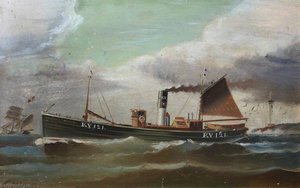
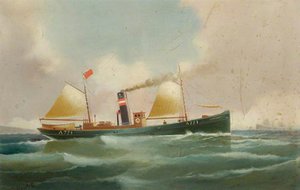
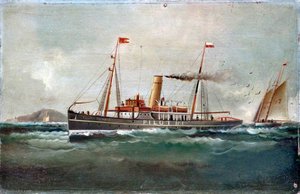
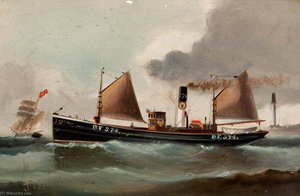
As his career progressed, Bourne’s artistic language underwent a sophisticated evolution. While his photographic roots demanded a certain level of realism, his foray into oil painting allowed him to explore the more ephemeral qualities of light, color, and mood. He moved beyond simple representation toward a style that embraced both realism and simplification, a technique used to distill complex maritime and landscape scenes into evocative compositions. In his paintings, one finds a remarkable ability to capture the play of light upon moving water and the shifting textures of the sky.
His maritime works, in particular, stand as testaments to his technical prowess. Consider the following elements that define his painterly approach:
- The Use of Light: Whether depicting the warm, golden hues of a sunset in Trawler INS 882 'Bella Main' or the muted, nostalgic tones of Study of Fishing Boat 'Cluny Hill', Bourne used light to instill a sense of serenity and time.
- Compositional Balance: He possessed a keen eye for weight and movement, often using solitary vessels against vast oceanic backdrops to create a profound sense of scale and solitude.
- Textural Depth: Through bold yet precise brushstrokes, he rendered the rugged textures of wooden hulls and the fluid, rhythmic motion of waves with extraordinary sensitivity.
Historical Significance and Enduring Influence
The significance of John Bourne extends far beyond his individual canvases and plates. He was a pivotal figure in a community of artists and photographers who sought to push the limits of visual storytelling. By mentoring younger practitioners and collaborating with contemporaries like Samuel Dixon Bourne, he helped foster a legacy of meticulous observation that would influence landscape art for generations. His work remains a vital historical archive, preserving the architectural and natural splendor of an era that was rapidly changing.
Today, the works of Bourne, such as those held in the Falconer Museum in Scotland, continue to resonate with modern viewers. They offer more than just a window into the Victorian past; they provide a meditative experience. In an age of rapid digital imagery, Bourne’s ability to capture the tranquility and majesty of the natural world serves as a poignant reminder of the power of slow, deliberate observation. His legacy is one of profound respect for the earth, captured through a lens—and a brush—that saw beauty in every detail.