Jean Alexis Achard: Master of the Dauphiné Landscape
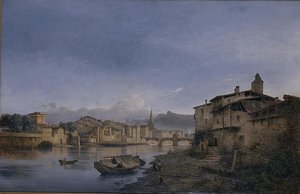
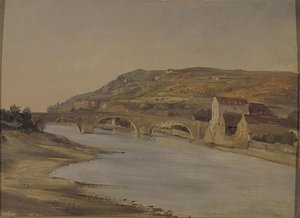
Born in 1807 in Voreppe, a small farming village nestled within the foothills of the French Alps in Isère, Jean Alexis Achard’s artistic journey began not with formal training but with an intimate connection to the land. His early life was steeped in rural traditions, a formative experience that would profoundly shape his distinctive style and subject matter. Unlike many artists of his era who sought inspiration in grand cities or classical subjects, Achard found his muse in the familiar landscapes of Dauphiné – the rolling hills, verdant valleys, and modest villages of his native region. This dedication to portraying the everyday beauty of his homeland would ultimately establish him as a pivotal figure in the development of French landscape painting and the influential “École Dauphinoise.”
Achard’s artistic apprenticeship was largely self-directed. He began by meticulously copying paintings at the Grenoble Museum, an endeavor that honed his observational skills and introduced him to the techniques of established artists. He then enrolled in the free municipal school of Grenoble, where he received a more structured education, but it was through encounters with the Lyon School painters – a group known for their focus on regional subjects and atmospheric effects – that Achard truly found his artistic voice. Isidore Dagnan served as his teacher from 1824 to 1830, providing him with invaluable guidance in capturing light and shadow, and establishing a foundation for his future work.
The Egyptian Expedition and Early Influences
A significant turning point in Achard’s career occurred in 1835 when he joined the St. Simonians, a group of intellectuals and artists associated with the utopian philosopher Henri de Saint-Simon. This expedition to Egypt between 1835 and 1837 proved transformative. Immersed in the vibrant colors and dramatic light of the Egyptian landscape, Achard was deeply influenced by the ancient world. He meticulously documented his observations, creating numerous sketches and studies that would later inform his paintings. The experience broadened his artistic horizons, introducing him to new compositional techniques and a heightened sensitivity to color and atmosphere – elements he skillfully integrated into his Dauphiné landscapes.
Returning to France, Achard’s style began to evolve. He spent time studying the works of the Dutch Masters at the Louvre, particularly their masterful use of light and shadow. This exposure to classical techniques, combined with his Egyptian experiences, laid the groundwork for his distinctive approach – a harmonious blend of realism and atmospheric impressionism. He also developed a close friendship with Victor Sappey, another St. Simonian artist, who shared his passion for capturing the essence of the French countryside.
The Barbizon School and the École Dauphinoise
In 1846, Achard’s artistic trajectory took another significant turn when he became associated with the Barbizon School. This group of artists, led by Théodore Rousseau, sought to paint *en plein air* (outdoors) and depict the natural world as it truly appeared – without idealization or artificiality. Achard embraced this approach, spending considerable time in Auvers-sur-Oise, a village near Paris known for its picturesque landscapes and proximity to the Barbizon artists. He formed close relationships with key figures such as Jean-Baptiste-Camille Corot, Théodore Rousseau, Charles-François Daubigny, and Narcisse Virgilio Díaz – artists who profoundly influenced his style and technique.
Crucially, Achard’s influence extended beyond the Barbizon School. He played a pivotal role in establishing the “École Dauphinoise,” a distinct artistic movement centered around the landscapes of Dauphiné. Artists like Laurent Guétal, Ernest Victor Hareux, Charles Bertier, and others were drawn to Achard's distinctive style – characterized by its earthy tones, atmospheric perspective, and meticulous attention to detail. This group developed a shared aesthetic sensibility, creating a body of work that celebrated the beauty and character of their native region.
Legacy and Artistic Significance
Jean Alexis Achard’s contribution to French landscape painting is undeniable. He elevated the depiction of Dauphiné landscapes from mere genre scenes to works of profound artistic merit. His paintings are not simply representations of scenery; they are imbued with a sense of atmosphere, emotion, and quiet contemplation. Achard's meticulous observation, combined with his innovative use of light and color, established him as “Master of the Landscape in Dauphiné.”
His legacy extends beyond his individual works. He fostered the development of the École Dauphinoise, shaping a generation of artists who continued to explore and celebrate the beauty of their region. Achard’s paintings are now housed in prominent museums throughout France, including the Musée de Grenoble, the Louvre, the Musée des Beaux-Arts de Chambéry, and the Musée du Château de Fontainebleau, ensuring that his artistic vision continues to inspire and captivate audiences today.
Notable Works
- PAYSAGE.ENVIRONS DE GRENOBLE (circa 1838): A quintessential example of Achard’s atmospheric style, capturing the rolling hills and distant mountains of Dauphiné with a masterful use of light and shadow.
- Massif d'arbres au bord de la mer. Environs d'Honfleur (circa 1859): Demonstrates Achard’s ability to evoke the beauty of coastal landscapes, utilizing loose brushstrokes and atmospheric perspective.
- Clairière ensoleillée (circa 1843): A serene depiction of a forest clearing, showcasing Achard's skill in capturing the dappled light filtering through the trees.