The Genesis of Classical Grace
Born in the quiet, historic surroundings of Montbard, France, Jean-Baptiste Claude Eugène Guillaume was destined to breathe life into stone and bronze. Raised in an environment where art was a fundamental language—his father being a painter—Guillaume’s early years were steeped in the aesthetics of tradition. His education at the Montbard Lycée provided him with more than just academic rigor; by studying Latin and Greek, he gained the linguistic keys to the ancient worlds that would later haunt and inspire his sculptural endeavors. This deep-seated reverence for antiquity paved the way for his 1841 entry into the prestigious École des Beaux-Arts, where he began a transformative journey under the tutelage of masters such as Cavelier, Millet, and Barrias, establishing himself firmly within the influential Parisian art scene.
A Triumph of Heroic Idealism
The trajectory of Guillaume’s career was irrevocably altered in 1845, a year marked by his monumental victory at the Prix de Rome. His winning piece, Theseus finding on a rock his father's sword, was not merely a display of technical prowess but a profound statement of heroic idealism. This achievement secured him the patronage necessary to ascend the heights of the Parisian art scene and established him as a leading voice in the revival of classical ideals during the Second Empire. Through this work, Guillaume demonstrated an uncanny ability to marry meticulous craftsmanship with the grand narratives of myth, setting a standard for the academic excellence he would later champion as Director of the École des Beaux-Arts.
The Emotional Resonance of Bronze and Stone
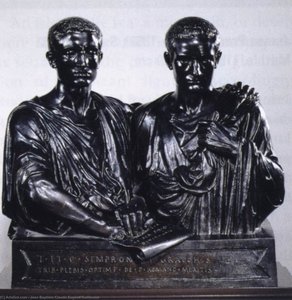
While his technical skill was undeniable, Guillaume’s true mastery lay in his ability to imbue cold materials with a palpable, human warmth. In works such as the Cenotaph of the Gracchi, created in 1848, one encounters a profound sense of solemnity and restrained power. This bronze masterpiece does not simply depict Roman figures; it captures the very essence of grief and the heavy burden of political upheaval. His ability to navigate between the monumental and the intimate allowed him to create works that ranged across various scales and subjects:
- Grand historical commemorations, such as his tributes to Colbert and Napoleon III;
- Intimate portrait busts that captured the nuanced essence of aristocratic life, including figures like Rameau and Michelangelo;
- Allegorical explorations, such as the evocative Castalia, or the Source of Poetry.
In every sculpture, whether a large-scale public monument or a delicate bust, there is an unmistakable commitment to anatomical accuracy intertwined with a modern sensibility for emotion. He possessed the rare gift of making bronze appear as heavy as sorrow and stone as fluid as memory.
A Lasting Academic Legacy
Guillaume’s influence extended far beyond the sculptor's studio. As he ascended to the roles of Director of the École des Beaux-Arts in 1864 and later Director-General of Fine Arts from 1878 to 1879, he became a guardian of academic standards during a period of significant cultural shifts. He was not only a creator but also a prolific scholar, writing extensively on the sculpture and architecture of the Classical period. His life, which concluded in Rome in 1905, remains a testament to a lifetime dedicated to the preservation and revival of beauty. Through his leadership and his enduring oeuvre, Guillaume ensured that the classical spirit would continue to resonate within the heart of French art history.
질의응답
주제별로 분류된 Jean Baptiste Claude Eugène Guillaume의 작품들은 어디에서 확인할 수 있나요?
Jean Baptiste Claude Eugène Guillaume의 주제별 아틀라스는 작가의 작품들을 주제별로 분류하여 보여주는 페이지입니다.
Jean Baptiste Claude Eugène Guillaume 작가의 출신 국가는 어디인가요?
Jean Baptiste Claude Eugène Guillaume은(는) France에서 태어났습니다.
Jean Baptiste Claude Eugène Guillaume 작가의 작품을 감상할 수 있는 3D 가상 투어가 있나요?
Jean Baptiste Claude Eugène Guillaume의 3D 뮤지엄는 작가의 작품들을 가상 3D 갤러리로 선보이는 페이지입니다.