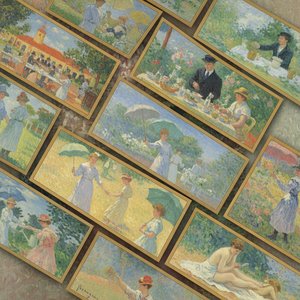
Louis Pierre Spindler: A Victorian Portraitist of Subtle Realism
Louis Pierre Spindler (1800-1889) emerges from the bustling artistic landscape of 19th-century Britain as a quietly significant portrait painter. While not commanding the same immediate fame as his contemporaries, Spindler’s meticulous approach and nuanced understanding of human character secured him a respected place within Victorian society, particularly through his depictions of prominent figures like William Crosfield and Jeremiah Wane. His work offers a compelling glimpse into the era's fascination with realism, social standing, and the subtle art of capturing an individual’s essence on canvas. Born in Lancaster, England, Spindler’s early life remains somewhat shrouded in detail, though his family background—including a connection to Reverend John Manby of Lancaster—suggested a privileged upbringing that afforded him access to artistic training.Early Influences and Artistic Training
Spindler's formal artistic education began at the age of twelve, a testament to his early aptitude for drawing. He received encouragement from his uncle, Louis-Pierre Spindler (no relation), a painter himself, fostering a passion that would define his life’s work. This initial guidance proved pivotal, leading him to Düsseldorf, Munich, and Berlin—major artistic centers of the time—where he immersed himself in diverse styles and techniques. Crucially, his encounter with Martin von Feuerstein in Munich introduced him to the world of marquetry, a technique involving intricate inlaying of materials into wood panels. This marked a turning point, as Spindler would later champion this craft, elevating it from mere decoration to a form of artistic expression. His military service further broadened his experiences and honed his observational skills – essential for capturing the subtle details that characterized his portraits.The Art of Portraiture: Technique and Subject Matter
Spindler’s portraiture is distinguished by its remarkable realism, achieved through painstaking attention to detail and a masterful understanding of light and shadow. He eschewed dramatic poses or theatrical settings, instead favoring compositions that presented his subjects in naturalistic arrangements within their environments. This approach allowed him to reveal not just the outward appearance but also the inner character of each individual. His portraits of figures like William Crosfield and Jeremiah Wane are particularly noteworthy for their ability to convey a sense of quiet dignity and intellectual depth. These weren’t simply likenesses; they were carefully constructed narratives, revealing personality through subtle gestures, expressions, and the arrangement of objects within the frame. He frequently employed a muted color palette, prioritizing tonal variations over vibrant hues, further enhancing the realism and creating an atmosphere of understated elegance.Beyond Portraiture: Marquetry as Art
Spindler’s artistic pursuits extended beyond traditional portraiture. His fascination with marquetry led him to develop a unique style that blurred the boundaries between painting and craftsmanship. He didn't merely decorate surfaces; he used marquetry to create textured, three-dimensional effects, layering materials like ivory, ebony, and mother-of-pearl to achieve remarkable visual depth. This innovative approach was showcased in his collaborations with artisans such as Léon Elchinger (pottery) and Jean-Désiré Ringel d’Illzach (sculpture), resulting in stunning furniture pieces that were both functional and works of art. His work for the Benedictine Abbey of Saint-Pierre, a significant commission, exemplifies this fusion of artistic disciplines.Legacy and Historical Significance
Louis Pierre Spindler's contribution to 19th-century British art is often understated but nonetheless important. He represents a quieter, more introspective strain within the Victorian portraiture tradition—one that valued psychological insight over flamboyant display. His meticulous technique, combined with his championing of marquetry as an artistic medium, established him as a respected figure in both painting and decorative arts. While he may not be widely celebrated today, Spindler’s portraits offer a valuable window into the social and cultural values of his time, revealing a keen awareness of human character and a commitment to capturing the subtle nuances of Victorian life. His work continues to be studied by art historians and appreciated for its quiet beauty and enduring realism.질의응답
Louis Pierre Spindler의 모든 작품에 나타나는 색채 활용을 살펴볼 수 있을까요?
Louis Pierre Spindler의 팔레트 지놈는 작가의 작품 세계를 구성하는 컬러 프로필을 보여주는 페이지입니다.
Louis Pierre Spindler은(는) 어느 시대에 활동했나요?
Louis Pierre Spindler은(는) 19th Century 시대에 활동했습니다. 이 시기는 역사적 맥락에서 작가의 활동 위치를 보여줍니다.
키워드로 Louis Pierre Spindler의 작품을 찾아볼 수 있나요?
특정 주제의 Louis Pierre Spindler 작품을 찾으려면 키워드별로 작품이 분류된 작가의 키워드별로 페이지를 이용해 보세요.