Early Life and Education
- Born: Marie Anne Caroline Quivoron, December 1, 1840, Argenton-en-Landunvez, Brittany, France
- Died: January 17, 1916
- Early life marked by instability due to her father's death and subsequent remarriage of her mother.
- Received initial art lessons from M. Auguste Vassort, an old painter who restored paintings.
- Studied under Jean-Auguste-Dominique Ingres, a prominent Neoclassical painter, gaining valuable technical skills but also experiencing his doubts about women's artistic capabilities.
Artistic Development and Impressionism
- Initially painted in an academic style influenced by Ingres.
- Married Félix Bracquemond, a printmaker who introduced her to Japanese art (Japonisme) and encouraged her exploration of new techniques.
- Around 1887, significantly shifted towards Impressionism under the influence of Monet, Degas, and particularly Paul Gauguin.
- Embraced en plein air painting, capturing fleeting moments and light effects in her garden at Sèvres.
- Developed a vibrant palette, influenced by Gauguin's advice to intensify colors.
Major Works and Style
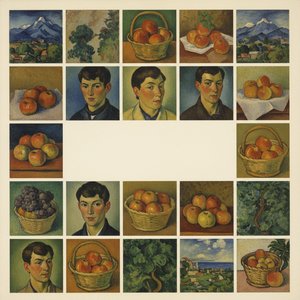
- Notable Paintings: "Felix Bracquemond in His Studio" (1886), "Child Pierre" (undated), "On the Terrace at Sèvres" (1880), "The Lady in White" (1880), "Afternoon Tea" (1887).
- Style: Characterized by loose brushstrokes, vibrant colors, and a focus on domestic scenes and garden views.
- Her paintings often depict intimate moments of family life and the beauty of nature.
- Demonstrated a meticulous approach to composition despite her Impressionistic style, planning pieces through sketches and drawings.
Recognition and Historical Significance
- Participated in three Impressionist exhibitions (1879, 1880, 1886).
- Her work was initially overshadowed by her husband's efforts to downplay her artistic achievements.
- Rediscovered as a significant figure in the Impressionist movement in the 20th century, particularly through Henri Focillon’s recognition of her as one of "les trois grandes dames" alongside Cassatt and Morisot.
- Represents an important contribution to female representation within the male-dominated art world of the 19th century.
Later Life and Legacy
- Continued painting until her death in 1916, despite declining health.
- Her son, Pierre Bracquemond, wrote a biography of his parents that provides valuable insights into their lives and artistic collaboration.
- Although fewer than 35 of her works are currently located and catalogued, her legacy as a talented Impressionist painter is increasingly recognized and celebrated.
- Marie Bracquemond's story highlights the challenges faced by women artists in gaining recognition and underscores the importance of rediscovering overlooked figures in art history.
질의응답
Marie Bracquemond의 출생지와 출생 연도는 언제인가요?
Marie Bracquemond은(는) 1840년 Argenton-en-Landunvez에서 태어났습니다.
Marie Bracquemond 작가의 작품을 3D 갤러리에서 어디서 볼 수 있나요?
가상 방문이 가능합니다: Marie Bracquemond의 3D 뮤지엄 페이지에서 작가의 작품들을 3D 갤러리를 통해 만나보실 수 있습니다.
Marie Bracquemond 작가의 작품을 연도별로 어떻게 확인할 수 있나요?
Marie Bracquemond의 작품은 작가의 작품 연대기 페이지에서 연도별로 확인하실 수 있습니다.