Early Life and Artistic Training
Thomas Duncan was born in Kinclaven, Perthshire, on 4 May 1807. His early years were shaped by the education he received at the Perth Academy. While his path initially seemed set toward the study of law, he eventually turned away from legal texts to pursue art. This shift in focus led him to the instruction of Sir William Allan, who helped him develop his early skills as a delineator of the human figure.
In 1827, Duncan moved toward more formal training when he enrolled at the Trustees’ Academy in Edinburgh. His time there was marked by a growing ability to capture the human form, a skill that would define much of his later work. He studied alongside David Octavius Hill, a man who would remain a lifelong friend. These formative years in Edinburgh provided the technical foundation for his later reputation as a painter of portraits and historical scenes.
Professional Career and Academic Roles
Success came early in his career. After exhibiting at the Royal Scottish Academy in 1828, he was elected a full member of the institution in 1829. This recognition coincided with the establishment of a significant portrait studio, where he worked to capture the likenesses of his subjects. His hands were busy with both the precision of line and the application of pigment.
His technical skill led him toward teaching. He was appointed as a professor of coloring at the Trustees' Academy, a role that required a deep understanding of how light and shade settle upon a surface. He later took on the responsibility of teaching drawing as well. From 1838 until 1845, he held a professorship at the Trustees' Academy, shaping the hands and eyes of students in Edinburgh until his death.
Notable Narrative and Portrait Works
Much of his output focused on the stories found in Scottish history and the novels of Sir Walter Scott. In 1840, he painted Charles Edward Stuart and the Highlanders entering Edinburgh following the Battle of Prestonpans. That same year, he produced a depiction of Charles Edward asleep after Culloden, a scene that was frequently engraved. These narrative works allowed him to explore the weight of historical moments through the figures of the people involved.
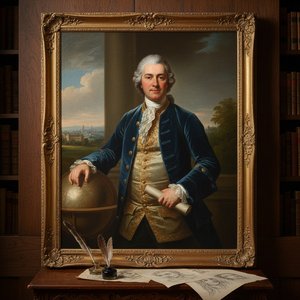
His brush also turned toward more intimate or symbolic subjects. In 1844, he completed Cupid and The Martyrdom of John Brown of Priesthill. While he was often sought after for his portraits of ladies and children, his own likeness remains a significant piece of his output. This self-portrait, painted in late 1844, was his last known work before his death.