Thomas Kirkby: A Painter of Dignified Portraits and Atmospheric Landscapes
Thomas Kirkby, a name perhaps less familiar than those of his contemporaries, nevertheless represents a significant figure in 18th and early 19th-century British art. Born in January 1775 and passing away around 1847, Kirkby’s career spanned nearly seven decades, during which he cultivated a distinctive style characterized by elegant portraiture and meticulously rendered landscapes—often imbued with a subtle melancholy. His work reflects the prevailing tastes of his era, embracing neoclassical ideals while simultaneously demonstrating an acute sensitivity to light and atmosphere.
Kirkby's early life remains somewhat shrouded in mystery, though he is known to have graduated from the Royal Academy of Arts in 1795. He quickly established himself as a professional artist, exhibiting his works at the Academy between 1796 and 1846, and later at the British Library from 1808 until his death. This consistent presence in the art world suggests a dedicated and persistent career, marked by both success and perhaps a quiet struggle for recognition.
The Portraiture of Distinction
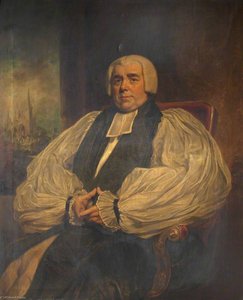
Kirkby’s most celebrated work lies within his portraiture. He possessed a remarkable ability to capture not just physical likeness but also the character and bearing of his subjects. His portraits are distinguished by their dignified composure, often conveying an air of quiet authority or understated elegance. Notable commissions included those for prominent figures such as Henry Bathurst, a member of the Royal Family, and William Howley, a respected clergyman. These works demonstrate Kirkby’s skill in capturing subtle nuances of expression and creating images that feel both formal and intimate.
The portraits are not merely representations; they are carefully constructed narratives. Kirkby meticulously considered his subjects' attire, poses, and the settings within which they were depicted—elements that collectively contribute to a deeper understanding of their personalities and social standing. His attention to detail is particularly evident in the rendering of fabrics, jewelry, and architectural features, showcasing a mastery of technique honed through years of practice.
Landscapes of Quiet Reflection
Alongside his portraiture, Kirkby produced a substantial body of landscape paintings. These works are often characterized by a subdued palette—predominantly consisting of muted greens, browns, and blues—and a focus on atmospheric effects. He eschewed the dramatic vistas favored by some of his contemporaries, instead opting for scenes that evoke a sense of quiet contemplation and solitude.
Kirkby’s landscapes are not simply depictions of scenery; they are imbued with an emotional resonance. The hazy light, the subtle shifts in color, and the carefully chosen compositions all contribute to a feeling of melancholy or wistfulness. It is as if he sought to capture not just the outward appearance of nature but also its inherent stillness and timelessness. His landscapes frequently feature elements such as ruins, woodlands, and distant hills, creating images that are both visually appealing and psychologically evocative.
Influences and Legacy
While Kirkby’s style is firmly rooted in the neoclassical tradition—drawing inspiration from artists like Sir Thomas Lawrence—he also demonstrates a sensitivity to the Romantic movement. His emphasis on atmosphere, emotion, and the beauty of nature aligns with the broader trends of the era. However, unlike many of his Romantic counterparts, Kirkby maintained a restrained approach, avoiding overt sentimentality or dramatic displays of feeling.
Thomas Kirkby’s legacy is perhaps less widely recognized than that of some of his more famous contemporaries, but his work deserves to be appreciated for its elegance, technical skill, and quiet emotional depth. His portraits offer glimpses into the lives of prominent figures, while his landscapes invite viewers to pause and reflect on the beauty and serenity of the natural world. He remains a testament to the enduring power of observation and artistic sensitivity.
질의응답
Thomas Kirkby 작가는 어떤 색상을 가장 자주 사용했나요?
Thomas Kirkby 작가 작품의 컬러 프로필은 작가의 팔레트 지놈 페이지에서 확인하실 수 있습니다.
주제별로 분류된 Thomas Kirkby의 작품들은 어디에서 확인할 수 있나요?
주제별 아틀라스 페이지에서는 Thomas Kirkby의 작품들을 주제별로 찾아보실 수 있습니다.
Thomas Kirkby의 작품은 얼마나 인기가 있나요?
Thomas Kirkby 작가 작품에 관한 통계 정보는 작가의 통계 페이지에서 확인하실 수 있습니다.
Thomas Kirkby 작품의 연도별 타임라인이 있나요?
Thomas Kirkby의 작품을 연도별로 정리하여 보여주는 작품 연대기 페이지입니다.
Thomas Kirkby의 경력은 어떻게 시기별로 구분되어 있나요?
Thomas Kirkby의 연대기는 작가의 활동 시기별로 분류된 작품들을 연대순으로 보여주는 스크롤 방식의 타임라인입니다.
Thomas Kirkby의 작품 중 몇 점을 둘러보실 수 있나요?
모든 작품 보기 페이지에서 Thomas Kirkby의 작품 작품 15점점을 만나보실 수 있습니다.
Thomas Kirkby의 모든 작품은 어디에서 볼 수 있나요?
본 웹사이트에 등록된 Thomas Kirkby의 모든 작품은 작가의 모든 작품 보기 페이지에서 확인하실 수 있습니다.
Thomas Kirkby은(는) 어느 시대에 활동했나요?
Thomas Kirkby은(는) 19th Century 시대에 활동했습니다. 이 시기는 역사적 맥락에서 작가의 활동 위치를 보여줍니다.