Life and Work
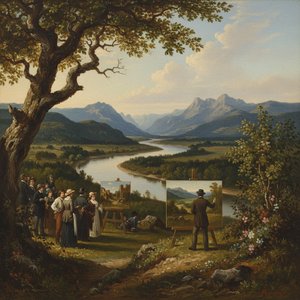
Vincenzo Montefusco (1852 – 1912) was an Italian painter born in Cava dei Tirreni, Campania, Kingdom of the Two Sicilies. He pursued his artistic education at the Academy of Fine Arts in Naples under Gabriele Smargiassi, Giuseppe Mancinelli, and Domenico Morelli. This formative period instilled within him a deep appreciation for realism and meticulous attention to detail—principles that would define his distinctive style. His debut at the Society for the Promotion of the Fine Arts in 1869 showcased his early talent with landscapes, establishing him as a budding artist focused on capturing the beauty of the natural world. However, Montefusco swiftly transitioned towards genre scenes depicting everyday life and imbued them with patriotic fervor, reflecting the spirit of his time. Notably, he produced “The Annunciation” and “The Visitation,” works celebrated for their luminous depiction of biblical narratives and masterful use of chiaroscuro—a technique emphasizing dramatic contrasts between light and shadow—demonstrating a profound understanding of artistic principles. Early collectors recognized Montefusco’s exceptional skill, securing commissions from discerning French patrons through the prestigious Goupil Gallery, marking an auspicious beginning to his career.Artistic Style and Themes
Montefusco's artistic style was characterized by vibrant colors combined with painstaking brushwork—a hallmark of Neapolitan Romanticism. He excelled at portraying scenes from ordinary life, capturing the nuances of domestic interiors and bustling marketplaces with remarkable accuracy. Yet, he wasn’t merely concerned with visual representation; Montefusco sought to convey emotion and idealism through his canvases. His patriotic themes resonated deeply with audiences, prominently featuring depictions of the Italian flag and the national anthem—expressions of pride and devotion to his homeland during a period of significant political upheaval. The artist's meticulous observation of light and shadow—a cornerstone of his technique—elevated his landscapes and genre scenes alike, transforming them into immersive experiences for viewers. His compositions were imbued with a sense of warmth and sincerity, reflecting the humanist values prevalent in Italian art circles of the era.Influences
Montefusco’s artistic sensibilities were profoundly shaped by the broader movement of Italian Romanticism, which championed emotional expression alongside realism. He drew inspiration from luminaries such as Giuseppe Michetti and Francesco Hayez—artists who similarly prioritized capturing psychological depth within their artworks. Furthermore, Montefusco's academic training under Smargiassi, Mancinelli, and Morelli ensured that he adhered to the rigorous standards of artistic excellence demanded by the Academy—a tradition rooted in classical ideals of beauty and proportion. These influences contributed to his distinctive aesthetic vision, characterized by a harmonious blend of observation and imagination.Notable Works
Montefusco’s oeuvre comprises numerous paintings that exemplify his stylistic prowess and thematic concerns. Among his most celebrated pieces are “The Annunciation,” “The Visitation,” “Setembrini” in the Prison of Santo Stefano, and “Borgo Santa Lucia.” These works stand out for their luminous color palettes and masterful execution—testaments to Montefusco’s dedication to artistic craftmanship. His landscapes, particularly those depicting Mount Vesuvius erupting, capture the dramatic power of nature with breathtaking realism. Moreover, his genre scenes offer poignant glimpses into the lives of ordinary Italians—revealing moments of tenderness, humor, and human connection. These paintings continue to be housed in prominent museums across Italy, including Museo di Capodimonte and Museo San Martino in Naples, ensuring that Montefusco’s artistic legacy endures for generations to come.Legacy and Later Life
Vincenzo Montefusco passed away in Rome in 1912, leaving behind a rich artistic heritage—a testament to his unwavering commitment to artistic excellence and humanist ideals. His paintings remain admired by art enthusiasts worldwide, serving as enduring symbols of Neapolitan Romanticism and Italian cultural identity. Montefusco’s influence extends beyond the realm of painting itself; he fostered a spirit of artistic innovation while upholding the traditions of academic training—inspiring subsequent generations of artists to pursue beauty and truth with unwavering conviction.질의응답
Vincenzo Montefusco의 출생지와 출생 연도는 언제인가요?
Vincenzo Montefusco은(는) 1852년 Cava de' Tirreni에서 태어났습니다.
주제별로 분류된 Vincenzo Montefusco의 작품들은 어디에서 확인할 수 있나요?
Vincenzo Montefusco의 주제별 아틀라스는 작가의 작품들을 주제별로 분류하여 보여주는 페이지입니다.
Vincenzo Montefusco의 작품 중 몇 점을 둘러보실 수 있나요?
모든 작품 보기 페이지에서 Vincenzo Montefusco의 작품 작품 1점점을 만나보실 수 있습니다.