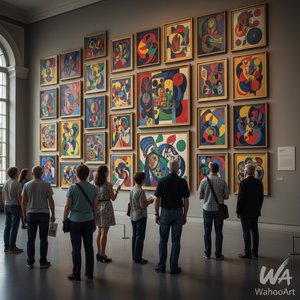
1946. Acrylic On Canvas. Modernaus meno muziejus Fort Verte.

§ 1Katalogo duomenys


Šis kūrinys yra saugomas autorinės teisės
Šiame puslapyje rodomas meno kūrinys yra saugomas autorių teisių įstatymais, todėl neturime teisės legaliai kurti ar parduoti jo identiškos reprodukcijos. Ši apsauga užtikrinama remiantis tokiais tarptautiniais susitarimais kaip Bernės konvencija ir pagal nacionalines įstatymų nuostatas, įskaitant tas, kurias nurodo JAV autoriškos teisės įstatymas – 17-asis skyrius.
Kaip pagarbią ir teisėtą alternatyvą, mes siūlome pagal užsakymą rankomis dažytus paveikslus, įkvėptus originalo. Mūsų įgudę ir profesionalūs menininkai kruopščiai tiria originalo stilių, nuotaiką ir meninę esmę, kad sukurtų naują, unikalią kūrinį, kuris sukelia tą paties jausmą – išlikdamas tuo tarciau originaliu, savarankišku kūrybiniu darbu.
Šis metodas visiškai atitinka autorių teises, nes jame nėra saugomo kūrinio kopijavimo ar dubliavimo. Tai yra kūrybinė reinterpretacija – naujas paveikslas, kurį įkvėpė originalas, tačiau kuris nėra jo identiškas.
 Skaityti daugiau
§ 2Abstraktus
Kolekcinio objekto aprašas
Experience Ad Reinhardt's iconic 'Number 6,' a dense abstract composition of layered colors and geometric shapes. Explore its minimalist aesthetic & philosophical depth – a key work by the influential artist.
Autoriaus biografija
Atraskite Ado Reinhardto (1913–1967) abstrakciją: ikoniškas juos paveikslus, geometrinę abstrakciją ir įtakingą „Menas kaip menas“ filosofiją. Esminė minimalizmo ir Abstraktinio ekspresionizmo figūra!
§ 3Komentaras
The Genesis of a Void: Ad Reinhardt's 'Number 6'
Adolph Friedrich Reinhardt, born in Buffalo, New York in 1913, wasn’t merely an artist; he was a philosopher of painting. His oeuvre, particularly his iconic “black” paintings from the mid-1960s, represents a radical departure from representational art and a profound exploration of what constitutes ‘art’ itself. 'Number 6,' created in 1946, stands as a pivotal example of this philosophy, embodying Reinhardt's core belief that painting could transcend subject matter and become an end unto itself – a pure, distilled experience. The work isn’t about depicting anything; it’s about the act of painting, the materiality of pigment, and the viewer’s engagement with the canvas as a field of color and texture.
The genesis of 'Number 6' lies within Reinhardt’s broader project to dismantle traditional notions of artistic value. He famously declared he was “painting the last paintings anyone can paint,” a provocative statement that challenged the prevailing emphasis on narrative, technique, and individual expression. This declaration stemmed from his conviction that art should be divorced from any external purpose or meaning, existing solely as an aesthetic experience. 'Number 6' perfectly encapsulates this stance – a seemingly simple composition of overlapping geometric shapes rendered in muted, earthy tones—yet it carries within it the weight of Reinhardt’s theoretical framework.
Composition and Color: A Calculated Chaos
The composition of ‘Number 6’ is deliberately unsettling. It eschews any sense of perspective or hierarchy, presenting a dense field of overlapping rectangles and lines that appear to press in on the viewer. There's no focal point, no immediately discernible subject; instead, the eye wanders across the surface, encountering a continuous interplay of color and form. The palette—a restrained blend of yellows, purples, greens, blacks, and browns—is deliberately muted, avoiding any dramatic contrasts or vibrant hues. This subdued approach reinforces the painting’s emphasis on pure sensation and the materiality of paint.
Reinhardt's technique involved applying thin layers of oil paint in a process he termed “layering.” He built up the image gradually, allowing each layer to dry before adding the next, creating subtle variations in color and texture. This meticulous layering contributes to the painting’s depth and complexity, suggesting a vastness contained within its seemingly simple form. The surface isn't heavily impastoed—it remains relatively smooth, inviting close inspection and encouraging the viewer to contemplate the individual marks of the brush.
Decoding the Void: Symbolism and Interpretation
As an abstract work, ‘Number 6’ resists straightforward interpretation. It doesn’t offer a narrative or representational image; instead, it invites contemplation on themes of complexity, ambiguity, and the limitations of representation. The dense layering can be seen as a metaphor for layers of experience, memory, or thought—a visual embodiment of the multifaceted nature of consciousness. Some scholars interpret the painting as an exploration of the ‘void’ – not as an absence of meaning, but as a space where pure sensation and aesthetic experience reside.
Furthermore, Reinhardt's deliberate use of monochrome shades within the composition can be understood as a rejection of traditional color theory. He sought to strip away any illusionistic effect, focusing instead on the inherent qualities of pigment itself. The painting becomes an exercise in perception—a challenge to the viewer’s assumptions about color and form. It is a testament to Reinhardt's belief that art could exist independently of external reference, offering a direct and immediate experience for the observer.
A Legacy of Minimalism: Reproductions and Beyond
‘Number 6’ remains one of Ad Reinhardt’s most enduring works, admired for its stark simplicity and profound philosophical implications. Hand-painted reproductions capture the subtle nuances of color and texture that are difficult to replicate digitally, offering a faithful representation of Reinhardt's original vision. Whether displayed in a contemporary art gallery or incorporated into a carefully curated interior space, ‘Number 6’ continues to provoke thought and inspire contemplation—a timeless reminder of the power of abstract art to transcend conventional boundaries.
Klausimai ir atsakymai
Ar yra panašių darbų kaip „Number 6“?
Darbai, panašūs į „Number 6“, pateikiami kūrinio Panašūs kūriniai puslapyje.
Iš ko ir kokiu stiliumi sukurta „Number 6“?
„Number 6“ – Adas Reinhartas sujungia Acrylic On Canvas techniką su Abstract Expressionism stiliumi. Technika ir stilius apibūdina kūrinio gamybos būdą bei jo estetinį iš Ausdrucką.
Ar „Number 6“ – Adas Reinhartas yra paveikslas, piešinys ar grafika?
„Number 6“ – Adas Reinhartas klasifikuojamas kaip WallArt. Ši kategorija aprašo originalo kūrinio tipą.


 Perjungti į spausdinamus版作品


 Dėl meno kūrinių ar reprodukcijų, kurių bet kuri pusė yra didesnė nei 105 cm (apie 41 inch), rėmas bus siunčiamas kaip išskaidytas surinkimo rinkinys. Šis metodas užtikrina saugų pristatymą ir apsaugo nuo transportavimo metu galimos žalos.