


 Peržiūrėti realaus dydžio版
 Pasidalinti
 Dalintis
 Išsamiau
 Vadovas

 Atsisiųsti
 Panašūs eksponatai
 Rentgeno spindulių nuotrauka
 Automatinė diorama
 问答
问答 Statistika
Lyricism in the Forest

 Skaityti daugiau
Giclée / Meno spausdinimas
Muziejų lygio „giclée“ arba drobos spausdinimas: greita gamyba ir lankstios apdailos parinktys. ( Pirkti rankų darbo tapybą Perejti prie skaitmeninių vaizdų)




P118B €10

P118H €10

P118W €10

P438Z €10

P508JH €12

P508YH €12

P805H €10

P805Z €10

P919BZ €10

P919G €10

P919XJ €10

P959ZH €10

P968JZ €12

W106C €8

W218G €10

W218JH €8

W218Y €10

W307PJ €10

W316G €10

W316PJ €8

W316Y €10

W398PJ €8

W4111J €10

W500HY €15

W500JH €15

W692G €12

W849H €8

W940BG €15

W953PJ €8




Pasirinkite iš mūsų nustatytų dydžių, atitinkančių originalaus meno kūrinio proporcijas.

Įveskite jums reikiamą plotį ir aukštį, kad atvaizdas derėtų prie jūsų rėmo ar sienos. Spausdiną galima tik sumažinti, bet nepadidinti virš originalaus paveikslėlio dydžio, todėl keičiant proporcijas, dalis vaizdo prarandama. Prieš spausdinimą atsiųsime jums skaitmeninį maketą patvirtinimui. Šioje puslapio nuotraukoje matomas pjūvis nėra tikslus – jį rodo tik maketas.
Pristatymas visame pasaulyje () per 2 weeks, o ne įprastas 4/5 savaičių laikotarpis. (7 lapkritis)

Nemokamas greitasis pristatymas visame pasaulyje

Aukštos kokybės lininis drobė

Pilnas siuntimo draudimas

Muitinės mokesčių grąžinimo garantija

Tikro spalvų atitikimo garantija

100 dienų grąžinimo politika (tik esant įtaigoms)

100% pinigų grąžinimo garantija

Nuolaida dideliems užsakymams
 Stiklo variantas prieinamas tik pasirinkus dydį iki 110 cm

Lyricism in the Forest
Giclée / Meno spausdinimas
Reprodukcijos matmenys
-


Bendroji kaina
€ 58
panašūs kūriniai


Autoriaus biografija
The Poet Painter of Symbolism
Alphonse Osbert (1857–1939) stands as a singular figure in the annals of French Symbolist art, an artist whose ethereal landscapes and haunting portraits captured the spirit of his time—a period marked by profound intellectual and spiritual questioning. Born in Paris, though often associated with the artistic currents flowing through Bordeaux, Osbert’s journey was one of constant metamorphosis. His early years were defined by a fervent admiration for the Spanish masters, particularly the dramatic realism of Jusepe de Ribera. This initial devotion to the heavy shadows and visceral textures of the old masters established a disciplined foundation, yet it was merely the prelude to a much more luminous and dreamlike destiny.
The trajectory of Osbert’s career underwent a radical transformation in the late 1880s, as he moved away from the rigid confines of academic naturalism. This evolution was catalyzed by his encounters with the avant-garde luminaries of his era. As a student at the prestigious École des Beaux-Arts, he studied under masters such as Henri Lehmann, Fernand Cormon, and Léon Bonnat, gaining the technical prowess that would later allow him to deconstruct reality itself. However, it was his friendship with Georges Seurat that fundamentally altered his visual language. Inspired by Seurat’s revolutionary Pointillism, Osbert began to experiment with Divisionist techniques, applying meticulous dots of color to create surfaces that seemed to vibrate with an internal, unearthly light.
A Visionary Language of Blue and Light
As Osbert embraced the tenets of Symbolism, his subject matter drifted away from the tangible world toward a realm of pure imagination and psychological depth. Influenced heavily by the poetic compositions of Pierre Puvis de Chavannes, he abandoned the depiction of real-world narratives in favor of creating a visual poetry of his own making. His signature style emerged as a hauntingly beautiful synthesis of color and atmosphere, characterized by mysterious landscapes bathed in the soft, spectral glow of a rising or setting sun or moon. In these works, the color blue became more than just a pigment; it became an emotional state, enveloping his compositions in a sense of profound tranquility and infinite mystery.
Within these azure dreamscapes, Osbert frequently placed ghostlike Muses—ethereal figures that seemed to emerge from the mist rather than inhabit the earth. These figures served as vessels for the spiritual and intellectual currents of the late nineteenth century, embodying the movement's rejection of materialism. His work often felt less like a window into a place and more like a portal into a dream, where the boundaries between the physical landscape and the human psyche were beautifully blurred.
Legacy and the Decorative Spirit
Beyond the confines of his easel paintings, Osbert’s artistic reach extended into the very architecture of French culture. His reputation as a master of decorative Symbolism led to significant commissions, most notably his breathtaking murals for the Centre Thermal des Dômes in Vichy. These large-scale works demonstrated his ability to translate his intimate, poetic vision onto a monumental scale, integrating art with the functional beauty of public spaces. During the 1890s, his involvement with the Kabbalistic Order of the Rose-Cross further cemented his status as a central figure in the esoteric and spiritual circles of the Symbolist movement.
Though the frenetic energy of later movements like Fauvism and Cubism eventually pushed Symbolism into the shadows of art history, Osbert’s contribution remains indelible. He achieved a rare feat: the ability to marry the rigorous technical discipline of the academic tradition with the boundless, nebulous aspirations of the modern soul. Today, his works continue to captivate viewers with their quiet intensity, reminding us of a time when painting sought not just to show the world, but to reveal the hidden, luminous truths lying beneath its surface.

Alphonse Osbert
1857 - 1939 , France
Trumpa informacija
- Full Name: Alphonse Osbert
- Nationality: French
- Date Of Birth: 1857
- Date Of Death: 1939
- Place Of Birth: Paris, France
- Notable Artworks:
- Un Paysage Avec Une Femme Nue Agenouillée Au Bord D'Un Lac
- Le Calme Deau
- Muses the waterfront
- Artistic Movement Or Style: Symbolism
- Artists Who Influenced This Artist: ['Pierre Puvis de Chavannes']
- Artists Or Movements Influenced By This Artist: ['Georges Seurat']
Susiję straipsniai

Serene Blue Backgrounds: Discover Soulful Art to Transform Your Space with Timeless Elegance
Transform your home with soulful blue art. From serene Monet impressions to modern textured sculptures, discover curated masterpieces designed to inspire calm. Explore expert art consultations and bespoke hand-painted reproductions to create your personal sanctuary.

The Allure of Azure: Exploring the Symbolic & Aesthetic Depths of Blue in Art History
Explore the rich history of blue in art! Discover its symbolism, from ancient pigments to modern masterpieces by Kandinsky & Seurat. Uncover the psychological impact and cultural meanings behind this captivating hue.

Liquid Vibes: Bold Water Landscapes & Deep Blue Textures to Level Up Your Space
Elevate your space with bold water landscapes and deep blue textures. Discover trending abstract art, from sculptural textiles to premium oil reproductions, designed to bring high-impact, liquid vibes to modern urban interiors.

10 Romantinių Peizažų Simbolių: Tapybos Majestatės Viršūnės
Atraskite 10 legendinių romantinio peizažo kūrinių! Pasinerkite į Claude Lorrain, Caspar David Friedrich ir J.M.W. Turner genijaus pasaulį. Išmokite apie tapybos meistriškumą bei gamtos grožį. Aukščiausios kokybės meno reprodukcijos – AllPaintingsStore.com. Tyrinėkite kolekciją!
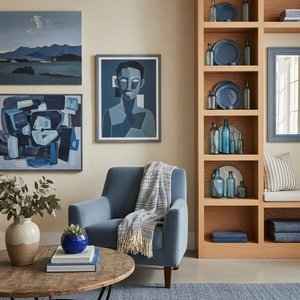
Slate Blue Masterpieces: 10 Iconic Paintings & Timeless Home Decor Ideas
Immerse yourself in the captivating world of slate blue! Explore 10 iconic paintings by Monet, Van Gogh & Renoir. Discover their stories, techniques & find museum-quality art reproductions for your home at .