

1909. Oil On Canvas.

§ 1Katalogo duomenys


§ 2Abstraktus
Kolekcinio objekto aprašas
Experience the melancholic beauty of Amedeo Modigliani's Study for The Cellist, a 1909 masterpiece blending African sculptural influences with early Modernism that invites you to explore his iconic expressive style.
 Skaityti daugiau
Autoriaus biografija
Amedeo Modigliani: italų dailininkas, žinomas poetiškais portretais ir figūromis su ilgomis kaktytėmis. Atverkite jo unikalų stilių, kuriame susijungia ekspresionizmas ir senovės Italijos menas.
§ 3Komentaras
A Symphony of Form and Shadow
In the quiet, evocative realm of Amedeo Clemente Modigliani’s 1909 masterpiece, Study for The Cellist, we encounter more than a mere preparatory sketch; we enter a profound meditation on rhythm, shape, and the human spirit. This pivotal work serves as a cornerstone of early Modernism, capturing a moment where the artist began to strip away the superficial layers of reality to reveal a deeper, more structural truth. The composition centers on a seated musician, whose presence is defined not by intricate detail, but by a striking, almost architectural simplicity. As the eye wanders across the canvas, it is immediately drawn to the deliberate asymmetry of the figure, which sits slightly offset, creating a subtle visual tension that mirrors the soulful, introspective nature of the music being played.
The brilliance of this study lies in its masterful dialogue between organic curves and geometric precision. The cello itself dominates the lower register of the painting, its sweeping, rounded contours providing a soft, melodic counterpoint to the more rigid, angular lines found in the man’s clothing and facial structure. This interplay of shapes is heavily indebted to Modigliani’s fascination with African sculpture, where the essence of a form is captured through bold, simplified silhouettes rather than anatomical perfection. For the discerning collector or interior designer, this piece offers a sophisticated balance of movement and stillness, making it an ideal focal point for spaces that demand both intellectual depth and aesthetic grace.
The Palette of Melancholy and Light
Modigliani’s color language in Study for The Cellist is one of restrained elegance. He employs a muted, earthy palette—a harmonious blend of deep browns, warm ochre, charcoal blacks, and somber grays—to evoke an atmosphere of quiet contemplation. There is no clamor here, only the soft resonance of tone. Subtle highlights of cream and white emerge on the shirt collar and certain facial features, acting as delicate flickers of light within a sea of shadow. This monochromatic approach does not diminish the work; rather, it intensifies the emotional weight of the subject, suggesting a sense of timelessness and a gentle, lingering melancholy that is so characteristic of the artist’s oeuvre.
The technique employed is remarkably fluid, suggesting a rapid and intuitive execution. The texture appears smooth, with brushstrokes that are felt more than seen, contributing to the flattened perspective that defines the piece. By minimizing depth and treating the background as a flat, indistinct plane, Modigliani forces the viewer to confront the subject directly. This lack of environmental detail removes the cellist from a specific time or place, elevating the scene to a universal symbol of artistic devotion. To possess a reproduction of this work is to bring into one's home a fragment of the Bohemian spirit of Paris—a piece that speaks of the beauty found in simplicity and the profound resonance of a single, well-placed note.
Klausimai ir atsakymai
Kokia yra „Study for The Cellist“ paletės ryškumas?
„Study for The Cellist“ – Amedėjas Modiljanis spalvų nasyginimas yra Subtle Color. Nasyginimas apibūdina, kokių spalvos yra ryškių arba išblukusių.
Kas sukūrė „Study for The Cellist“ ir kokiu stiliumi tai atlikta?
Amedėjas Modiljanis sukūrė „Study for The Cellist“, priklausantį Early Modernism stiliui.
Kur galiu rasti panašių kūrinių kaip „Study for The Cellist“ – Amedėjas Modiljanis?
Puslapio Panašūs kūriniai skiltyje, skirtoje kūriniam darbui „Study for The Cellist“ – Amedėjas Modiljanis, pateikiami panašūs meno kūriniai.


 Perjungti į spausdinamus版作品


 Dėl meno kūrinių ar reprodukcijų, kurių bet kuri pusė yra didesnė nei 105 cm (apie 41 inch), rėmas bus siunčiamas kaip išskaidytas surinkimo rinkinys. Šis metodas užtikrina saugų pristatymą ir apsaugo nuo transportavimo metu galimos žalos.


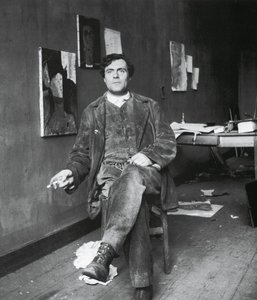
![Amedeo Clemente Modigliani (US: ; Italian: [ameˈdɛːo modiʎˈʎaːni]; 12 July 1884 – 24 January 1920) was an Italian painter and sculptor of the École de Paris who worked mainly in France. He is known for portraits and nudes in a modern style characterised b](/media/artworks/images-thumb/89/b4/89b468fd13c9cee7979c7570240f5cb8.jpg)


