


 Peržiūrėti realaus dydžio版
 Siųsti
 Dalintis
 Išsamiau
 Vadovas

 Atsisiųsti
 Panašūs eksponatai
 Rentgeno spindulių nuotrauka
 Diaporama
 Statistika
The Forge\n\nReference Image


 Rodyti daugiau
Šiame puslapyje rodomas meno kūrinys yra saugomas autorių teisių įstatymais, todėl neturime teisės legaliai kurti ar parduoti jo identiškos reprodukcijos. Ši apsauga užtikrinama remiantis tokiais tarptautiniais susitarimais kaip Bernės konvencija ir pagal nacionalines įstatymų nuostatas, įskaitant tas, kurias nurodo JAV autoriškos teisės įstatymas – 17-asis skyrius.
Šis metodas visiškai atitinka autorių teises, nes jame nėra kūrinio kopijavimo ar dubliavimo. Tai yra kūrybinė reinterpretacija – naujas paveikslas, kurį įkvėpė originalas, tačiau kuris nėra jo identiškas.
Giclée / Meno spausdinimas
Muziejų lygio „giclée“ arba drobos spausdinimas: greita gamyba ir lankstios apdailos parinktys. ( Pirkti rankomis tapytą reprodukciją Perejti prie skaitmeninių vaizdų)




































Pasirinkite iš mūsų nustatytų dydžių, atitinkančių originalaus meno kūrinio proporcijas.

Įveskite jums reikiamą plotį ir aukštį, kad atvaizdas derėtų prie jūsų rėmo ar sienos. Spausdiną galima tik sumažinti, bet nepadidinti virš originalaus paveikslėlio dydžio, todėl keičiant proporcijas, dalis vaizdo prarandama. Prieš spausdinimą atsiųsime jums skaitmeninį maketą patvirtinimui. Šioje puslapio nuotraukoje matomas pjūvis nėra tikslus – jį rodo tik maketas.
Pristatymas visame pasaulyje () per 2 weeks, o ne įprastas 4/5 savaičių laikotarpis. (25 spalis)

Nemokamas greitasis pristatymas visame pasaulyje

Aukštos kokybės lininis drobė

Pilnas siuntimo draudimas

Muitinės mokesčių grąžinimo garantija

Tikro spalvų atitikimo garantija

100 dienų grąžinimo politika (tik esant įtaigoms)

100% pinigų grąžinimo garantija

Nuolaida dideliems užsakymams
 Stiklo variantas prieinamas tik pasirinkus dydį iki 110 cm

The Forge\n\nReference Image
Giclée / Meno spausdinimas
Reprodukcijos dydis
-


Visų pasirinktų variantų kaina
€ 56
问答 (or more naturally for a website heading): Klausimai ir atsakymai
Kokią spalvų harmoniją išpriešia „The Forge\n\nReference Image“, autorius – Andrzej Różycki?
„The Forge\n\nReference Image“, autorius – Andrzej Różycki spalvos于demonstruoja Strong Color Unity harmoniją. Harmonija apibūdina, kaip spalvos dera viena su kita.
Kuriam muziejui priklauso originalus kūrinys „The Forge\n\nReference Image“?
Kūrinys „The Forge\n\nReference Image“, autorius – Andrzej Różycki rodomas Centre of Contemporary Art Znaki Czasu, Torun, Poland. Nuoroda į muziejų nurodo originalą, o ne reprodukciją.
Kaip galiu gauti „The Forge\n\nReference Image“, autorius – Andrzej Różycki skaitmeninį failą?
Norėdami gauti „The Forge\n\nReference Image“, autorius – Andrzej Różycki skaitmeninį failą, užsisakykite aukštos raiškos skaitmeninio vaizdo atsisiuntimas jo Skaitmeninis vaizdas puslapio.
Susiję kūriniai


![Urban Light [in Situ] — Christopher Lee Burden, Contemporary Art](/media/artworks/images-thumb/bb/41/bb41e0e98ca1ce05061042408c88a300.jpg)


Autoriaus biografija
A Visionary of Folklore and Film: The Life and Art of Andrzej Różycki
Andrzej Różycki, a Polish artist who passed away in 2021, was far more than simply a photographer or filmmaker. He was a polymath—a thinker, theorist, multimedia artist whose work delved into the very essence of image-making and its relationship to culture, ritual, and memory. Born in Baranowicze, Poland, in 1942, his early life was marked by displacement following World War II, an experience that would profoundly shape his artistic sensibility. This sense of loss and a fascination with fragmented histories became recurring themes throughout his prolific career. He received his formal training at the Faculty of Fine Arts at Nicolaus Copernicus University in Toruń, laying the groundwork for a practice that seamlessly blended academic rigor with experimental approaches.From Zero-61 to the Film Form Workshop: Early Artistic Development
Różycki’s artistic journey truly began to take form in Łódź, where he settled in 1969 and became deeply involved in the city's vibrant avant-garde scene. He was a key member of the Zero-61 group, an influential collective dedicated to exploring new forms of photographic expression. This period saw him move away from traditional documentary styles toward more conceptual approaches, seeking “positive values” within the medium itself—a search for meaning beyond mere representation. His involvement with the Film Form Workshop at the Polish National Film, Television and Theater School further broadened his horizons, leading to the creation of around sixty films that spanned ethnology, art history, and folk traditions. These weren’t conventional documentaries; they were often poetic explorations, imbued with a philosophical depth that questioned the nature of reality itself.Ethnological Films & The Power of Ritual
Różycki's most significant contribution lies in his unique ethnological films. He didn’t approach folklore as a static relic of the past but as a living, breathing force—a complex system of beliefs and practices that continued to resonate within contemporary Polish society. His work meticulously documented folk rituals, not simply recording them but attempting to understand their underlying symbolism and social function. He collaborated extensively with the Educational Film Studio in Łódź during the 1970s and 80s, producing films that were both artistically innovative and academically insightful. These works often explored the tension between tradition and modernity, highlighting the ways in which ancient customs adapted to changing times. He wasn’t merely an observer; he was a participant, deeply engaged with the communities he filmed, seeking to capture the *spirit* of these traditions rather than simply their outward forms.Fotozofia & The Legacy of Discarded Images
In later years, Różycki’s work took an increasingly introspective turn, focusing on his personal collections of forgotten or obsolete objects and images. This practice, which he termed “Fotozofia” (Photosophy), was a fascinating blend of hoarding, archaeology, and philosophical inquiry. He saw beauty in the discarded—in the remnants of everyday life that others had deemed worthless. These collected fragments became the raw material for his art, prompting reflections on memory, loss, and the ephemeral nature of existence. His 2021 retrospective exhibition, *Import(ance)s. Between Hoarding and Photosophy*, at Fotofestiwal in Łódź, offered a comprehensive overview of this unique artistic trajectory, showcasing five decades of work that challenged conventional notions of art and value. His influence extends beyond the realm of visual arts, impacting fields such as anthropology and cultural studies. Różycki’s legacy is one of relentless curiosity, intellectual rigor, and a profound respect for the power of images to shape our understanding of the world.Historical Significance & Enduring Impact
Andrzej Różycki stands as a pivotal figure in Polish postwar avant-garde art. His work challenged the boundaries between disciplines—photography, film, ethnography, philosophy—creating a truly interdisciplinary practice that continues to inspire artists and scholars today. He was not simply documenting reality; he was actively constructing it, questioning its very foundations. His films offer invaluable insights into Polish folklore and social commentary, while his Fotozofia provides a unique perspective on the relationship between memory, materiality, and identity.- A member of Zero-61 group.
- Co-founder of the Łódź Film Form Workshop.
- Created around sixty films related to ethnology, art, and folk rituals.

Andrzej Różycki
1942 - 2021 , Poland
Trumpa informacija apie kūrėją
- Full Name: Andrzej Różycki
- Nationality: Polish
- Date Of Birth: 1942
- Date Of Death: 2021
- Place Of Birth: Baranowicze, Poland
- Notable Artworks: ['The Forge']
- Artistic Movement Or Style: Ethnological films & art
Susiję straipsniai

White on Canvas: 10 Masterpieces & Timeless Elegance for Your Home Decor
Explore 10 iconic white paintings by Monet, Whistler & Rothko! Discover the stories behind these serene masterpieces and their impact on art history. Find museum-quality reproductions for your home decor at .

Shadow & Soul: Why Black & White Photography Remains the Ultimate Power Move in Modern Art
Discover why black & white photography remains a powerful force in contemporary art. Explore the impact of light, shadow, and texture through a visual journey of monochrome mastery and learn how to elevate your space with timeless grayscale aesthetics.

Monochrome Edge: The Ultimate Design Flex—Level Up Your Space with Bold Black & White Art
Master the monochrome aesthetic with high-impact Black & White art from AllPaintingsStore.com. From custom hand-painted oils to iconic pop culture remixes, discover the ultimate design flex for your urban space. Elevate your decor with bold, premium, and timeless monochrome masterpieces.
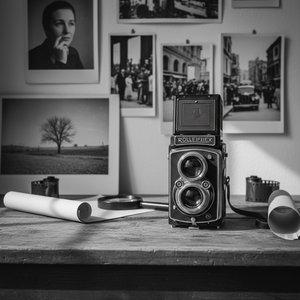
Monochrome Visions: Exploring the Aesthetic & Historical Significance of Black & White Photography
Explore the rich history & artistic power of black and white photography. From early techniques to iconic masters like Ansel Adams, discover why monochrome continues to captivate art lovers today. Expert insights for collectors.

Dark Masterpieces: 10 Iconic Paintings Dominated by Black Tones |
Explore 10 iconic paintings dominated by black tones, from Rembrandt’s chiaroscuro to Goya's dark expressions. Discover the stories behind these masterpieces & find museum-quality art reproductions for your home at .

