

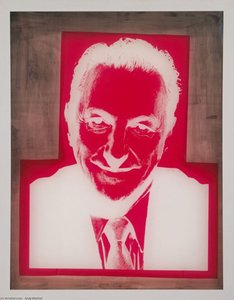
1976. Silkscreen.

§ 1Catalogue data


Šis kūrinys yra saugomas autorinės teisės
Šiame puslapyje rodomas meno kūrinys yra saugomas autorių teisių įstatymais, todėl neturime teisės legaliai kurti ar parduoti jo identiškos reprodukcijos. Ši apsauga užtikrinama remiantis tokiais tarptautiniais susitarimais kaip Bernės konvencija ir pagal nacionalines įstatymų nuostatas, įskaitant tas, kurias nurodo JAV autoriškos teisės įstatymas – 17-asis skyrius.
Kaip pagarbią ir teisėtą alternatyvą, mes siūlome pagal užsakymą rankomis dažytus paveikslus, įkvėptus originalo. Mūsų įgudę ir profesionalūs menininkai kruopščiai tiria originalo stilių, nuotaiką ir meninę esmę, kad sukurtų naują, unikalią kūrinį, kuris sukelia tą paties jausmą – išlikdamas tuo tarciau originaliu, savarankišku kūrybiniu darbu.
Šis metodas visiškai atitinka autorių teises, nes jame nėra saugomo kūrinio kopijavimo ar dubliavimo. Tai yra kūrybinė reinterpretacija – naujas paveikslas, kurį įkvėpė originalas, tačiau kuris nėra jo identiškas.
 Skaityti daugiau
§ 2Abstract
Kolekcinio objekto aprašas
A striking red hammer and sickle emblem sits atop a chair in this powerful 1976 Pop Art silkscreen by Andy Warhol that captures Cold War tensions and invites you to explore his iconic political imagery.
Autoriaus biografija
Pažinkite Andy Warholą (1928–1987) – pop meno pradininką! Jo šilkografijos su Marilyn Monroe, „Campbell’s“ sriubos skardinėmis ir garsenybių portretais pakeitė meno supratimą. Atverkite amerikietiškos kultūros simbolius!
§ 3Commentary
The Resonance of Red: Encountering Warhol’s Political Still Life
In the vast landscape of Pop Art, few images command attention with such stark, unapologetic clarity as Andy Warhol’s 1976 masterpiece, Hammer and Sickle. At first glance, the viewer is met with a deceptively simple composition: a vibrant, blood-red emblem of the hammer and sickle superimposed upon the quiet, unassuming presence of a chair. Yet, beneath this surface-level simplicity lies a profound tension, a visual dialogue that captures the very essence of the Cold War era. Warhol, a master of transforming the mundane into the monumental, utilizes this piece to bridge the gap between political propaganda and fine art, inviting us to contemplate the intersection of ideology and everyday existence. The presence of other scattered objects—a pair of scissors, a knife, and a bottle—adds a layer of domesticity that contrasts sharply with the revolutionary weight of the central symbol, creating a sense of an interrupted moment in time, where the tools of industry and the artifacts of daily life collide.
Technique as Democracy: The Power of the Screen
To truly grasp the impact of this work, one must look toward Warhol’s revolutionary use of the silk screen printing process. This technique, which allowed for the production of multiple identical prints, was not merely a choice of convenience but a profound philosophical statement on the democratization of art. By utilizing screenprinting, Warhol stripped away the traditional aura of the "unique" masterpiece, instead embracing the rhythmic, mechanical nature of mass production. This method allowed for the achievement of incredibly vibrant colors and precise tonal gradations that make the red of the emblem pulse against its backdrop with an almost electric intensity. For the collector or interior designer, this technique offers a unique opportunity to possess a piece that embodies the industrial spirit of the 20th century. The repetition inherent in his process mirrors the very nature of the symbols he depicts—symbols designed for mass consumption and widespread recognition—thereby blurring the lines between high culture and the pervasive imagery of popular propaganda.
An Enduring Statement for Contemporary Interiors
For those seeking to infuse a modern space with intellectual depth and visual drama, Hammer and Sickle serves as an incomparable focal point. It is far more than mere decoration; it is a provocative conversation starter that challenges the viewer to look beyond the aesthetic and engage with the historical currents of the late 1970s. The bold, graphic nature of the work makes it particularly suited for contemporary settings where minimalism meets conceptual strength. Whether placed in a curated gallery or as a striking element in a sophisticated residential study, the piece brings an unmistakable energy—a blend of industrial grit and artistic refinement. Owning a high-quality reproduction of this work allows one to celebrate Warhol’s legacy of provocation, ensuring that the echoes of revolution and the beauty of Pop Art continue to resonate powerfully within the walls of the modern home.
Klausimai ir atsakymai
Kokia „Hammer and Sickle“ – Endis Varholas nuotaika yra apibūdinama?
Bendrąją „Hammer and Sickle“ – Endis Varholas nuotaiką apibrėžia Bold. Ši nuotaika atspindi bendrą kūrinio atmosferą.
Kokio dydžio „Hammer and Sickle“ – Endis Varholas spausdinimas tinka rekomenduojamai patalpai?
Living Room erdvėje „Hammer and Sickle“ siūloma spausdinti Large dydžiu.
Ką vaizduoja „Hammer and Sickle“ – Endis Varholas?
„Hammer and Sickle“ – Endis Varholas temos apima symbolism, communism, industrial, tool, iconography, reproduction, warholesque. Kartu jie apibendrina šio kūrinio tematiką.




 Perjungti į spausdinamus版作品


 Dėl meno kūrinių ar reprodukcijų, kurių bet kuri pusė yra didesnė nei 105 cm (apie 41 inch), rėmas bus siunčiamas kaip išskaidytas surinkimo rinkinys. Šis metodas užtikrina saugų pristatymą ir apsaugo nuo transportavimo metu galimos žalos.


