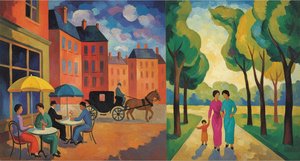
1914. Oil On Canvas.

§ 1Katalogo duomenys


§ 2Abstraktus
Kolekcinio objekto aprašas
Experience the vibrant leisure of August Macke's 1914 Expressionist park scene, capturing a moment of quiet reflection among lively surroundings; discover this masterpiece today.
 Skaityti daugiau
Autoriaus biografija
August Macke (1887-1914) – ryškus ekspresionizmo atstovas, įkvėptas fauvizmo ir Orfizmo. Jo paveikslai, tokie kaip „Miesto fone esančios maudynės“, perteikia modernų gyvenimą drąsiomis spalvomis ir kompozicija. Der Blaue Reiter narys.
§ 3Komentaras
A Moment Suspended in Time: The Leisure of August Macke
To gaze upon Man Reading in a Park is to step through a veil into a perfect afternoon—a moment so richly imbued with quiet contemplation that it feels almost suspended outside the rush of modern life. This painting by August Macke captures more than just a man on a bench; it encapsulates the very essence of leisure, the profound luxury of simply being present amidst the vibrant chaos of nature and society. The composition draws the eye immediately to the central figure, absorbed in the narrative held within his newspaper, yet the surrounding park life—the distant figures, the delicate perch of a bird against the foliage—reminds us that solitude is often found within community.
The Luminous Brushwork of German Expressionism
Macke’s technique here is a masterful blend of Impressionistic light play and the emotional depth characteristic of early German Expressionism. While his style hints at the bright, almost joyous palette associated with the movement, there is an underlying sense of poignant introspection. Observe the handling of the paint; it possesses a palpable texture, suggesting Macke’s skilled use of impasto that allows the sunlight filtering through the leaves to become visible pigment itself. The background is not merely painted scenery; it breathes. It vibrates with color and suggestion, allowing the viewer's own imagination to fill in the details of conversation or activity happening just beyond our direct focus.
Context and the Fleeting Nature of Joy
Painted in 1914, this work carries the bittersweet resonance of its time. August Macke’s life was tragically cut short by the looming shadow of global conflict, making works like this an artifact imbued with a poignant nostalgia for peace and simple pleasures. The park setting becomes a sanctuary—a temporary haven before the storm. It speaks to a yearning for permanence in an era defined by rapid change, suggesting that true beauty resides in these small, unrepeatable pockets of calm.
Symbolism of Solitude Amidst Life
The symbolism within Man Reading in a Park is wonderfully layered. The newspaper itself acts as a barrier and a portal; it connects the man to the outside world's discourse while simultaneously isolating him in his personal bubble of thought. Meanwhile, the surrounding activity—the other figures enjoying their day—serves as a beautiful counterpoint, reminding us that even when we seek quietude, we are always part of a larger, interconnected human tapestry. The bird perched overhead is nature’s silent witness, observing the ritual of human repose.
Bringing Macke's Atmosphere Home
For collectors and designers alike, this piece offers more than mere decoration; it offers an emotional anchor. Reproducing the luminosity and evocative mood of Man Reading in a Park allows one to infuse a space with sophisticated tranquility. Imagine this scene rendered on a wall—a vibrant conversation starter that whispers tales of sun-drenched afternoons and thoughtful repose, transforming any room into a curated retreat.
Klausimai ir atsakymai
Ar galiu užsisakyti „Man Reading in a Park“ aliejinę reprodukciją?
„Man Reading in a Park“ galima įsigyti kaip rankomis dažyta aliejaus reprodukcija ant lininio drobos. Užsakymą galite padaryti specialioje Rankų darbo aliejinis reprodukcija puslapio, pasirinkę tinkamą dydį.
Kokio Augustas Makė kūrybos laikotarpio priklauso „Man Reading in a Park“?
„Man Reading in a Park“ priklauso Augustas Makė kūrybos karjeros Late Period etapui. Ši klasifikacija atspindi kūrinio ryšį su menininko evoliucija.
Kokią spalvų harmoniją išpriešia „Man Reading in a Park“ – Augustas Makė?
„Man Reading in a Park“ spalvų harmonija yra apibūdinama kaip Strong Color Unity.


 Perjungti į spausdinamus版作品


 Dėl meno kūrinių ar reprodukcijų, kurių bet kuri pusė yra didesnė nei 105 cm (apie 41 inch), rėmas bus siunčiamas kaip išskaidytas surinkimo rinkinys. Šis metodas užtikrina saugų pristatymą ir apsaugo nuo transportavimo metu galimos žalos.