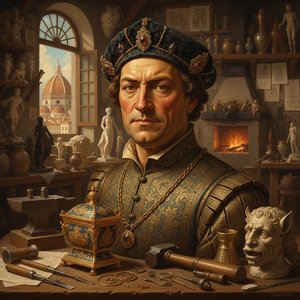
1570. Acrylic On Canvas, 68.0 x 49.0 cm. Liuvro muziejus.

§ 1Katalogo duomenys

- 68.0 x 49.0 cm


§ 2Abstraktus
Kolekcinio objekto aprašas
Admire Benvenuto Cellini's masterful Helmet (c. 1570), crafted from repoussé steel and gilded, housed in the Louvre Museum. Explore Renaissance artistry and royal symbolism.
 Skaityti daugiau
Autoriaus biografija
Benvenuto Cellini (1500-1571): Renesanso laikų auksakalis ir skulptorius, žinomas dėl dramatiškos 'Persejaus' skulptūros bei išskirtinio Cellini druskos indelio. Tyrinėkite jo meną ir gyvenimą!
§ 3Komentaras
A Regal Emblem of Florentine Mannerism: Exploring Cellini’s Helmet
Benvenuto Cellini’s “Helmet,” created around 1570, stands as a testament to the zenith of Renaissance artistry and the flamboyant spirit of Mannerism. More than just armor—though exquisitely crafted—it embodies Cellini's ambition to elevate craftsmanship into an art form itself, mirroring his broader fascination with transforming materials into objects of sublime beauty.
- Subject Matter: The helmet depicts a cityscape scene, capturing the bustling energy of Florence during Charles IX’s reign. Buildings rise majestically against a sky filled with horses—a deliberate choice reflecting both the grandeur of royal patronage and Cellini's masterful understanding of visual storytelling.
- Style & Technique: Cellini employed repoussé steel – hammering metal from the reverse side – to achieve incredible detail, layering textures and contours that would have captivated viewers accustomed to the meticulous precision of Mannerist sculpture. The surface was then plated with gold and adorned with enamel pigments, resulting in a shimmering spectacle of color and luminosity.
- Historical Context: Commissioned for King Charles IX, this helmet exemplifies the artistic fervor of the period following Leonardo da Vinci’s death. Cellini sought to surpass his predecessors, pushing the boundaries of technique and incorporating symbolic elements that conveyed power and prestige—a reflection of the political landscape of France at the time.
- Symbolism: The cityscape itself speaks volumes about Florentine identity and ambition. Horses symbolize nobility and military prowess, reinforcing the helmet’s purpose as a symbol of royal authority. Cellini's meticulous attention to detail underscores his belief in elevating craftmanship into art, mirroring the humanist ideals that underpinned the Renaissance.
The Maestro’s Obsession with Perfection
Cellini wasn’t merely creating armor; he was crafting an experience. His autobiography recounts countless hours spent perfecting every aspect of the helmet's design and execution—a characteristic driven by his unwavering belief in achieving artistic excellence. This dedication is palpable in the surface texture, achieved through painstaking hammering and polishing, demonstrating Cellini’s mastery of material manipulation.
A Louvre Treasure: Artistic Legacy
Currently housed in the Musée du Louvre, Paris, “Helmet” represents a remarkable survival from the Renaissance era. Its preservation allows us to appreciate Cellini's unparalleled skill as both sculptor and goldsmith—a figure who profoundly shaped the artistic landscape of his time. The helmet’s shimmering gold surface continues to inspire awe and admiration, cementing Cellini’s place among the greatest artists of all eras.
Further Exploration
For a deeper understanding of Cellini's oeuvre and the broader context of Mannerist art, consider researching “Morion for Francesco I de’ Medici,” another iconic piece created by Cellini during his prolific career. Also, delve into Cellini’s autobiography – “Benvenuto Cellini: Renaissance Goldsmith, Sculptor & Master of Self-Fashioning” – to gain insight into the artist's intellectual and personal life.
Klausimai ir atsakymai
Kur rekomenduojama eksponuoti „Helmet“ Portrait formatą?
Formatas (Portrait) ir rekomenduojama erdvė (Living Room) yra du nurodyti išdėstymo faktai kūriniui „Helmet“ – Benvenutas Čelinis.
Koks kontrastas yra darbe „Helmet“ – Benvenutas Čelinis?
Kūrinio „Helmet“ – Benvenutas Čelinis kontrasto lygis yra Statement.
Kaip rasti panašių kūrinių kaip „Helmet“ – Benvenutas Čelinis?
Puslapio Panašūs kūriniai skiltyje, skirtoje kūriniam darbui „Helmet“ – Benvenutas Čelinis, pateikiami panašūs meno kūriniai.


 Perjungti į spausdinamus版作品


 Dėl meno kūrinių ar reprodukcijų, kurių bet kuri pusė yra didesnė nei 105 cm (apie 41 inch), rėmas bus siunčiamas kaip išskaidytas surinkimo rinkinys. Šis metodas užtikrina saugų pristatymą ir apsaugo nuo transportavimo metu galimos žalos.