

Acrylic On Canvas. Detroito Menų Instituto Muziejus.

§ 1Katalogo duomenys


§ 2Abstraktus
Kolekcinio objekto aprašas
 Skaityti daugiau
Autoriaus biografija
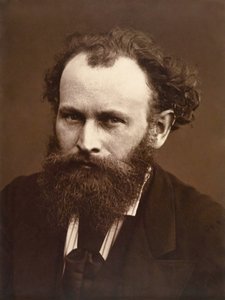
Pažinkite Édouard Manetą (1832–1883), reikšmingą figūrą tarp realizmo ir impresionizmo! Apžiūrėkite ikoninius kūrinius 'Pusryčiai ant žolės' ir 'Olimpija', bei jo palikimą moderniajame mene.
§ 3Komentaras
Au Prado: A Snapshot of Parisian Life Captured in Etching
Édouard Manet’s “Au Prado,” completed around 1863 and reworked circa 1867, stands as a deceptively simple yet profoundly significant etching that encapsulates the spirit of Impressionism's nascent stages. More than just a depiction of a Parisian street scene—a commonplace subject for artists of the time—it’s a carefully constructed tableau designed to provoke contemplation about modernity and artistic innovation.
The image portrays a group of figures gathered in front of the Prado Museum, capturing a moment of leisure amidst the bustle of urban life. Manet eschewed academic conventions, prioritizing observation over idealized representation. He meticulously rendered the textures of clothing—the voluminous skirts of women—and the subtle interplay of light and shadow on surfaces, mirroring techniques honed by masters like Caravaggio and Velázquez.
- Style: Impressionistic – Manet deliberately avoided smooth blending, opting for visible brushstrokes that convey immediacy and spontaneity.
- Technique: Etching and Aquatint – This printing process allowed for nuanced tonal gradations and intricate detail, crucial to capturing the atmospheric qualities of the scene. The aquatint layer contributes to a velvety surface texture.
- Historical Context: Created during a period of artistic ferment in Paris, “Au Prado” reflects the growing interest in portraying everyday life with honesty and realism—a reaction against Romantic idealism.
A woman dominates the composition, holding an umbrella aloft as if shielding herself from impending rain. This gesture isn’t merely functional; it symbolizes vulnerability and perhaps a hint of melancholy – emotions Manet skillfully conveyed through subtle facial expressions and posture. The inclusion of two dogs adds to the scene's realism and contributes to its overall mood.
As evidenced by extensive research (links provided), “Au Prado” has garnered considerable attention from art historians and collectors alike. Its enduring appeal lies in Manet’s masterful execution and his willingness to challenge established artistic norms, cementing its place as a cornerstone of Impressionist art history. Reproductions offer an opportunity to appreciate this iconic artwork's beauty and complexity within the comfort of your own home.
- Symbolism: The umbrella can be interpreted as representing protection from adversity or perhaps a longing for refuge amidst the pressures of urban existence.
- Emotional Impact: Manet’s etching evokes feelings of quiet contemplation and captures the essence of Parisian life during a transformative era.
Klausimai ir atsakymai
Kokia spausdinimo konfigūracija rekomenduojama kūriniui „Au Prado“ – Eduaras Manė?
Dėl „Au Prado“ rekomenduojamas spausdinimo nustatymas yra Large dydžio ir Portrait orientacijos.
Ar „Au Prado“ yra vienas populiariausių Eduaras Manė kūrinių?
„Au Prado“ – Eduaras Manė populiarumumo lygis yra Iconic. Ši klasifikacija atspindi, kaip plačiai šis kūrinys yra atpažįstamas.
Kokie kiti pseudonimai arba alternatyvūs vardai priklauso Eduaras Manė?
Eduaras Manė taip pat žinomas (žinoma) kaip E. Manė, Édouard Manet, Eduaras Manė (Pranc. Édouard Manet).


 Perjungti į spausdinamus版作品


 Dėl meno kūrinių ar reprodukcijų, kurių bet kuri pusė yra didesnė nei 105 cm (apie 41 inch), rėmas bus siunčiamas kaip išskaidytas surinkimo rinkinys. Šis metodas užtikrina saugų pristatymą ir apsaugo nuo transportavimo metu galimos žalos.


