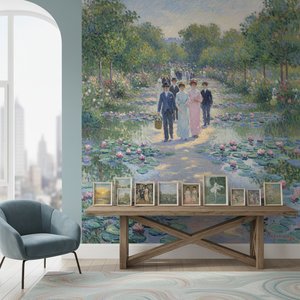
Acrylic On Canvas.

§ 1Katalogo duomenys

§ 2Abstraktus
Kolekcinio objekto aprašas
 Skaityti daugiau
Autoriaus biografija
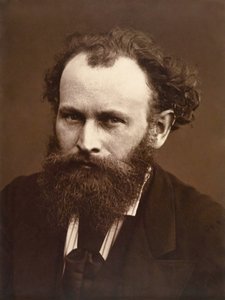
Manetas su „Olimpija“ sujungė realizmą ir impresionizmą. Atraskite šio paryžiečių meistro revoliucinius kūrinius.
§ 3Komentaras
Le lapin: A Fragment of Parisian Impressionism
Édouard Manet’s “Le lapin,” painted in 1881, is a deceptively simple composition—a solitary cat perched upon a weathered stone wall against the muted backdrop of a Parisian courtyard. Yet, within its understated elegance lies a profound exploration of light, texture, and psychological nuance that firmly establishes it as a cornerstone of Impressionist art.
- Subject Matter: The central figure—a tabby cat—is rendered with remarkable realism, capturing the subtle nuances of fur texture and musculature. Its gaze is directed upwards, seemingly absorbed in contemplation, inviting viewers to consider its inner life amidst the bustling city around it.
- Style & Technique: Manet eschewed academic conventions, prioritizing direct observation over meticulous detail. He employed loose brushstrokes—characteristic of Impressionism—to convey the fleeting effects of light and atmosphere. The artist skillfully blended colors to create a hazy luminescence that softens the contours of the cat and wall, mirroring the diffused sunlight filtering through the courtyard foliage.
- Historical Context: Painted during Manet’s formative years as an artist, “Le lapin” reflects the burgeoning artistic spirit of Paris at the turn of the century. It aligns with a broader movement away from historical narrative towards capturing contemporary life—a deliberate rejection of Romantic idealism and a celebration of sensory experience.
- Symbolism: While seemingly devoid of overt symbolism, the cat itself possesses connotations of independence and solitude – qualities that resonate within Manet’s artistic vision. Its upward gaze speaks to an aspiration for transcendence, hinting at a desire to escape the confines of everyday existence.
The painting's emotional impact is subtle yet powerful. It evokes a feeling of quiet contemplation, prompting viewers to ponder questions of perception and emotion. Manet’s masterful handling of light and color creates an immersive experience that captures not just what is seen but also how it feels—a testament to his enduring legacy as one of the most influential artists of the Belle Époque.
- Material & Reproduction: AllPaintingsStore offers high-quality reproductions crafted from archival pigment prints on canvas or paper, ensuring that you experience the beauty and artistry of “Le lapin” faithfully.
- Interior Design Inspiration: Consider incorporating elements of Manet’s palette—muted greens, earthy browns, and soft blues—into your interior design scheme to achieve a harmonious blend of tranquility and sophistication.
Klausimai ir atsakymai
Ar „Le lapin“ – Édouard Manet yra šviesaus ar tamsaus tono kūrinys?
Įrašytos „Le lapin“ – Édouard Manet reikšmės: šviesos intensyvumas – bright, luminansas – Gentle Luminance.
Ar studentams skirtas informacinis lapelis apie „Le lapin“ – Édouard Manet yra prieinamas?
„Le lapin“ – Édouard Manet Informacinė medžiaga puslapioje galima rasti spausdinamą dviejų lapų informacinę lentelę: kūrinį su jo tapatybės lentele, laikotarpį nurodantį juostą, atitinkantį gyvenimo metus, kitus šio autoriaus darbus, išmatuotą spalvų paletę bei keturiomis stiliais paruoštus citavimo pavyzdžius.
Kokio Édouard Manet kūrybos laikotarpio priklauso „Le lapin“?
Édouard Manet kūrybos enceklopedijoje kūrinys „Le lapin“ priskiriamas Mature Period laikotarpiui. Šis etapas leidžia palyginti jį su kitais šio autoriaus kūriniais.


 Perjungti į spausdinamus版作品


 Dėl meno kūrinių ar reprodukcijų, kurių bet kuri pusė yra didesnė nei 105 cm (apie 41 inch), rėmas bus siunčiamas kaip išskaidytas surinkimo rinkinys. Šis metodas užtikrina saugų pristatymą ir apsaugo nuo transportavimo metu galimos žalos.