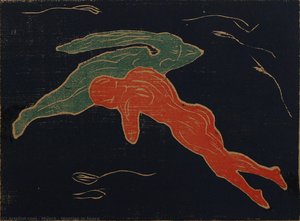
1894. Acrylic On Canvas.

§ 1Catalogue data


§ 2Abstract
Kolekcinio objekto aprašas
Explore Edvard Munch's 'Anxiety 2,' a haunting Expressionist masterpiece depicting collective fear and psychological turmoil. A pivotal work reflecting the human condition.
 Skaityti daugiau
Autoriaus biografija
Pažinkite Edvardą Munchą (1863–1944), ekspresionizmo pionierį! Atraskite jo ikoninius kūrinius, pavyzdžiui, 'Šauksmą', bei meno tyrinimus apie nerimą, mirtį, meilę ir psichologines temas. Norvegų dailininkas, paveikęs XX a. avangardą.
§ 3Commentary
Anxiety
Edvard Munch’s “Anxiety” stands as a haunting testament to the psychological landscape of late 19th-century Europe and a cornerstone of Expressionism. Created between 1893 and 1894, this monochrome oil painting transcends mere representation; it plunges viewers into the turbulent depths of human emotion—specifically, fear and despair—capturing a visceral experience that continues to resonate powerfully today.
Style and Technique Munch’s approach aligns perfectly with the tenets of Expressionism. Rejecting Impressionistic objectivity, he prioritized conveying inner feelings rather than external appearances. The painting utilizes thick impasto brushstrokes – bold, textured marks of paint – which contribute significantly to its dramatic impact. These strokes aren't merely decorative; they embody the artist’s agitated state of mind and visually communicate the overwhelming sensation of anxiety.
Historical Context “Anxiety” emerged during a period marked by intellectual ferment and societal anxieties surrounding scientific advancements, urbanization, and shifting moral values. Munch was deeply influenced by philosophers like Nietzsche and Kierkegaard, whose existential explorations mirrored his own preoccupation with mortality and the human condition. The painting reflects the broader cultural mood of uncertainty and apprehension prevalent in Norway at the time.
Symbolism Munch’s masterful use of symbolism elevates “Anxiety” beyond a simple depiction of emotion. The central figure—a solitary individual rendered in muted tones—stands on a bridge overlooking a fjord, mirroring the iconic image of “The Scream.” This repetition underscores the interconnectedness of psychological torment and artistic expression. The swirling lines dominating the composition symbolize the chaotic forces of fear and anxiety, engulfing the landscape and reflecting the inner turmoil of the protagonist.
Emotional Impact Viewing “Anxiety” evokes a profound sense of unease and vulnerability. Munch’s deliberate avoidance of color—confined to shades of grey—intensifies the painting's emotional power by stripping away any distractions from the core experience of dread. The figure’s contorted posture and anguished gaze convey an overwhelming feeling of helplessness, inviting contemplation on themes of isolation, suffering, and the inescapable confrontation with mortality. It is a piece that compels us to confront our own anxieties and grapple with the darker aspects of human existence.
Location & Further Exploration “Anxiety” resides within The Munch Museum in Oslo, Norway—a pilgrimage for anyone interested in delving deeper into Munch’s artistic legacy and the broader context of Expressionism.
You can find more information about Edvard Munch and his artwork on AllPaintingsStore.com. Interested in owning a stunning reproduction? Visit AllPaintingsStore.com.
Klausimai ir atsakymai
Ar galiu pamatyti „Anxiety“ – Edvardas Munkas skirtingame apšvietime?
Darbino „Anxiety“ – Edvardas Munkas puslapio Rentgeninis vaizdas veją yra interaktyvus naršyklė, leidžiantis peržiūrėti vienu metu vieną iš vienylika optinių vaizdo sluoksnių, įskaitant rentgeno tipo vaizdą.
Kaip galiu įsigyti „Anxiety“ – Edvardas Munkas skaitmeninį vaizdą?
„Anxiety“ galima įsigyti kaip aukštos raiškos skaitmeninio vaizdo atsisiuntimas, tiesiogiai savo Skaitmeninis vaizdas puslapio.
Kiek šviesos, kaip atrodo, atspindi „Anxiety“ spalvos?
„Anxiety“ – Edvardas Munkas šviesos intensyvumas yra Soft Shadow. Šviesos intensyvumas apibūdina, kiek šviesos, kaip atrodo, atspindi spalvos.


 Perjungti į spausdinamus版作品


 Dėl meno kūrinių ar reprodukcijų, kurių bet kuri pusė yra didesnė nei 105 cm (apie 41 inch), rėmas bus siunčiamas kaip išskaidytas surinkimo rinkinys. Šis metodas užtikrina saugų pristatymą ir apsaugo nuo transportavimo metu galimos žalos.