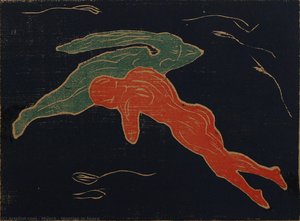
1913. Acrylic On Canvas.

§ 1Catalogue data


§ 2Abstract
Kolekcinio objekto aprašas
 Skaityti daugiau
Autoriaus biografija
Pažinkite Edvardą Munchą (1863–1944), ekspresionizmo pionierį! Atraskite jo ikoninius kūrinius, pavyzdžiui, 'Šauksmą', bei meno tyrinimus apie nerimą, mirtį, meilę ir psichologines temas. Norvegų dailininkas, paveikęs XX a. avangardą.
§ 3Commentary
A Landscape Steeped in Melancholy: Exploring Edvard Munch’s “Coast”
Edvard Munch's "Coast," painted in 1913, transcends mere depiction of a Norwegian fjord landscape; it embodies the profound anxieties and emotional turbulence characteristic of Expressionism—a movement that sought to convey inner psychological states rather than objective reality. This artwork isn’t simply a beautiful vista; it’s a carefully constructed visual meditation on themes of isolation, vulnerability, and the inescapable presence of darkness within even the most serene surroundings. The painting captures a moment of quiet contemplation amidst towering mountains draped in verdant grass—a deceptively tranquil scene that belies the artist's deeply felt preoccupation with existential dread.- Subject Matter: Munch’s focus is on capturing the grandeur of nature, specifically the coastline of Norway. However, it’s not a celebratory portrayal; rather, he presents it as a backdrop to human experience—a space where solitude and contemplation coexist with an underlying sense of unease.
- Style: “Coast” firmly establishes Munch within the Expressionist canon. Unlike Impressionism's emphasis on capturing fleeting moments of light and color, Expressionism prioritizes conveying emotion through distorted forms and jarring colors—techniques employed here to heighten the painting’s psychological impact.
Historical Context: The Dawn of Expressionism
Painted during a period marked by significant social upheaval—the aftermath of World War I and burgeoning anxieties about modernity— “Coast” reflects the broader intellectual climate of its time. Munch was deeply influenced by Nietzsche’s philosophy, which questioned traditional morality and championed individualism. These ideas resonated powerfully with Munch's artistic vision, propelling him to explore themes of psychological torment and spiritual crisis—a preoccupation that would define his oeuvre.Symbolism: Shadows Within Light
Beyond its aesthetic qualities, “Coast” is laden with symbolic significance. The solitary figure positioned on the road serves as a poignant emblem of human vulnerability against the immensity of nature and the inevitability of suffering. The birds scattered across the landscape represent fleeting moments of beauty and joy—yet they are juxtaposed with the dominant hues of blue and green, suggesting that even these positive elements are tainted by melancholy. Munch’s use of color isn't merely decorative; it functions as a conduit for conveying emotional intensity.Emotional Impact: A Portrait of Inner Turmoil
Ultimately, “Coast” succeeds in capturing the essence of Munch’s artistic mission—to confront viewers with uncomfortable truths about human existence. The painting's subdued palette and distorted forms compel contemplation on themes of isolation, fear, and grief. It invites us to consider how external landscapes can mirror internal psychological states—a testament to Munch’s enduring legacy as one of the most influential artists of the 20th century.Klausimai ir atsakymai
Kokia yra „Coast“ – Edvardas Munkas kūrybos data?
„Coast“ – Edvardas Munkas kūrybos metai – 1913.
Kokia buvo Edvardas Munkas amžius sukuriant „Coast“?
Kai 1913 m. buvo sukurta „Coast“, Edvardas Munkas – gimęs 1863 m. – buvo 50 metų amžiaus.
Kokią emociją sukelia „Coast“?
Emocinis tonas, nurodytas kūriniui „Coast“ – Edvardas Munkas, yra Melancholic. Jis apibūdina jausmą, kurį išreiškia šis darbas.


 Perjungti į spausdinamus版作品


 Dėl meno kūrinių ar reprodukcijų, kurių bet kuri pusė yra didesnė nei 105 cm (apie 41 inch), rėmas bus siunčiamas kaip išskaidytas surinkimo rinkinys. Šis metodas užtikrina saugų pristatymą ir apsaugo nuo transportavimo metu galimos žalos.