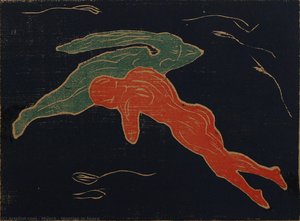
1907. Oil On Canvas.

§ 1Katalogo duomenys


§ 2Abstraktus
Kolekcinio objekto aprašas
Experience Edvard Munch's 'Cupido,' a hauntingly beautiful Symbolist painting capturing intimacy and vulnerability. Explore its rich symbolism, emotional depth, and the artist’s exploration of love & despair.
 Skaityti daugiau
Autoriaus biografija
Pažinkite Edvardą Munchą (1863–1944), ekspresionizmo pionierį! Atraskite jo ikoninius kūrinius, pavyzdžiui, 'Šauksmą', bei meno tyrinimus apie nerimą, mirtį, meilę ir psichologines temas. Norvegų dailininkas, paveikęs XX a. avangardą.
§ 3Komentaras
A Window Into Munch’s Soul: Exploring ‘Cupido’
Edvard Munch's “Cupido,” completed in 1907, isn’t merely a painting; it’s an embodiment of existential angst distilled onto canvas. Created during Munch’s pivotal period of artistic experimentation—a time marked by profound personal turmoil and the burgeoning influence of Symbolism—the artwork transcends its visual elements to deliver a visceral experience of emotion. It stands as a cornerstone of Expressionist art, cementing Munch's reputation as one of the most influential artists of his era.Composition and Elements: Balance Between Intimacy and Dread
The scene depicts two figures intertwined in an embrace, bathed in muted hues that heighten the sense of vulnerability. Munch meticulously crafted the composition to convey a feeling of profound unease. The dominant horizontal line establishes stability, yet it’s disrupted by the upward thrust of the woman's body, mirroring perhaps the struggle for control amidst overwhelming emotion. Scattered across the canvas are subtle details—a bird soaring above—representing freedom and vitality, juxtaposed against the palpable tension radiating from the couple. Notably, a tennis racket rests on the left side, an element that has been interpreted as symbolizing connection – love intertwined with sport’s competitive spirit, or perhaps representing the futile attempt to impose order upon chaos.Symbolism: Decoding Munch's Emotional Landscape
“Cupido” is rife with symbolic resonance, inviting viewers to delve beneath its surface and confront uncomfortable truths about human experience. The embracing figures represent not just physical intimacy but also a deeper yearning for connection—a desire to find solace in another’s presence during times of profound distress. The bird above symbolizes hope amidst despair, yet it's simultaneously fragile, mirroring the precariousness of life itself. Munch’s masterful use of color – predominantly blues and yellows – contributes significantly to the painting’s emotional impact. Blues evoke feelings of melancholy and isolation, while yellows convey warmth and optimism—creating a dynamic interplay that captures the complexities of human emotion. The artist's expressive brushstrokes amplify these sensations, immersing the viewer in Munch’s inner world.Historical Context: Symbolism's Response to Modern Anxiety
Symbolism emerged as a reaction to Impressionism’s focus on capturing fleeting moments of sensory experience. Artists like Munch sought to express subjective emotions and psychological states—rather than objective reality—using symbolic imagery and evocative color palettes. “Cupido” reflects the anxieties prevalent in Europe at the turn of the century, fueled by rapid industrialization, urbanization, and growing disillusionment with traditional values. Munch’s work anticipates the horrors of World War I and embodies a broader preoccupation with mortality and suffering—themes that would become central to Expressionist art throughout the decade.A Legacy of Emotion: Why ‘Cupido’ Continues to Captivate
“Cupido” remains powerfully evocative today because it speaks directly to our deepest fears and desires. Munch's ability to translate psychological turmoil into visual form is unparalleled, creating a masterpiece that transcends time and continues to resonate with audiences worldwide. Its haunting beauty lies in its unflinching portrayal of human vulnerability—a reminder that even amidst moments of joy and connection, the shadow of existential dread always lingers. The painting serves as an enduring testament to Munch’s artistic genius and his profound understanding of the human condition.Klausimai ir atsakymai
Kokia naudojimo paskirtis ir erdvė rekomenduojama kūriniam darbui „Cupido“ – Edvardas Munkas?
„Cupido“ siūloma naudoti Statement, o rekomenduojama erdvė – Living Room.
Kam rekomenduojamas naudojimui „Cupido“ spausdinys?
Rekomenduojamas naudojimo būdas kūriniui „Cupido“ – Edvardas Munkas yra Statement. Jis taip pat gali būti naudojamas kitoms paskritis.
Ar galiu naudoti papildytojąjį realybės technologiją, kad pamatytumėte „Cupido“ – Edvardas Munkas savo kambaryje?
„Cupido“ – Edvardas Munkas puslapio Peržiūra papildintajai realybei funkcija naudoja papildytojąjį realybės technologiją, kad suderinamame įrenginyje parodytų kūrinį jūsų erdvėje.


 Perjungti į spausdinamus版作品


 Dėl meno kūrinių ar reprodukcijų, kurių bet kuri pusė yra didesnė nei 105 cm (apie 41 inch), rėmas bus siunčiamas kaip išskaidytas surinkimo rinkinys. Šis metodas užtikrina saugų pristatymą ir apsaugo nuo transportavimo metu galimos žalos.