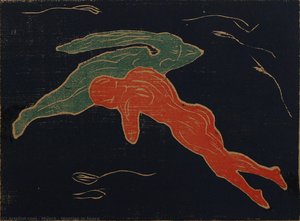
1904. Acrylic On Canvas.

§ 1Catalogue data


§ 2Abstract
Kolekcinio objekto aprašas
Explore Edvard Munch's expressive masterpiece 'Dance on the Beach,' capturing joy and leisure on the beach with vibrant light and masterful technique. Discover Expressionism & its influence.
 Skaityti daugiau
Autoriaus biografija
Pažinkite Edvardą Munchą (1863–1944), ekspresionizmo pionierį! Atraskite jo ikoninius kūrinius, pavyzdžiui, 'Šauksmą', bei meno tyrinimus apie nerimą, mirtį, meilę ir psichologines temas. Norvegų dailininkas, paveikęs XX a. avangardą.
§ 3Commentary
The Expressionist Movement
Expressionism was an early 20th-century movement that emphasized experimentation, abstraction, and subjective experience. It emerged in response to significant changes in Western culture, including secularization and the growing influence of science. Modernism, which influenced expressionism, centered around beliefs in a "growing alienation" from prevailing "morality, optimism, and convention" and a desire to change how "human beings in a society interact and live together."Artistic Techniques
Munch's use of light in Dance on the Beach is noteworthy. Light in painting fulfills several objectives, both plastic and aesthetic. It affects color, texture, and volume, and its combination with shadow can determine the composition of the work. In this painting, Munch skillfully captures the play of light and shadow to create a lively atmosphere.The Nude in Art
The historical evolution of the nude in art runs parallel to the history of art in general. The nude is an artistic genre that consists of the representation of the naked human body. In Dance on the Beach, Munch's depiction of people dancing and enjoying themselves reflects the social standards for aesthetics and morality of his era.Relevance to Modernism
Modernism was influenced by widespread technological innovation, industrialization, and urbanization, as well as cultural and geopolitical shifts after World War I. Artistic movements associated with modernism include abstract art, literary stream-of-consciousness, cinematic montage, musical atonality, and twelve-tonality.Conclusion
Dance on the Beach by Edvard Munch is a significant expressionist painting that captures the joy and leisure of people on the beach. The artwork reflects the social standards and artistic techniques of its time, making it an important piece in the history of modern art.- Painting by 'Edvard Munch' | Edvard Munch:Dance on the Beach (Expressionism,)
- Modernism
- Light in painting
- Painting by 'Clyfford Still' | Clyfford Still:PH-212 (Oil On Canvas,)
Visit AllPaintingsStore.com to explore more artworks and learn about the artists who created them.
Klausimai ir atsakymai
Kada ir kokiais medžiagomis buvo sukurta „Dance on the Beach“?
„Dance on the Beach“ – Edvardas Munkas technika – Acrylic On Canvas, kūrybinė data – 1904.
Kokia spalvų ryškumas ir intensyvumas pasižymi „Dance on the Beach“ – Edvardas Munkas?
„Dance on the Beach“ spalvų nasyginimas yra Balanced Soft, o intensyvumas – Balanced.
Kaip atsisiųsti „Dance on the Beach“ – Edvardas Munkas vaizdą?
Kūrinio „Dance on the Beach“ – Edvardas Munkas vaizdą galite atsisiųsti puslapio Atsisiųsti skaitmeninį vaizdą skiltyje: aukštos raiškos skaitmeninio vaizdo atsisiuntimas.


 Perjungti į spausdinamus版作品


 Dėl meno kūrinių ar reprodukcijų, kurių bet kuri pusė yra didesnė nei 105 cm (apie 41 inch), rėmas bus siunčiamas kaip išskaidytas surinkimo rinkinys. Šis metodas užtikrina saugų pristatymą ir apsaugo nuo transportavimo metu galimos žalos.