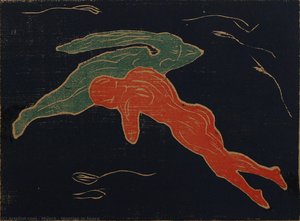
1903. Acrylic On Canvas.

§ 1Catalogue data


§ 2Abstract
 Skaityti daugiau
Autoriaus biografija
Pažinkite Edvardą Munchą (1863–1944), ekspresionizmo pionierį! Atraskite jo ikoninius kūrinius, pavyzdžiui, 'Šauksmą', bei meno tyrinimus apie nerimą, mirtį, meilę ir psichologines temas. Norvegų dailininkas, paveikęs XX a. avangardą.
§ 3Commentary
The Painting
Eken, a painting by Edvard Munch, is a striking representation of a tree with branches that extend outwards in various directions. The tree appears to be barren, with no leaves on its branches. The tree's trunk is large and prominent, taking up a significant portion of the image.Symbolism and Composition
In addition to the main tree, there are several smaller trees visible in the background, adding depth and dimension to the scene. A bird can also be seen perched atop one of the branches, further enhancing the natural atmosphere of the painting. The overall composition is striking and captivating, with a sense of tranquility and serenity emanating from the image.Artistic Style
The painting is classified under the Symbolism style, which was popular during the late 19th and early 20th centuries. Symbolist artists often used natural elements to convey deeper meanings and emotions. In this case, the barren tree may symbolize a sense of desolation or isolation.Artist's Background
Edvard Munch was a Norwegian artist known for his bold and expressive works. He is famous for his iconic painting The Scream, which is widely regarded as an icon of existential angst. Munch's work often explored themes of anxiety, death, and the human condition.Relevance to Art Movements
The Catholic Art Movement, also known as the Sacred Art Movement, was an art movement that emerged in the late 19th and early 20th centuries. It aimed to revive the tradition of religious art in the Catholic Church, which had been in decline since the Protestant Reformation. While Munch's work does not directly align with this movement, his use of symbolism reflects a broader interest in exploring deeper meanings through art.Conclusion
Eken by Edvard Munch is a powerful and thought-provoking painting that invites the viewer to contemplate the symbolism and emotions it evokes. For those interested in Symbolism and the works of Edvard Munch, this painting offers a unique insight into his artistic vision.Klausimai ir atsakymai
Kaip kūrinys „Eken“ dera su Edvardas Munkas temomis ir stiliumi?
Edvardas Munkas kūryboje „Eken“ atlieka Symbolism stilių, susijęs su expressionist roots, existential angst, mortality concerns, psychological depth, symbolic representation, iconic munch piece, exploring inner turmoil temomis.
Kokia yra „Eken“ – Edvardas Munkas kūrybos data ir stilius?
„Eken“ sukurta 1903 metais, priklausant į Symbolism kryptį. Data ir stilius įtvirtina šį kūrinį laiko eje.
Ar studentams skirtas informacinis lapelis apie „Eken“ – Edvardas Munkas yra prieinamas?
„Eken“ – Edvardas Munkas Informacinė medžiaga puslapioje galima rasti spausdinamą dviejų lapų informacinę lentelę: kūrinį su jo tapatybės lentele, laikotarpį nurodantį juostą, atitinkantį gyvenimo metus, kitus šio autoriaus darbus, išmatuotą spalvų paletę bei keturiomis stiliais paruoštus citavimo pavyzdžius.


 Perjungti į spausdinamus版作品


 Dėl meno kūrinių ar reprodukcijų, kurių bet kuri pusė yra didesnė nei 105 cm (apie 41 inch), rėmas bus siunčiamas kaip išskaidytas surinkimo rinkinys. Šis metodas užtikrina saugų pristatymą ir apsaugo nuo transportavimo metu galimos žalos.