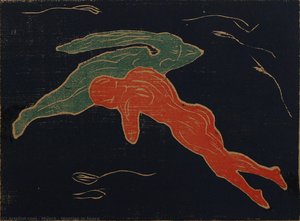
1901. Acrylic.

§ 1Katalogo duomenys


§ 2Abstraktus
Kolekcinio objekto aprašas
Captured in stark black and white, Edvard Munch’s ‘Envy’ embodies profound psychological anguish through its depiction of a man concealing his face amidst a desolate landscape—a poignant emblem of existential dread from the Symbolist era.
 Skaityti daugiau
Autoriaus biografija
Pažinkite Edvardą Munchą (1863–1944), ekspresionizmo pionierį! Atraskite jo ikoninius kūrinius, pavyzdžiui, 'Šauksmą', bei meno tyrinimus apie nerimą, mirtį, meilę ir psichologines temas. Norvegų dailininkas, paveikęs XX a. avangardą.
§ 3Komentaras
A Portrait of Inner Turmoil: Exploring Edvard Munch’s “Envy”
The painting "Envy," created by Edvard Munch in 1901, isn't merely a depiction of a man; it’s an embodiment of psychological distress—a visceral representation of the anxieties that defined Munch’s artistic output and resonate powerfully with audiences today. Captured in stark black and white, the artwork immediately commands attention through its unsettling composition and masterful execution. It speaks volumes about the artist’s personal struggles and his profound understanding of human emotion.- Subject Matter: At first glance, the painting presents a solitary figure—a man clutching his face in anguish—a gesture universally recognized as indicative of despair or overwhelming emotion. The subtle blue shirt he wears adds a touch of color against the monochrome backdrop, subtly highlighting the vulnerability of the subject.
- Style: Munch’s style is firmly rooted in Expressionism, prioritizing emotional intensity over realistic representation. He abandons conventional perspective and strives to convey inner feelings rather than external appearances. This stylistic choice aligns perfectly with his preoccupation with themes of anxiety, fear, and psychological torment—elements that permeate throughout his oeuvre.
Technique: Impressionistic Brushstrokes Amidst Darkness
Munch employed a technique characterized by loose, agitated brushstrokes—a hallmark of Expressionism. These strokes aren’t intended to capture precise details but rather to convey the artist's subjective experience of the scene. The textured surface of the painting contributes significantly to its emotional impact, mirroring the turbulent state of mind depicted within. Notice how Munch skillfully utilizes tonal variations to heighten drama and create a sense of unease; the darker shades dominate, emphasizing the oppressive atmosphere.- Color Palette: Although presented in black and white, Munch’s masterful use of tonal shading creates an illusion of color. The dominant blues evoke feelings of melancholy and isolation, reinforcing the painting's overarching mood.
- Composition: The composition is deliberately unbalanced, drawing the viewer’s eye to the central figure while simultaneously emphasizing the desolate landscape surrounding him. The placement of the houses and boat serves as a visual anchor, grounding the image but also subtly highlighting the man’s isolation from society.
Historical Context: Fin-de-Siècle Anxiety and Munch's Personal Demons
“Envy” emerged during the Fin-de-Siècle period—a time of profound social and intellectual upheaval in Europe. Artists like Munch wrestled with anxieties about modernity, industrialization, and the decline of traditional values. Munch’s own life was marked by tragedy and illness, profoundly influencing his artistic vision. He suffered from debilitating anxiety attacks and struggled to reconcile his faith with the horrors he witnessed during World War I. These experiences fueled his exploration of psychological themes—fear, grief, and despair—themes that find expression in “Envy” as a reflection of the broader cultural anxieties of the era.Symbolism: Faces of Fear and Isolation
The man’s gesture of clutching his face is laden with symbolic significance. It represents not only physical pain but also emotional anguish—a desperate attempt to shield oneself from overwhelming feelings. The blue shirt symbolizes vulnerability and fragility, mirroring the artist's own struggles with mental illness. Furthermore, the desolate landscape serves as a visual metaphor for inner turmoil—representing the emptiness and despair that characterize Munch’s psychological state. “Envy” is ultimately a portrait of existential dread—a haunting reminder of humanity’s inherent vulnerability to suffering.Klausimai ir atsakymai
Kokia technika sukurta „Envy“ – Edvardas Munkas?
Edvardas Munkas kūriniui „Envy“ panaudojo Acrylic techniką. Ši technika apibrėžė originalaus kūrinio medžiaginę prigimtį.
Ar yra vadovas kūriniui „Envy“ – Edvardas Munkas?
„Envy“ – Edvardas Munkas Informacinė medžiaga puslapioje galima rasti spausdinamą dviejų lapų informacinę lentelę: kūrinį su jo tapatybės lentele, laikotarpį nurodantį juostą, atitinkantį gyvenimo metus, kitus šio autoriaus darbus, išmatuotą spalvų paletę bei keturiomis stiliais paruoštus citavimo pavyzdžius.
Kuriam menininkui priskiriamas kūrinys „Envy“?
Kūrinį „Envy“ sukūrė Edvardas Munkas. Darbas katalogizuojamas Edvardas Munkas vardu.


 Perjungti į spausdinamus版作品


 Dėl meno kūrinių ar reprodukcijų, kurių bet kuri pusė yra didesnė nei 105 cm (apie 41 inch), rėmas bus siunčiamas kaip išskaidytas surinkimo rinkinys. Šis metodas užtikrina saugų pristatymą ir apsaugo nuo transportavimo metu galimos žalos.