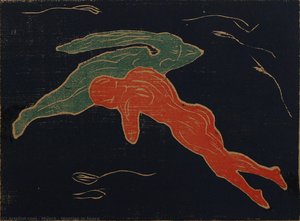
1915. Acrylic On Canvas.

§ 1Catalogue data


§ 2Abstract
Kolekcinio objekto aprašas
 Skaityti daugiau
Autoriaus biografija
Pažinkite Edvardą Munchą (1863–1944), ekspresionizmo pionierį! Atraskite jo ikoninius kūrinius, pavyzdžiui, 'Šauksmą', bei meno tyrinimus apie nerimą, mirtį, meilę ir psichologines temas. Norvegų dailininkas, paveikęs XX a. avangardą.
§ 3Commentary
A Window into Inner Turmoil: Examining Edvard Munch’s Self-Portrait (1915)
The monochrome canvas of Edvard Munch's “Self-Portrait” transcends mere representation; it embodies a profound exploration of psychological vulnerability and the pervasive anxieties that characterized the dawn of the 20th century. Painted in 1915, during a period marked by personal upheaval and artistic experimentation—a time when Munch wrestled with his own mental health struggles—this deceptively simple image speaks volumes about the artist’s inner landscape and offers a compelling glimpse into Expressionist aesthetics.- Subject Matter & Composition: Munch presents himself in profile, bathed in an unsettlingly pale light that casts deep shadows across his face. The gaze is averted downwards, conveying a palpable sense of melancholy and introspection. This deliberate framing emphasizes the isolation of the figure against a backdrop of muted tones—a technique characteristic of Munch’s broader artistic vision.
- Style & Technique: “Self-Portrait” exemplifies Munch's signature Expressionist style, prioritizing emotional intensity over realistic depiction. He employs loose brushstrokes and textured surfaces to convey feeling rather than precise detail. The pigment is applied thinly, allowing the canvas’s texture to peek through—a deliberate choice that underscores the artwork’s materiality and contributes to its haunting atmosphere.
- Interior Designer Considerations: When incorporating this artwork into an interior space, consider its monochromatic palette as a counterbalance to brighter hues—creating a mood of quiet reflection and understated elegance.
- Collector Appeal: “Self-Portrait” holds considerable appeal for collectors interested in pioneering Expressionist art. Its emotive power and masterful technique solidify Munch’s place among the most influential artists of his generation, ensuring its continued relevance within the realm of fine art history.
Klausimai ir atsakymai
Kokia „Self-Portrait“ – Edvardas Munkas nuotaika yra apibūdinama?
„Self-Portrait“ dvelkia Dramatic atmosfera.
Kaip kūrinys „Self-Portrait“ dera su Edvardas Munkas temomis ir stiliumi?
Edvardas Munkas kūryboje „Self-Portrait“ atlieka Expressionist Painting stilių, susijęs su symbolic angst, psychological realism, personal trauma, existential questioning, artistic legacy temomis.
Ar „Self-Portrait“ – Edvardas Munkas yra paveikslas, piešinys ar grafika?
„Self-Portrait“ yra WallArt kūrinys.


 Perjungti į spausdinamus版作品


 Dėl meno kūrinių ar reprodukcijų, kurių bet kuri pusė yra didesnė nei 105 cm (apie 41 inch), rėmas bus siunčiamas kaip išskaidytas surinkimo rinkinys. Šis metodas užtikrina saugų pristatymą ir apsaugo nuo transportavimo metu galimos žalos.