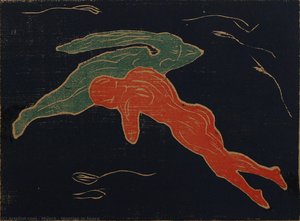
1895. Acrylic.

§ 1Catalogue data


§ 2Abstract
Kolekcinio objekto aprašas
Experience Edvard Munch's iconic 'The Scream.' This haunting lithograph captures raw emotion and existential dread – a cornerstone of Expressionism, reflecting the anxieties of modern life.
 Skaityti daugiau
Autoriaus biografija
Pažinkite Edvardą Munchą (1863–1944), ekspresionizmo pionierį! Atraskite jo ikoninius kūrinius, pavyzdžiui, 'Šauksmą', bei meno tyrinimus apie nerimą, mirtį, meilę ir psichologines temas. Norvegų dailininkas, paveikęs XX a. avangardą.
§ 3Commentary
The Silent Scream: Edvard Munch’s *Skriet* – A Window into Modern Anxiety
Edvard Munch's *Skriet* (1893), often translated as “The Scream,” is far more than a simple depiction of a figure emitting a shriek. It’s a visceral embodiment of the anxieties and existential dread that gripped Europe at the fin de siècle, a pivotal moment of profound social and psychological upheaval. This iconic image, rendered in pastel on cardboard, transcends its immediate visual impact to become a universal symbol of human anguish – a feeling remarkably resonant even today. The painting's enduring power lies not just in its arresting composition but also in Munch’s masterful ability to distill raw emotion onto the canvas, creating an experience that is both deeply unsettling and profoundly moving.
The scene unfolds on a bridge overlooking Oslofjord, bathed in a lurid sunset – a sky rendered in swirling shades of blood red, orange, and purple. The central figure, often interpreted as Munch himself, is not actively screaming but rather reacting to an unseen horror. His hands are clasped to his face, his mouth agape in a silent, desperate plea. The elongated form, almost skeletal in its simplicity, conveys a sense of utter vulnerability and isolation. Notice the deliberate distortion of perspective; the bridge recedes sharply into the distance, creating a claustrophobic effect that mirrors the figure’s internal turmoil. The two figures in the background, seemingly oblivious to the central subject's distress, further amplify this feeling of alienation.
Expressionist Techniques and the Language of Emotion
Munch was a pioneer of Expressionism, an artistic movement characterized by its focus on subjective experience and emotional intensity. *Skriet* exemplifies this approach perfectly. He eschewed realistic representation in favor of conveying inner states through distorted forms, exaggerated colors, and dynamic brushstrokes. The pastel medium itself is crucial to the painting’s effect; its grainy texture and luminous quality contribute to a sense of unease and instability. Munch employed a technique known as “soul painting,” aiming to capture not just what he saw but what he *felt*. He meticulously documented his emotional responses to life's events, transforming personal experiences into powerful visual metaphors.
The use of color is particularly striking. The fiery sunset isn’t merely a backdrop; it’s an active participant in the scene, mirroring and intensifying the figure’s anguish. The swirling patterns suggest chaos and instability, reflecting the overwhelming nature of the experience. Munch's deliberate simplification of forms – reducing figures to their essential outlines – further emphasizes the emotional core of the work. He prioritized conveying feeling over precise detail, creating an image that is both immediate and timeless.
Symbolism and the Modern Condition
*Skriet* is laden with symbolism, reflecting Munch’s preoccupation with mortality, illness, and psychological distress. The bridge itself can be interpreted as a liminal space – a threshold between life and death, sanity and madness. The silent scream represents not just individual anguish but also a broader sense of societal anxiety and the alienation felt by individuals in an increasingly industrialized and impersonal world. Munch’s own personal struggles—the early deaths of his mother and sister from tuberculosis, his father's religious fanaticism, and his own battles with mental illness—provided fertile ground for this exploration of human vulnerability.
Interestingly, Munch created multiple versions of *Skriet* in various mediums – pastel on cardboard, lithograph, oil paint, and crayon. Each version offers a slightly different perspective on the same core emotion. The 1893 pastel is considered the most emotionally raw and immediate, capturing the essence of the experience with remarkable intensity. It’s a testament to Munch's ability to translate his inner turmoil into a universally understood visual language.
A Timeless Masterpiece – Reproduction Possibilities
AllPaintingsStore offers meticulously crafted hand-painted reproductions of *Skriet*, allowing art lovers to experience this iconic masterpiece in stunning detail and vibrant color. Our skilled artists replicate Munch’s expressive techniques with the utmost care, ensuring that every brushstroke captures the painting's original emotional power. Whether you seek a large-scale statement piece for your home or a smaller, more intimate reproduction, we offer a range of sizes and framing options to suit your individual taste and space. A AllPaintingsStore reproduction of *Skriet* is not merely a copy; it’s a testament to the enduring legacy of Edvard Munch and his profound exploration of the human condition – a window into the silent scream that continues to resonate with audiences worldwide.
Klausimai ir atsakymai
Kokią spalvų paletę naudoja „skriet“ – Edvardas Munkas?
„skriet“ spalvos sudaro Neutrals paletę. Ši klasifikacija aprašo dominuojančias spalvų grupes.
Kokia buvo „skriet“ kūrimo metai ir kokiam stiliui jis priklauso?
„skriet“ sukurtas 1895 m., priklausantį Expressionism stiliui.
Ar galima atsisiųsti „skriet“ vaizdą?
Kūrinį „skriet“ galima atsisiųsti: jo Atsisiųsti skaitmeninį vaizdą puslapyje siūloma aukštos raiškos skaitmeninio vaizdo atsisiuntimas.


 Perjungti į spausdinamus版作品


 Dėl meno kūrinių ar reprodukcijų, kurių bet kuri pusė yra didesnė nei 105 cm (apie 41 inch), rėmas bus siunčiamas kaip išskaidytas surinkimo rinkinys. Šis metodas užtikrina saugų pristatymą ir apsaugo nuo transportavimo metu galimos žalos.